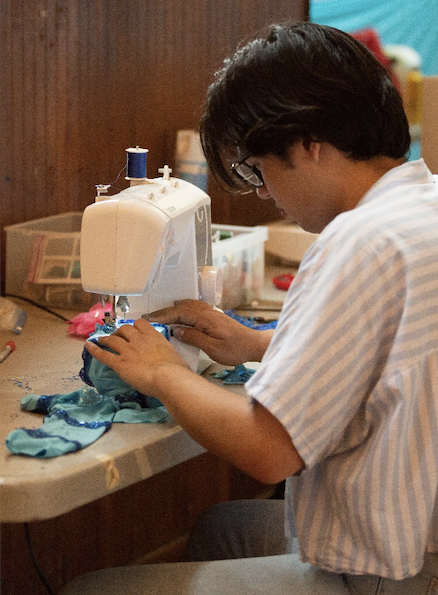
Q Le just returned to dry land after a Virgin Voyages cruise through the Mediterranean, where he worked on costumes for the immersive show Persephone. You might say the Pace University costume design graduate has been sailing smoothly since earning his degree, with consistent work and little downtime.
After graduation, his first job was a production of Anything Goes at the Muny in St. Louis, assisting costume designer Tristan Raines, his former professor. Le took the design notes, ran costume fittings, coordinated shopping runs, and pulled additional pieces from the theatre’s costume stock.
“They call it Broadway summer camp,” said Le. “It’s all of these people who are at the top of their craft in all worlds—design, directing, choreography—and the performers are just so incredible, so dedicated. It’s a unique experience to put up shows of that size in two weeks.”
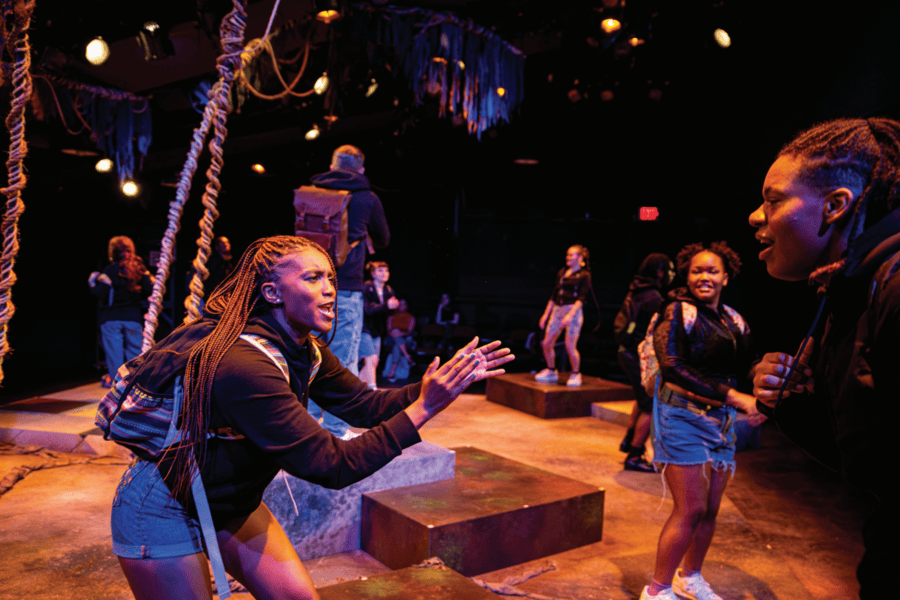
After the Muny, Le returned home to Santa Barbara, California, to do the costumes for Grease at Stage Left Productions, where he had done theatre as a kid, and where he’s returned for the past seven summers to design the costumes. Le’s last summer looked a lot like the previous year’s, with a return to the Muny for Bring It On and to Stage Left Productions for The Addams Family.
Between this bookend of summer gigs, Le was brought back to New York to work on Jimmy Fallon’s Tonightmares, a haunted house at Rockefeller Center, where he met a dresser who connected him with a job working on costumes for Jennifer Hudson’s backup dancers at the Macy’s Thanksgiving Day Parade.
“So much of the reason that I’ve gotten to do some of the coolest things in my entire life is because someone said, ‘Are you free to go on a cruise ship?’ Yes, I am. ‘Are you free to wake up at 1 a.m. and go to the Thanksgiving Day Parade and sew for 40 dancers in the pouring rain?’ Yes, I am.”
His primary connections have come through Raines, but Le has also found work through fellow classmates and connections in fashion and live entertainment. He works tailoring gigs for electronic dance music artists, and he recently did the costumes for Conan Gray’s band and backup dancers for the MTV Video Music Awards.
Between gigs, Le teaches on weekends at the New York Sewing Center, where he can pick up extra shifts if design work is slow. “Every survival gig or money gig that I do, it’s really sewing and art-centered,” he said. “I feel very lucky to be able to say that.”
Starting last January, Le worked on the Nevada Ballet Theatre’s The Nutcracker with a team of designers he’d worked with in New York, including Ricky Lurie and his former professor Jess Gersz. This team brought him on to work on other exciting projects, including Two Strangers (Carry a Cake Across New York) at the American Repertory Theater, the Oh, Mary! transfer to Broadway and ongoing cast changeovers, and Waiting for Godot on Broadway.
He also worked on Dracula: A Comedy of Terrors with Raines at New World Stages. When the producers asked the design team to build out a rental package, Raines passed the reins to Le. “It was the first time that I was just handed a bible of costumes and was told, ‘You’re in charge. Here’s all the money. Buy it and make it.’ It was pretty intimidating, but it was very rewarding.”
In this whirlwind year, Le spent a few months back in Santa Barbara, but recently moved into a new apartment in New York City with classmates.
“I feel a lot more secure now that I live with some of my best friends,” he said. “So I feel like I’m here for the foreseeable future, until I start considering grad school.”
For Le, who is still deciding whether to pursue a career as a designer or continue along the associate route, one goal is clear: “I really have always wanted to end up being a teacher. I love working with kids at the summer camp, and it’s so rewarding to help them on their journey through the arts and theatre—it’s the most rewarding thing I’ve ever done.”
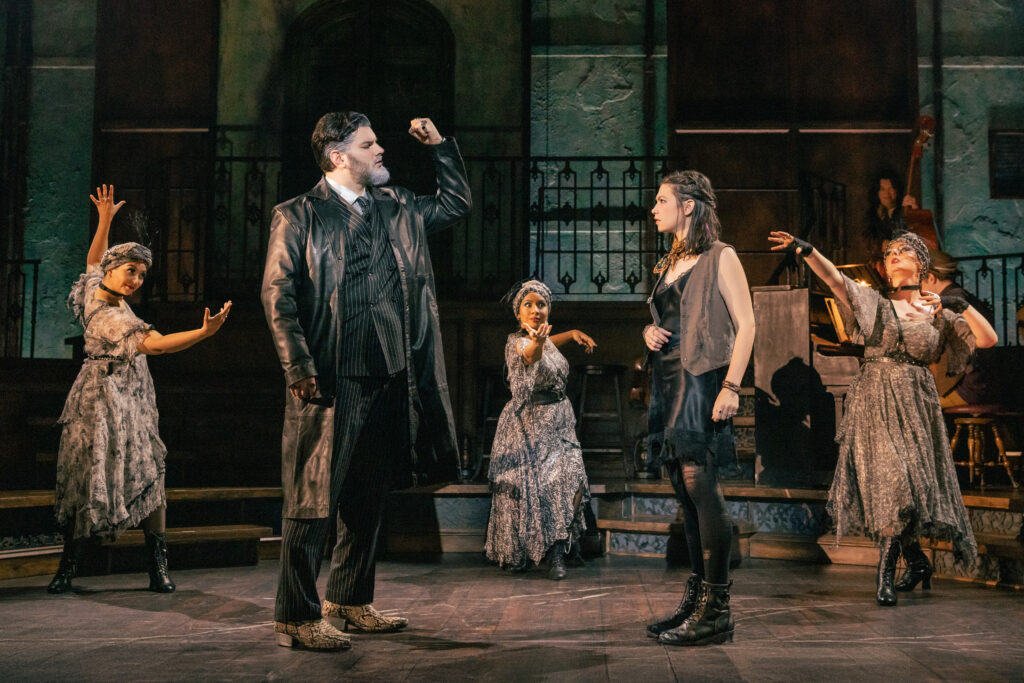
Julia Schick, a 2024 graduate of College-Conservatory of Music at the University of Cincinnati, just hit the road for her second stint with the Hadestown tour. This time she is adding co-dance captain to her swing track.
Since graduation, Schick’s been on the road or on a plane, living out of a suitcase. She stayed in New York after CCM’s senior showcase there, landing “multiple audition appointments almost immediately, which was a blessing, and I was so excited, but I was like, ‘Oh no, I’m not prepared for this!’” Schick recalled with a laugh. Thankfully, her network of CCM alumni in the city was strong, and for the next two weeks of auditions, callbacks, and general meetings, she was able to couch-surf.
This whirlwind introduction to New York City proved fruitful. Schick signed with an agency and flew back and forth from Cincinnati for auditions and callbacks, including for the Hadestown tour. While packing up her apartment in Cincinnati, she learned she had booked it.
Before starting rehearsals in September, she landed another gig: a presentation of a new musical called After Pinocchio. “It was so fun and very much a learning experience,” Schick said. “I had never been a part of a process for a new show, so it was very educational to sit there and be like, ‘Oh, we’re developing these characters together.’”
Schick felt that her training and experience prepared her for rehearsing an eight-role swing track and for being part of a months-long tour contract, but the road itself was a fresh experience. “What was new was the actual traveling,” she said, “because the Hadestown tour is a bus-and-truck tour, so we’re on a bus traveling to a new city with new weather and temperatures.”
The transition from college apartment living to life on the road was a crash course in adulting, but Schick said she soon found her rhythm, learning how to manage her health and stay ready to step into any of eight roles at a moment’s notice. (This year, it’s nine roles.) When her contract wrapped in May 2025, she took a brief vocal rest before heading to Covington, Kentucky, to work on several productions at the Carnegie Theatre, including choreographing The Color Purple with a director she’d previously collaborated with at CCM. Next she traveled to New York to join City Center’s pre-production choreography workshop for last fall’s Encores! revival of Bat Boy.
In the midst of all her far-flung jobs, Schick’s home base was her family’s home in Kennesaw, Georgia, where her dad runs Firefly Theatrical, a children’s theatre company. Schick makes extra cash there teaching classes, organizing costumes, and cleaning the theatre.
She also had another cushion: Schick received the Stewart F. Lane Fellowship for Career Advancement through the American Theatre Wing, a $10,000 award. Candidates for the fellowship are selected from the graduating class of Andrew Lloyd Webber Initiative University Scholarship recipients, and the funds support the transition from college to career. She’s saving half of that for her eventual move to New York City in the summer, while the rest has been useful for various flights back and forth in the interim (and a new suitcase).
In the meantime, she’s embracing the reality that opportunities might take her in another direction. “It’s scary to go into the next couple of years with so much unknown,” Schick admitted. “I have a plan, but that plan could be uprooted by booking a job at a regional theatre in California, or doing another year of Hadestown, or booking another tour. Sometimes I have to sit and look back and be like, I have done some amazing things, and I’m very happy with where I am right now. I feel very confident that wherever I end up next will be correct for me.”
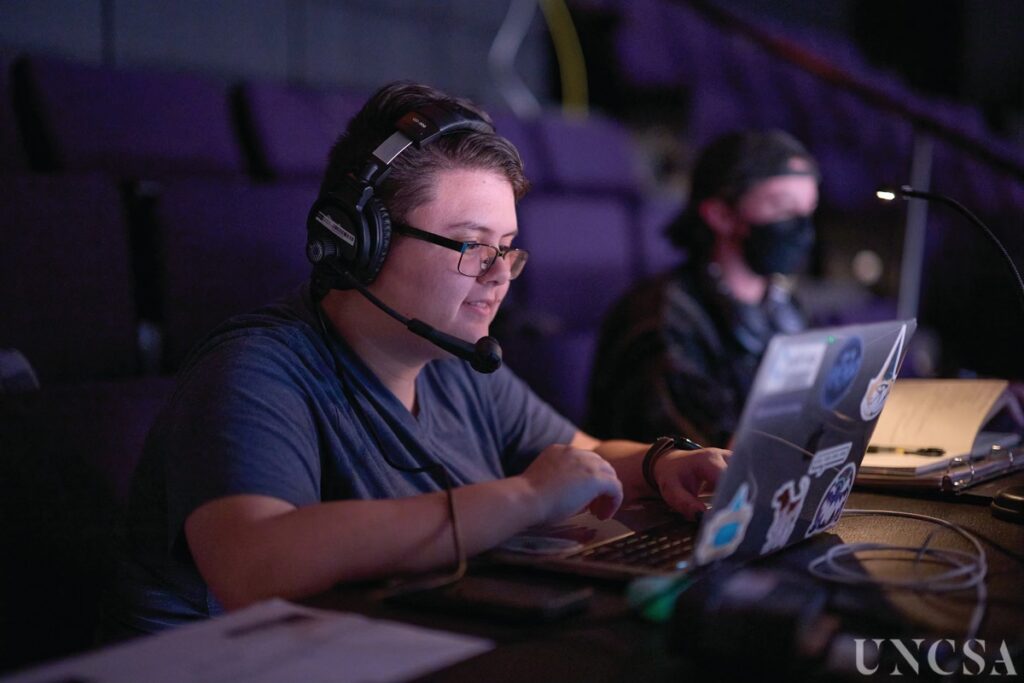
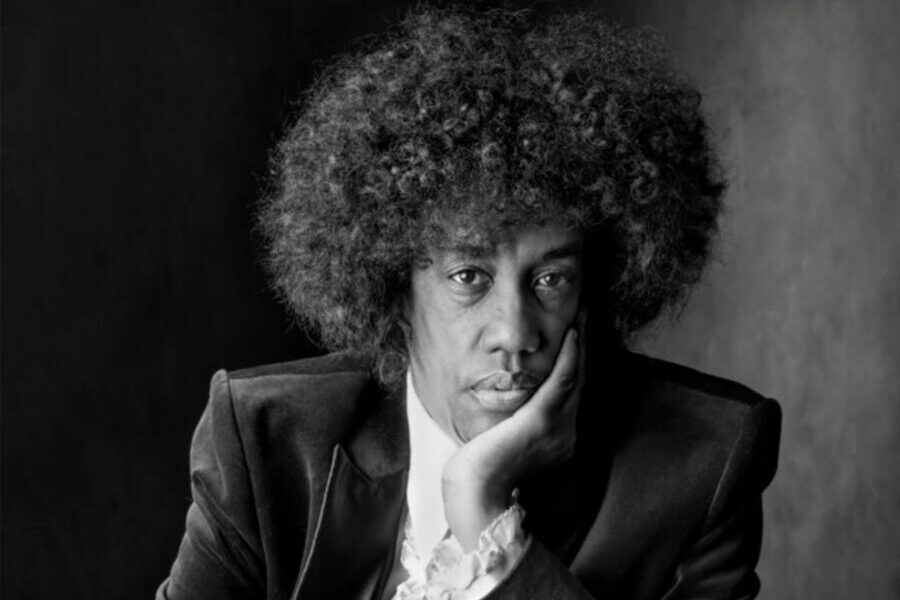
Since graduating from the University of North Carolina School of the Arts, sound designer Kai Machuca’s career has been a wild ride—literally. Within two months, the New Jersey native had moved to Orlando, Florida, to begin working as an A/V design engineer for Videlio-HMS, which provides entertainment and audiovisual systems for cruise ships and theme parks.
Machuca initially wanted to skip college and move straight to New York City, but at his mother’s urging, he enrolled in UNCSA. He’s glad he did. The design curriculum expands beyond theatre, and students build skills in sound for various entertainment applications. “My interests lie in themed entertainment, video games, and anything that sort of puts the audience in a different world,” said Machuca.
In addition to design and production courses, UNCSA also offers personal finance classes, portfolio and website-building workshops, sessions on developing side gigs for sound designers, and even a guest lecture from a union member on how to manage finances while on tour.
While Machuca felt ready to enter the field, the pandemic had reshaped job prospects, as video game companies underwent acquisitions and widespread layoffs. Machuca’s program director sent along a job posting for a sound engineering role at Videlio-HMS, and it felt like a good fit.
“I was definitely scared, but I knew that my school had set me up for success, and I had worked my butt off to try to get all my ducks in a row,” said Machuca. “So I was really focused on, how do I present myself in the best way possible, so people see who I am as a person and also as a worker?”
While many classmates hit the road with touring productions or moved to New York City to cut their teeth, Machuca sought a more stable path—one that would allow him to put down roots, pursue virtual reality hobbies, and maybe even get a pet someday. Machuca settled in Orlando and found community through a local gym, LGBTQ groups, and the NextGen chapter of the Themed Entertainment Association with other young professionals.
At Videlio-HMS, Machuca works on a team of 11 focused on land-based entertainment. Machuca worked on interactive/immersive mini-games and the Yoshi’s Adventure ride at Universal Epic Universe. One of the best parts of the experience was when the team did sound tuning overnight in the park as part of the install.
“You’re in an empty theme park and there’s no one around, and it’s like your own little playground for a few hours,” he said. “You can experiment and get to just appreciate the musical art and acoustical genius that goes into such a huge project. It’s creatively satisfying in the best way. I would just come home to my apartment, dancing around, just saying, ‘I love my job, I love my job!’ over and over again.”
Machuca’s long-term goal is to move further into the creative side of themed entertainment. His advice to college seniors: Be ready to step outside your comfort zone.
“For me, it was, I’m going to do this engineering gig that I don’t think I’ll be very good at, and I ended up being pretty good at it,” Machuca said. “Your goals might shift, your interests might shift, and that’s okay. You’re not losing yourself by going into something different from what your current plan is. That path is going to wind in ways that you never expected.”
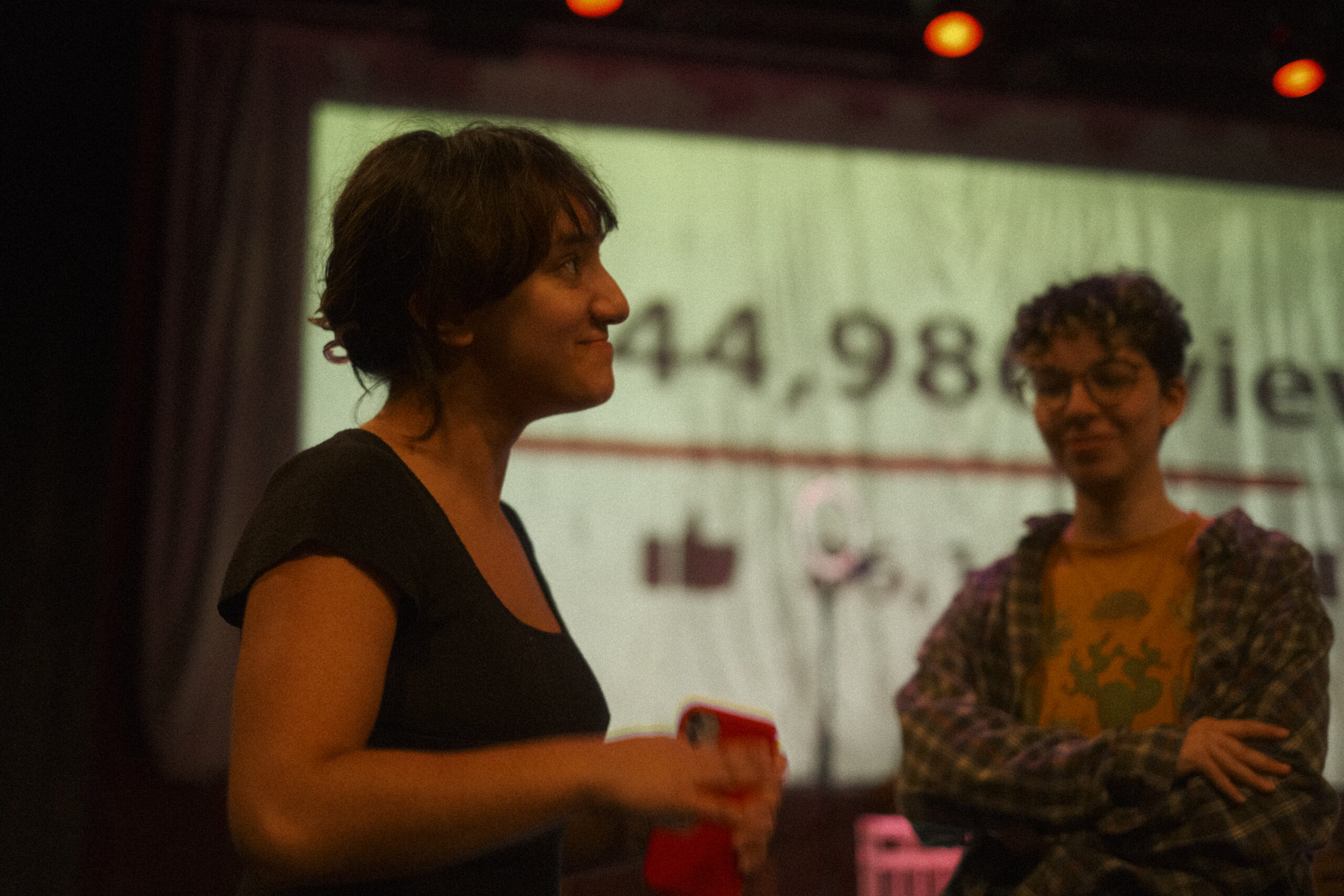 Pria Dahiya studied directing and social and political history at Carnegie Mellon University—a path that took some convincing from her parents, both teachers who attended business school. Before starting college, Dahiya, who had some internships at regional theatres under her belt, supplied them with data about what kinds of jobs she could do after graduation. The picture when she did finally graduate in 2024, though, has been cloudier.
“What’s heartbreaking to me is that some of those jobs that looked really promising do not exist anymore, because there’s been such a shrinking in the industry,” Dahiya said recently. “It felt like the building blocks of the reality that I understood the theatre ecosystem to be when setting myself up for this career have since proven to be something very different.”
Case in point: Pittsburgh’s three major theatre companies are currently weighing a merger into one overarching institution. Upon graduation, Dahiya stayed in Pittsburgh to create multimedia and experiential projects with her own company, New Product Company. She did so while juggling multiple jobs: a gallery assistant role with eight-hour shifts on her feet, an arts educator gig at a local company, and a three-month 9-to-5 at an AI tech company, which cemented her determination to avoid any future desk jobs.
The balancing act of producing work while holding multiple jobs became untenable, so Dahiya recently moved back home to Bethesda, Maryland. From there she can focus on applying to director residency programs, fellowships, and funding opportunities, while continuing to develop projects. Most recently, she directed a staged reading at Montgomery College in Rockville and remounted a concert she originally helmed last year at Kelly-Strayhorn Theater in Pittsburgh. In May, New Product Company will present Are You Are, a modern adaptation of Karel Čapek’s R.U.R.
While she’s worked nonstop since graduation, Dahiya, who recently turned 24, finds it hard to measure success. “I’ve done these great fellowships,” said Dahiya, who has contributed to American Theatre after being part of its Critical Insight partnership with Pittsburgh Public Theater. “I’ve directed shows at a level that I feel very proud and confident of. I’ve started my own theatre company. To me, these are really important—they’re goals I’ve had for myself for years and years and years. And yet to articulate that to anyone outside of my field, it sounds like my life is falling apart because I don’t have any money.”
For Dahiya, this first year-and-a-half out of school has been an exploration of how her directing skills apply to other industries.
“What’s bringing me joy is that I’ve been moving away from narrowly categorizing myself as a theatre artist,” she said. Recently, a curator found a video art piece Dahiya posted on Instagram, titled “How to Work Out for Alt Girls,” and selected it for an installation at the Fugue Gallery in New York. “It’s so funny to me that my New York premiere is not a play I directed but a video art piece that I put on a television. It kind of speaks to the fact that that’s how work is getting discovered.”
For directors just starting out, there’s no talent representative for job placement, just networking and persistence. Mentors have been invaluable to her hustle. Bricolage Production Company and Quantum Theatre—both of them with strong CMU alumni connections—have also played a key role in supporting her as she established her own company.
“My relationships with older theatre professionals have been so fruitful and so fulfilling,” said Dahiya. “Having people who have been unflinchingly supportive of me and who I can call when I’m being offered a contract and be like, ‘Am I being criminally underpaid? Should I negotiate this?’ I’m never going to be able to fully express the amount of gratitude I have toward all these people.”
Dahiya’s advice to graduating seniors is to ask themselves if they feel they need to be doing theatre at a certain level to be happy.
“I decided a long time ago that even if I never work professionally, I will be fulfilled as long as I can do exactly what I’m doing,” she said. “There’s always going to be a way that I can create community events and invite people together. It’s not a skill that I’m ever going to grow out of or age out of. It’s always there, and I’m probably gonna get better as I get older. That’s something that gives me a lot of comfort.”
Allison Considine is a former senior editor of American Theatre. Based in Brooklyn, she works at a mission-driven tech startup by day and moonlights as a theatre critic.