1796 (230 years ago)
On July 4, the Old American Company arrived in Hartford, Connecticut. At the time, the ensemble, which was one of the earliest professional theatre troupes in the U.S., was being tumultuously co-managed by actors John Hodgkinson and Lewis Hallam. Despite tensions in the group, the Company opened two plays one week after their arrival titled The Provoked Husband and Purse. However, due to poor ticket sales, the Company closed their shows and left Connecticut shortly after their arrival.
1851 (175 years ago)
Henry Box Brown and James Caesar Anthony Smith officially dissolved their touring partnership on July 25. Brown, who had been born into slavery in the early 1800s, gained fame for shipping himself in a dry goods box from Virginia to Philadelphia as a means of gaining his freedom. Brown subsequently began presenting and performing throughout anti-slavery lecture circuits, which eventually led him to commission the creation of a moving panorama to support his tours. The resulting image-based narrative was titled The Mirror of Slavery, and told the history of the United States from the perspective of Black people, intermingling picturesque images of the nation with graphic depictions of slavery, including Brown’s own unique escape from enslavement. Shortly after the panorama’s completion, the Fugitive Slave Act was incorporated into the Compromise of 1850 forcing Brown, accompanied by Smith, a free Black man who had assisted in Brown’s transport to the North, to flee to England with The Mirror of Slavery in tow. After several months of financially-successful touring abroad, Brown and Smith parted ways due to financial disputes.
1876 (150 years ago)
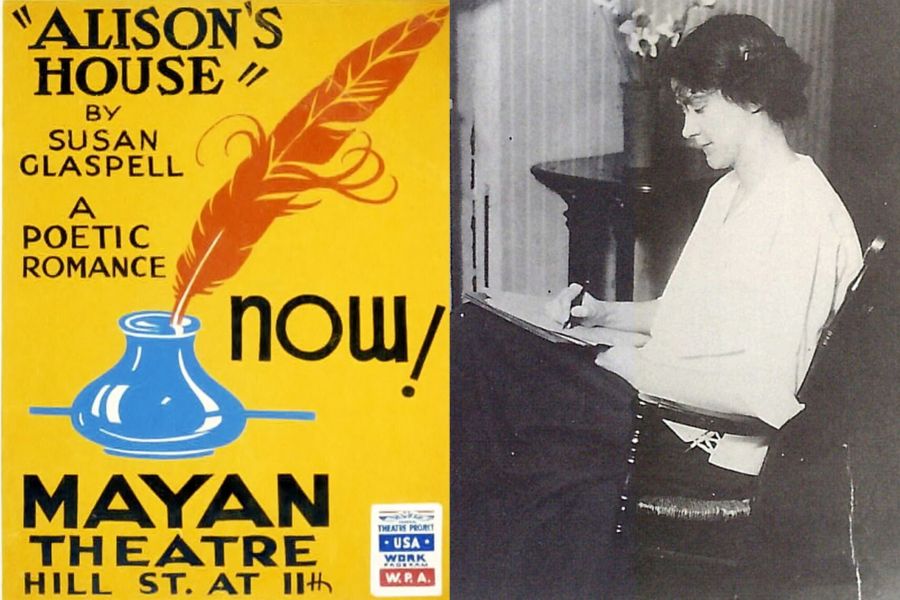
Playwright Susan Glaspell was born on July 1 in Davenport, Iowa. Glaspell grew up on a farm and spent her young adulthood as a reporter and fiction writer, until transitioning to dramatic writing in her thirties. Alongside her husband, George Cram Cook, Glaspell established the Provincetown Players in the summer of 1916 while living on Cape Cod. The Provincetown Players, a noncommercial company known for its theatrical innovation, moved with the couple between the Cape and Greenwich Village, intersecting with the paths of other notable dramatists like Eugene O’Neill. Glaspell’s play Alison’s House, which was loosely based on the life and work of Emily Dickinson, earned her the 1931 Pulitzer Prize in Drama and she later served as director of the Midwest Play Bureau of the Federal Theatre Project for two years. By the end of her life in 1948, Glaspell’s total literary output included about 50 short stories, nine novels, and 14 plays, with feminist themes and class scrutiny being commonly found across her work.
1961 (65 years ago)
A production of Jean Genet’s The Maids directed by Andy Milligan ran at the preeminent Off-Off-Broadway venue, Caffe Cino. Milligan—who was also an actor, costume designer, and dress shop owner—reportedly incorporated viscerally-realistic violence, a lesbian sex scene, and an assortment of red roses (one of his theatrical calling cards) into the show. Following his directorial rendition of The Maids and a series of other equally radical and impactful productions at the Cino and La Mama, Milligan transitioned into filmmaking.
1986 (40 years ago)
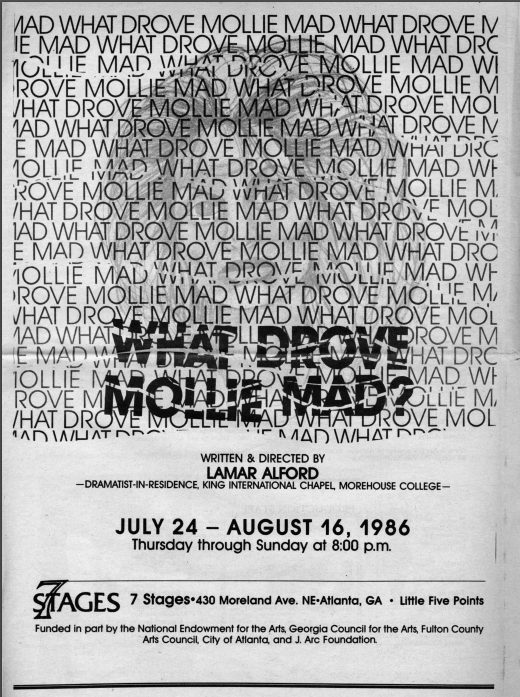
On July 24, the play What Drove Mollie Mad? by Lamar Alford had its world premiere at 7 Stages in Atlanta. Alford, an actor-singer-playwright-composer, frequently explored the Black American experience and civil rights through his plays and musicals and was serving as Dramatist-in-Residence at Morehouse College at the time of this run. A sampling of Alford’s other theatrical achievements include performing in the original Broadway cast of Godspell (1971), being a member of La Mama’s Great Jones Repertory Company and Tom Eyen’s Theatre of the Eye Repertory Company, writing the musicals Thoughts (1972) and Martin (1988), and founding the King Players theatre group at Morehouse in 1982.
2016 (10 years ago)
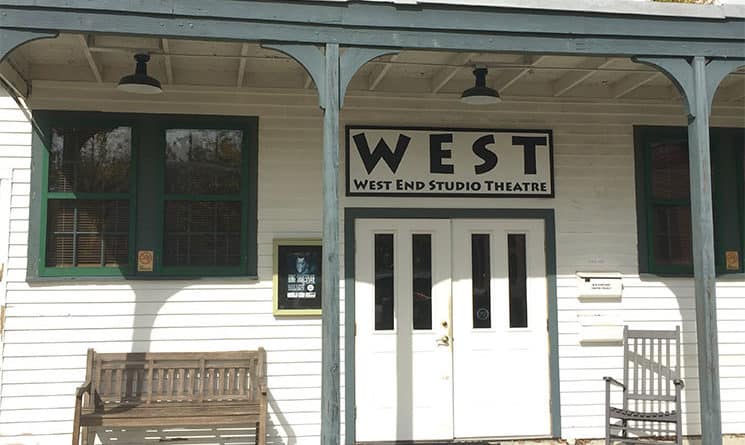
On July 1, New Hampshire Theatre Project (NHTP) became the primary tenant of the West End Studio Theatre building in Portsmouth, making it their official home base. NHTP is an applied theatre company founded in 1984, and has bounced around various office and studio spaces over its four decades as the company primarily pursued educational and community-rooted endeavors. The West End Studio Theatre contains a 50-seat black box space that can support NHTP’s MainStage Productions and their Elephant-in-the-Room Series, which uses theatre to facilitate community discourse surrounding topics like mental health, identity and belonging, elder care, and addiction. NHTP plans to eventually buy the West End Studio Theatre.