Almost alone among American presidents, our 32nd, Franklin Delano Roosevelt, is still remembered not for a single incident or tic but for a cluster of iconic landmarks and attributes: the New Deal and World War II, the ivory cigarette holder and pince-nez glasses, fireside chats in an arch mid-Atlantic accent, the wheelchair.
The last of these is recalled almost in spite of his best efforts: Struck by polio in his late 30s, FDR used braces and a wheelchair for the rest of his life, but forbade reporters from taking photos that showed his disability.
“Friends of mine from the disability community are like, ‘I hate FDR,’” confessed Regan Linton, who stars in the new interactive show, FDR’s Very Happy Hour, which she co-created with director M. Graham Smith, and which kicks off a national tour at the Denver Center for the Performing Arts, Oct. 14-Nov. 1. “They feel he set us back so far, because he wasn’t open about it.”
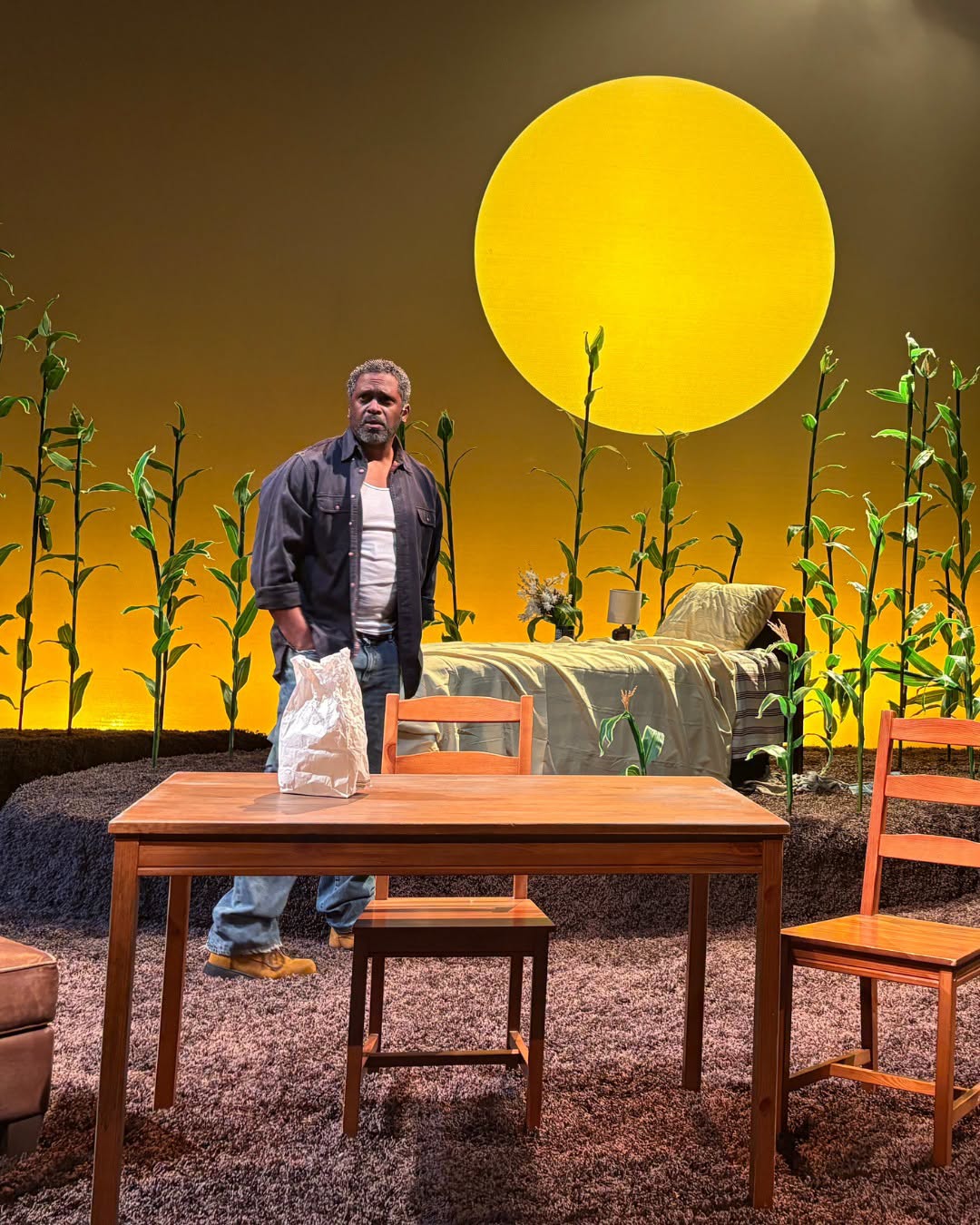
But Linton, who uses a wheelchair, wanted to create an original piece that highlighted a disabled role model. And for other reasons—his eventful life and voluble personality, as well as some of his character flaws—FDR seemed like a compelling stage character. With Smith, Linton has crafted a show that takes full advantage of Roosevelt’s chatty conviviality to include game-like elements, in which audience members are encouraged to talk amongst themselves, and to name and solve civic problems. Crucially, as the show’s title promises, drinks are also free-flowing (mocktails available).
“Regan and I felt like we hadn’t seen enough immersive experiences where the audience space was accessible,” Smith said of the show’s creation. “I had seen performances where disability was a feature of the creative team, but not as deeply thought about in terms of how the audience would experience the show.”
Access, then, was the pathway to engagement. And who better than a practiced politician to do crowd work?
Said Smith, “One of my favorite things about watching Regan do this show for different audiences—or when I’m not there, I have never been so eager to read a performance report in my life as a director—is that there are so many moments of the show where Regan does crowd work with the audience as FDR, and all of these improvisations occur. And more of FDR’s character kind of gets written every single performance as an audience throws her a wild card, and she deals with it in character. They’re just gems, and I just feel like Regan could do that forever.”
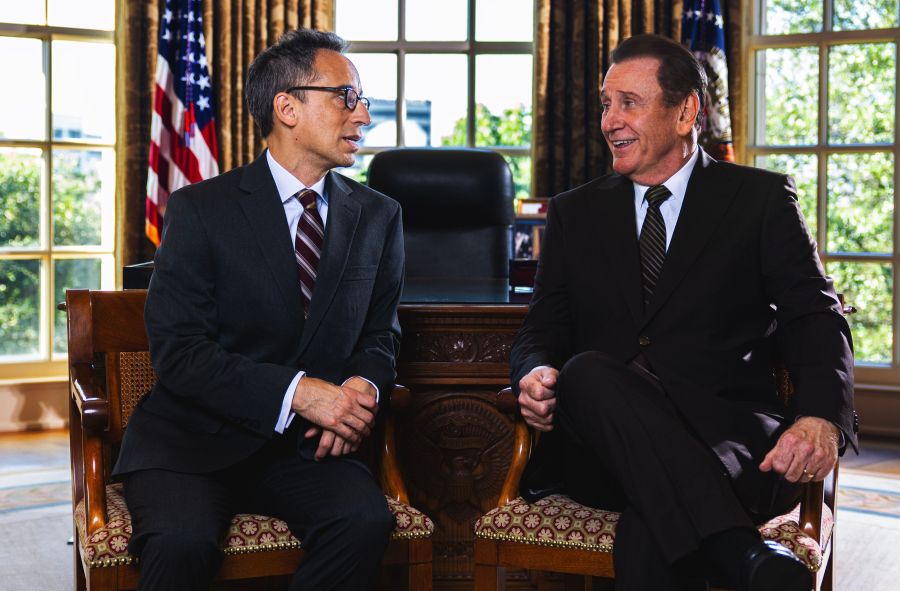
Apart from the participatory segments, the show has a collage-like structure: scenes with the ghost of James Madison, with ecological avatar Smokey the Bear (created by the U.S. Forest Service in 1944), and with FDR’s wife, Eleanor (all three played by the versatile Deaf actor Alexandra Wailes). All these elements distinguish FDR’s Very Happy Hour meaningfully from the familiar presidential one-man show genre (Jerome Alden’s Bully, about Teddy Roosevelt; Donald Freed and Arnold M. Stone’s Secret Honor, about Richard Nixon; Richard Hellesen’s Eisenhower: This Piece of Ground).
And the disability that FDR seemed to want to deny was, perhaps ironically, the way into the role for Linton.
“In theatre, currently and historically, there’s not a comprehensive understanding of disability as not just a circumstance, or a prop, or a costume piece, but as a cultural experience,” said Linton, who has served as artistic director of Denver’s disability-focused Phamaly Theatre Company. “But that is my way into FDR, and I feel like I have an incredibly deep understanding of him in all facets, as a leader and as a person, because of our shared experience of going through that fundamental change in identity.”
Though FDR’s policies weren’t uniquely disabled-friendly as a result of his experience, he did preside over progress in disabled veterans’ care, in part due to the onset of WWII. And he so relished his time at a resort in Warm Springs, Georgia, alongside other disabled folks of all ages and classes, that he built a “little white house” there.
“That was in one of the most impoverished counties in the country,” said Smith. “And spending time there really opened his eyes to a different socioeconomic experience that I think you could really see addressed in many of his policies after that. I think it’s always been a part of Regan’s formulation of the character that FDR’s disability is his leadership superpower—the thing that enabled him to empathize and understand people who didn’t come from the background he came from.”
Remarkably, this happy hour also makes time for a less happy subject: Executive Order 9066, which ordered the internment of Japanese Americans during WWII. The show makes no excuses for this racist policy, and even gives FDR a kind of timeout while his wife, Eleanor, asks the audience to write down their “complicated truths”—the contradictions they carry. Unlike some of the other participatory elements, these slips of paper are not shared aloud but handed in and posted anonymously outside the show afterwards.
There have been some remarkable and vulnerable revelations in these, Linton said. Things like, “I’m caring for my husband who’s dying, and I don’t like it,” or “I’m gay and nobody knows,” or one that really struck her, from a high schooler in Kentucky—the show had its premiere at Actors Theatre of Louisville—who wrote, “I’m going to work on an oil rig, and that’s going to be my life.”
Imagine a president, let alone an openly disabled one, getting folks to unburden themselves of intimate truths, not to surveil and punish them but to welcome, even celebrate their vulnerability. That wasn’t the real FDR’s legacy, exactly, or that of anyone to follow him (except maybe Jimmy Carter?). But if the theatre isn’t at least partly a place where we can dream of what’s possible, I don’t know what it is. Can we drink to that?
Rob Weinert-Kendt is editor-in-chief of American Theatre.

Support American Theatre: a just and thriving theatre ecology begins with information for all. Please join us in this mission by joining TCG, which entitles you to copies of our quarterly print magazine and helps support a long legacy of quality nonprofit arts journalism.