
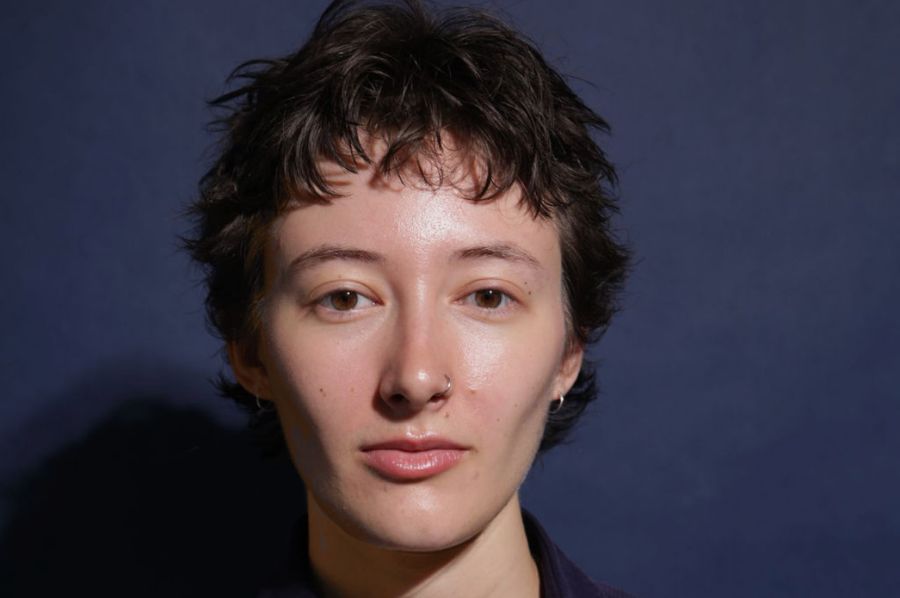
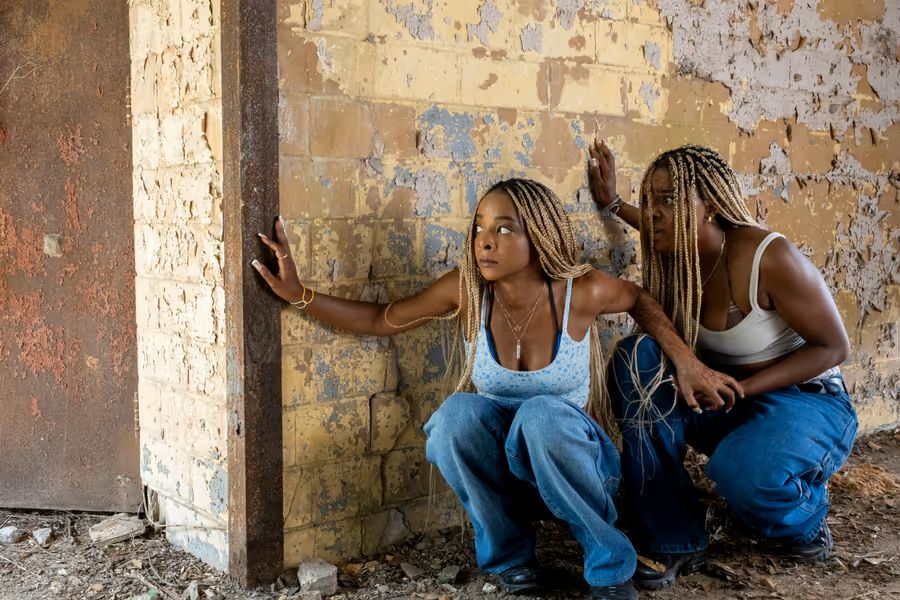
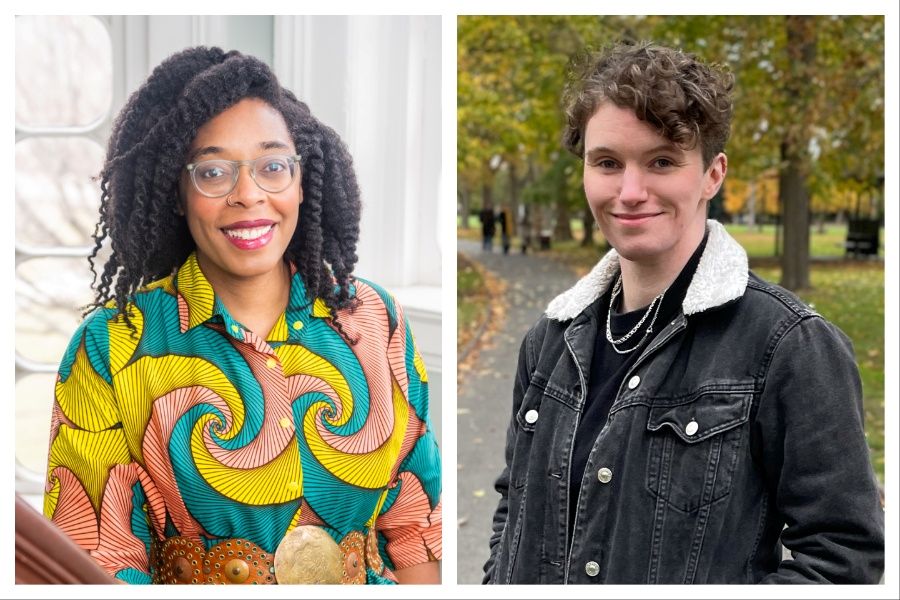
Yes, it’s a play named for a kind of mouse trap, but it’s got nothing to do with Agatha Christie. Nadia Hopkins’s Humane Traps, the recipient of this year’s Relentless Award, is a weirdly funny, sneakily ambitious and moving five-hander she first wrote as part of her honors thesis at Connecticut College. The 24-year-old writer and performer receives the honor in the 10th iteration of a prize established by the American Playwriting Foundation in memory of Philip Seymour Hoffman, and designed to celebrate “fearless, honest storytelling with the largest annual cash prize for unproduced work in American theatre.” The $50,000 prize kicked off memorably in 2015 with two influential co-winners, Clare Barron’s Dance Nation and Sarah DeLappe’s The Wolves, and doubled down the next year with Aleshea Harris’s blistering Is God Is. It now honors musicals every other year.
Indeed, The Wolves played a part in inspiring Hopkins when she saw it in Boston in high school. “At the time,” she said in an interview this week, “it felt like the craziest play I’d ever seen. I wanted to be in it.” Starting with a high school theatre-devising class, Hopkins went on to study playwriting at Connecticut College with Kenneth Prestininzi, and took advantage of the rich theatre scenes in Boston, where she grew up, and Philadelphia, where she lived for a time after college. She now lives in Ridgewood, Brooklyn.
This year’s Relentless finalists included Regan Moro (Nazi Mind), william o’neal ii (Gottesfehler), and Matt Thekkethala (Vulturine), each of whom were awarded $2,000. Along with Hopkins they’ll be recognized at a ceremony and performance for the award, Nov. 16 at Theatre Row on West 42nd Street in New York City.
I spoke recently to Hopkins about her play—in which a young woman, Charlie, is sent to stay with an aunt and uncle, Julia and Rick, who are facing both an out-of-control mice infestation and Rick’s imminent demise—and about the award.
ROB WEINERT-KENDT: Congratulations! Your play is very messed up, in the best way. I understand it’s your first full-length?
NADIA HOPKINS: Yes.
And it started with the mice, right?
Yeah. At a Quaker camp where I used to work, every summer we’d get there and it was infested with mice. I think a few summers ago, it just struck me that this inevitability—that we just accept that mice are going to tear through our lives—felt similar to the way that death is inevitable. The way death is both so expected and also so surprising every time it happens is exactly how it felt coming across those mice every summer. So initially the play was mostly about the mice, because I was so fascinated. In a hardware store I saw a humane trap, which I’d known about, but I’ve never known anyone to use it. Like, what kind of person, whose house and pantry are being infiltrated by mice, is wanting to solve this problem humanely? It was both ridiculous and kind of sweet to me.
The dynamic between Julie and Rick emerged out of that. And then, as I was writing those scenes, it kind of came to me: Oh, Rick is dying. And there’s this way they’re dealing with the bodies of the mice that is actually them trying to figure out how to deal with Rick’s body and how to deal with the physical state of dying.
Where did Charlie come in, then?
I’ve spent a lot of time working with young people, so that’s a really interesting type of character to me. And with all of my writing, I’m interested in the point of view of the character who’s kind of walking into something, witnessing something. That’s Charlie: She comes into this kind of mess of a home that’s being consumed by mice and by her aunt and uncle’s issues with each other as they face end of life. What’s so exciting to me about her is that she’s not afraid of a lot of things that people are afraid of; death and infestation are fascinating to her, even exciting. Because she has such a close relationship to the natural world, death is actually something that is full of potential and transformation for her.
In the press release about the award, one of the judges, Branden Jacobs-Jenkins, says some lovely stuff about your play—he calls it “challenging, fearless, passionate”—and name-drops Albee, Durang, and Shepard. As I read the play, I was thinking of Albee, particularly plays like A Delicate Balance, which have a sort of realistic surface, while very weird, possibly unexplainable things are happening.
While I was writing it, I was like, “I’m writing a realism play,” and then as I started to read the scenes out loud with people, I was like, “Oh wait—this is kind of something else.” Honestly, I’m excited by how there are moments in the play that almost feel a bit sitcommy, like, we know these archetypes, the uptight aunt and the grumpy uncle. That feels like Durang. That’s intriguing to me, because then there are these moments where they sort of explode into something more poetic, right? So it’s a play that can stretch in a lot of different directions. I think I see the Albee connection in that the characters are making decisions that reflect a bit more how it feels to be a person, and not as much how normal behavior always functions. What we maybe want to say, these characters do say.
That’s a great segue to another question I have. Before I learned that Thomas Bradshaw was also one of the judges, your play reminded me of his work in the sense that your characters just say the subtext, or say what they’re feeling, though they’re not necessarily reliable narrators of their own experiences—there’s still a lot of mystery and contradiction going on.
I agree. I think Caryl Churchill and Sarah Ruhl are other playwrights who also do that really beautifully, where there’s so much truth that’s revealed to the characters themselves as they speak aloud. My characters do often just say what they mean; it’s not really a play about a deep secret that someone can’t say, which makes it a bit different than Albee or some other 20th-century-style plays. These characters are saying what they want, but they’re still coming across the problems of their environment and each other. And I think the stark differences in desire between characters can create these moments of utter shock and spectacle that subtext can’t, which is something Bradshaw achieves so incredibly in his work.
Further Reading
You say the play could stretch in different directions. Was there a full staging last year at Connecticut College as part of your final project? How did it live onstage?
I directed and co-produced a full staging of it. It was truly incredible to learn so much from an audience, and from incredible actors about what the play demands. It’s the type of comedy where I can’t necessarily know what jokes are going to land and what moments are going to be sort of more emotional for an audience. I remember the moment when Charlie brings the mouse out to the backyard, and she comes back in and says that the mouse is dead. I was like, for sure, that’s a hilarious moment. And when it happened, the audience was like [gasps]. In rehearsals, it had been funny. Similarly, there were moments I was like, “That was so heartfelt,” but with an audience, everyone was laughing. So that’s just such a cool thing to learn; you’re always surprised by those kinds of things.
It’s also why this award is such an exciting opportunity; I’m so grateful to get to continue to see the life of the play through other artists and learn about it. Morgan Green is directing the reading for the ceremony, and I’m working with new actors on it and so I’m sure seeing totally new people approach the script is going to show me a whole other world of Humane Traps.
Backtracking for a second, how does a humane mouse trap actually work?

I actually used one of them in fifth grade because I wanted a pet mouse; I kept it for a few days. It goes in, it crawls in; it’s like a little metal thing with a ramp. The mouse goes up and then it tips it down and closes. So the mouse is still living in there, but it’s horribly trapped. What happened to my mouse—or at least this is what my aunt, who was visiting, told me—is that it died of loneliness, which really stuck with me as a kid. Maybe that is actually the origin of this play, now that I’m talking to you about it.
So it’s not really humane. And you would have to do it many, many times if you had an infestation. That’s what’s so interesting about Julie doing it; she’s kind of trying to stall and figure out how to solve Rick’s death, and it’s the same thing she’s doing with the mouse—like, what is the end goal here? But also this is how all of us procrastinate the sort of loss we’re going to have to feel eventually.
You have a solo show that you performed last year in Philly. Tell me about that.
It’s called Fuck dada. It’s another dark comedy and it’s about going through a Duchamp exhibit at MOMA with someone that you’re also trying to break up with. The speaker is dating someone who loves Duchamp, loves the toilet, loves the bicycle wheel, all of it. The speaker doesn’t, but for some reason keeps going back with her girlfriend. So it uses the principles of Dadaism, which I’m really excited by. And I’m just interested in thinking about, like, what is pleasurable about heartbreak? As in Humane Traps, there’s a lot of pleasure to be found in spite of, or even through, grief, loss, and the sort of disgusting parts of life. Similarly, I think this solo show is exploring what is sort of enjoyable about the process of grieving someone that you’re trying to also say goodbye to.
So you’re still also performing?
I mean, I studied acting. I love acting. There are certain types of characters I love to play. A few years ago I played Marjorie in The Moors by Jen Silverman. The spikiness of her plays and her characters is something I love so much. I get a lot of inspiration from that for my own plays as well. But yeah, my focus is writing these days.
I want to close by asking what it means to get this award specifically.
Last night I was watching the movie adaptation of Is God Is by Aleshea Harris, who won the Relentless award in 2016. And I was just like: This story really trusts and believes that the outrageous and the truthful can live in the same story. I had so many moments, as many playwrights do, when I was working on Humane Traps and worrying, “Is it too much? I’ve never seen a play do that.” But I think this is an award that really celebrates the courageous and the original, and it’s an incredible honor to be part of a lineage that has really achieved that in so many different ways.
Rob Weinert-Kendt (he/him) is the editor-in-chief of American Theatre. He also reviews theatre and culture for America magazine.

Support American Theatre: a just and thriving theatre ecology begins with information for all. Please join us in this mission by joining TCG, which entitles you to copies of our quarterly print magazine and helps support a long legacy of quality nonprofit arts journalism.


