The national magazine for the American not-for-profit theatre
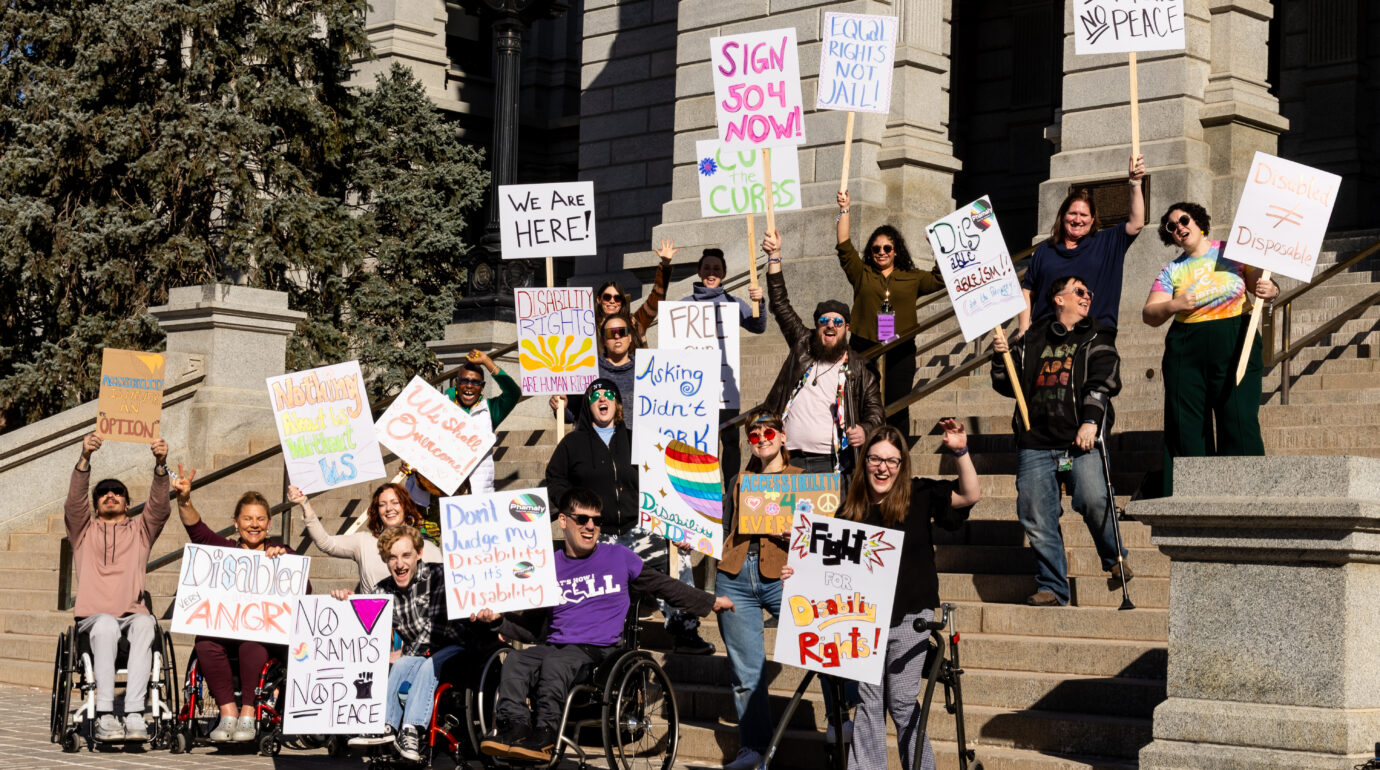
“504: The Musical” cast members and Phamaly community members at the Colorado State Capitol building during Disability Rights Advocacy Day. (Photo by RDGPhotography)
“We say ‘nothing about us without us,’ not because it’s the right thing to do, although it is. We say it because it allows the best stories to be told,” said Ben Raanan, artistic director of Denver’s Phamaly Theatre Company.
With 504: The Musical, which runs Aug. 6-23, Phamaly and Ranaan are revisiting an important, often overlooked piece of history: the 1977 San Francisco 504 Sit-In. For 28 days, disabled people and allies occupied the city’s Health, Education, and Welfare (HEW) offices to protest its failure to implement Section 504 of the Rehabilitation Act of 1973, which prohibits discrimination against disability in federally funded programs.
The sit-in wasn’t just brilliantly effective—HEW signed onto Office of Civil Rights regulations without modifications—it was also momentous for its organizing across social movements. As book writer and lyricist Abbie Goldberg explained, “The big reason that the 504 Sit-In was able to last was that they were fed by the Black Panthers and supported by unions, LGBTQ groups, churches. Of course, it wasn’t perfect, and we try to both celebrate the intersectionality of that moment and explore the complexity as well.”
Said composer Mason McDowell, “Protestors had to come to terms with the fact that they weren’t exactly on the same page. There’s the overarching nemesis, which is the outside world. But then there are the preconceptions about a group or another within their ranks, that they have to find a way to resolve on their own, and coalesce together at the end.”
The dramaturgy of difference was likewise part of the show’s development: When actors asked for specific cultural signifiers or truths to be lifted in readings and workshops, the creators personalized lyrics for each iteration. Both onstage and behind the scenes, 504 shows how justice and community can intertwine.
Support American Theatre: a just and thriving theatre ecology begins with information for all. Please join us in this mission by joining TCG, which entitles you to copies of our quarterly print magazine and helps support a long legacy of quality nonprofit arts journalism.