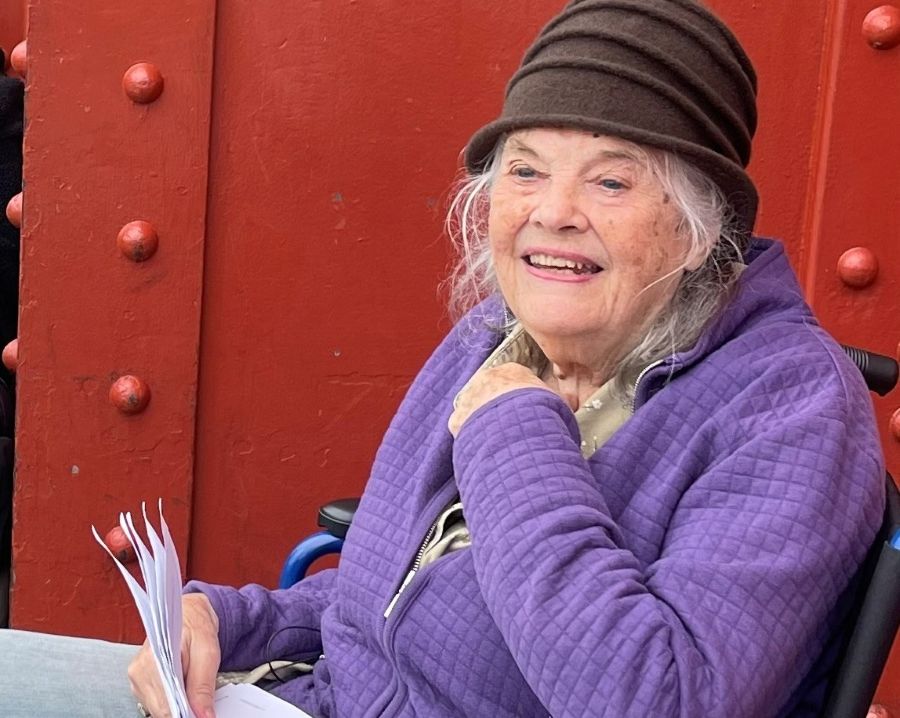
LYNDSEY BOURNE: I’ve been having so much fun revisiting some of your work. I watched an archival recording of Buried Child earlier this week, and The Trip to Bountiful.
LOIS SMITH: I think those are two of my best works.
In Buried Child, especially, the final reveal in the third act—when we learn about the baby as you’re going up the stairs, gripping the side of the banister with both hands and your back to the audience—it’s devastating. It’s rare to be so moved by back acting.
Discovering that was very specific and very real. Gary Sinise, who directed it, was so fierce, holding everybody so tight, we’d go crazy. Afterwards, I felt if he hadn’t done that, we never would have gotten to where we got. I felt free because we were so grounded. And he was delighted at the things that came forth.
The Trip to Bountiful too. Carrie Watts is such a physically and emotionally demanding role. I kept thinking, for an old play, it feels very contemporary.
Oh gosh, yes. What a beautiful play. Horton [Foote] was with us all the time, and he loves actors—he was a delight. He’d been working on that play for 50 years. In ’53 it was on television and Broadway the same year. Then, of course, he adapted it for the film. The original had something like five huge sets and three acts. In 2005, when we did it at the Signature, Harris Yulin, the director, proposed we cut it down. We did it in 90 minutes without stopping. Horton was all for it—he made it happen. It was so exciting.
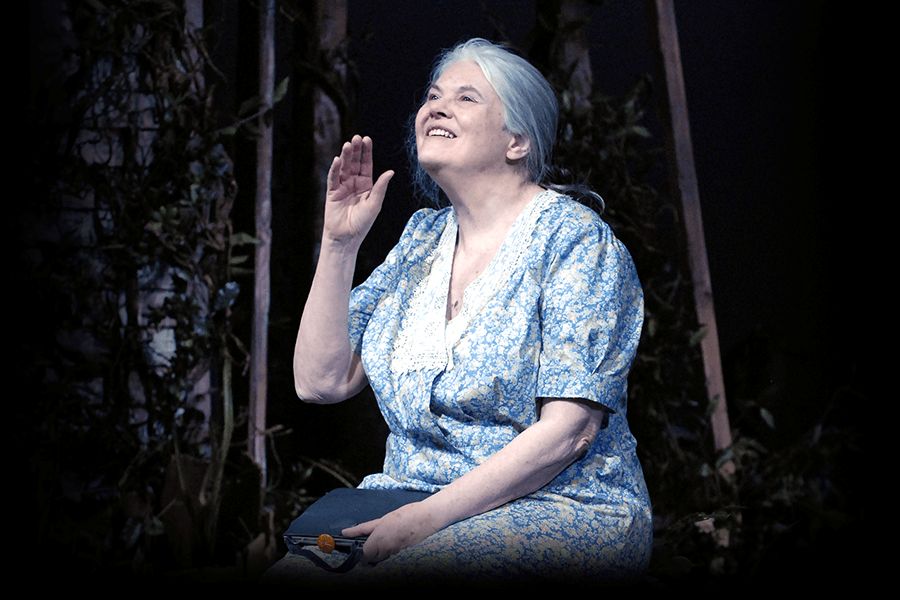
I’d love to go back to the very beginning of your career. You moved to New York in 1952, is that right? Were you scared, coming here on your own, all the way across the country for those first few months?
No, I wasn’t scared. I was excited.
You were ready to start your life.
New York seemed like the place for me. I was at the University of Washington in the Drama Department. There were two theatres on campus performing plays year-round with student casts. Every play ran for six-week runs, six nights a week, to a paid audience. It was like being in a stock company or something—a kind of theatre training that was beyond classwork.
We drove from Seattle to New York in a little old Ford that boiled over during the day, so we drove at night. It was really crazy.
What were you hoping for when you moved here? Were you thinking long-term about your career, about the kind of life you wanted to build?
I don’t think I had that kind of thought. I wanted to work—and I was lucky. When my husband and I first came, he was going to Harvard. We stayed a month in a little rented room. I worked all night sorting checks in a bank on Wall Street; he had a filing job. I looked for acting work during the day.
That summer, I got my first job, a play on Broadway called Time Out for Ginger; Melvyn Douglas played my father. Suddenly I had a Broadway salary. In those days it was nothing like what it is now, of course, but it was more money than I’d ever made in one day. I came here hoping to work and I lucked out. There was a lot of theatre going on then. Off-Broadway didn’t yet exist, but there were a lot of plays on Broadway, there were showcases, television dramas—I don’t mean series but plays filmed live for television. That’s how I got started in television.
I don’t want to presume, but it must have been difficult in the 1950s to be a woman and an actor, and then also a mother. What was it like for you?
Well, you know, it’s me, all those years, all those 70 years. So it’s hard to say. I was lucky in that there was a lot of work. And sometimes, like right now, there isn’t. By the time I’d been here, I think, two years, I had done some television work and a film, which meant I could make a living—which you can’t do in the theatre, or almost can’t.
Was it steady work?
Oh, never. It’s not steady.
Are there roles you feel most connected to? Which plays still stick with you the most?
It’s interesting, you immediately picked two of them: The Trip to Bountiful, Buried Child. Also The Grapes of Wrath. I think they were my best work. They were examples of what it is when it’s good—when it’s the real thing. When people are working together with skill and trust and love. So many things have to come together. And in those cases, they did. You can’t do it alone. Though as a playwright, you probably feel more than others that you are alone, at least for a good part of the process.
Just the first half, really. I love being in rehearsal. I’m just a playwright so I can get to the rehearsal room, you know?
It’s the best place.
Do you feel your approach to a rehearsal process changes with each role, with every play, whether it’s a new play or a classic?
It’s always different. I mean, I’m speaking now ideally and about my best experiences. Of course, it’s not always wonderful. It’s very hard. And it hasn’t always worked beautifully, which has to do with everything: the play, the actors, the director. This is a slightly different subject, but when Glynis Johns died this year, I read an obituary where she said, “I think my best thinking is in the theatre.” That’s exactly how I feel.

Looking back, was there a decade in theatre that feels most meaningful to you?
My first decade. That excitement—everything was new. The fact that I got work quickly and in all three mediums meant that I could keep working. In ’55 I did a Broadway play, The Young and Beautiful; Sally Benson wrote it based on F. Scott Fitzgerald stories. That was very early in my career—fun. By then we were living in Princeton; my husband was a classicist and taught at Princeton. My daughter was born there in ’58. I had various jobs during that time, Broadway plays. Sometimes they would close quickly.
Did your daughter come with you when you worked, when you traveled for jobs?
When she was a little baby, I remember a job when I was carrying her in a handbag practically, and my mother from Seattle came down to L.A. and babysat while I was doing a television show there. That happened more than once. Then in the ’60s, we lived in Philadelphia; my husband’s next job was at Penn. I worked for Theatre of the Living Arts. André Gregory was artistic director.
You’ve mentioned a few directors already—Gary Sinise, Harris Yulin—and how much their approaches shaped those productions. Are there other directors or collaborators you’ve especially loved working with—people who really understood you or lifted you up in the work?
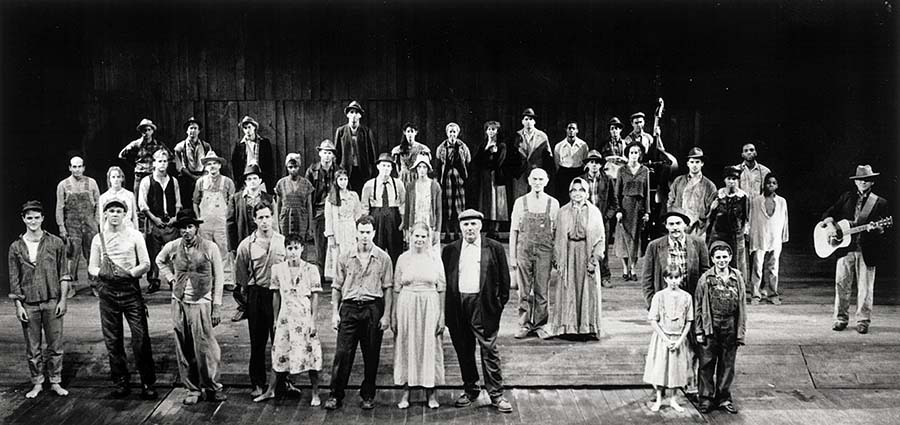
Frank Galati, certainly. I first worked with him in The Grapes of Wrath at Steppenwolf. I think we did three more things together.
What was it about him?
His presence. His manner of working. Who he was. I remember when we did The Grapes of Wrath in ’88, he hadn’t been a member of the company very long. He was a phenomenon in Chicago, and they were very pleased that they lured him to come and be a member at Steppenwolf. This was a great big cast; everyone was working at the top of their game. They had gotten my name from asking around because they didn’t have a Ma Joad in the company. Anyway, it was a huge production. Everybody felt a lot of agency; nobody was shy. It was my first experience with him and with the company. It was really falling in love.
I’m also thinking about how important and meaningful working with Irene Lewis has been to me.
Tell me about her.
She was artistic director at Baltimore Center Stage. I first met her when she cast me in Escape From Happiness by George Walker. Then she asked what I’d like to do. I mentioned Shaw and The Cherry Orchard. She directed me in Mrs. Warren’s Profession and then as Ranevskaya.
She used all of the allotted rehearsal time—and used it well. I find this less and less the norm. There is no substitute for what happens during rehearsal. There is no substitute for the experience and growth of the production of a play during the rehearsal hours together. She exemplified an understanding and practice of the art of rehearsal. My times of working with her were probably in the 1990s.
At what point did you move back to New York?
It was the beginning of the ’70s, when we were living in Philadelphia, and my daughter and I moved back to New York. That was really kind of scary.
You were a single mom, is that right? How did you manage that?
One of the first things I did coming back to New York was a Joyce Carol Oates play, Sunday Dinner. Curt Dempster directed it; this was right around the time he started EST. Then, fairly early on, I got a job in a soap opera. And then another. For a long time, I had several running jobs in soap operas—hardly what I would most love to do—but my goodness, Monday to Friday, daytime hours! Amazing. That was a real break, you know? Not in my sense of myself as an actor, but as an actor who was working, which was very important. I was making enough money to comfortably live on. That was how I managed as a single mom in those early years, in her school years.
How important have your friendships in the theatre been—to sustaining your career, your resilience, to moving through all these decades?
Amazingly important. Harold Clurman was another director I loved and a very good friend. I first worked with him in Orpheus Descending, probably. Harold introduced me to Stella Adler and her daughter, Ellen, who he had really raised with Stella from the time she was with the Group Theatre through all its years. Ellen and I both had daughters, born, I think, a day apart.
What was your daughter’s relationship to you being a working actor? Did she ever talk about it with you? Was she thrilled by your job or was it just what Mom did?
I think she was interested. I remember when I was in the Theater of the Living Arts, she was in grade school, and it was the first time that my husband had brought her to see a play all the way through—a modern-day version of The Misanthrope. I must have been about 35, I’m guessing, something like that. Afterwards she said, “Here you are, getting your gray hair, and you were so bouncy.” So that was my first review from my daughter.
That’s so good—that’s my favorite review I’ve ever heard.
Isn’t that wonderful?
When you’re on a stage, what’s your favorite sound to hear from an audience?
Oh, gosh. You know, it could be silence. It could be laughter. As long as they’re listening.
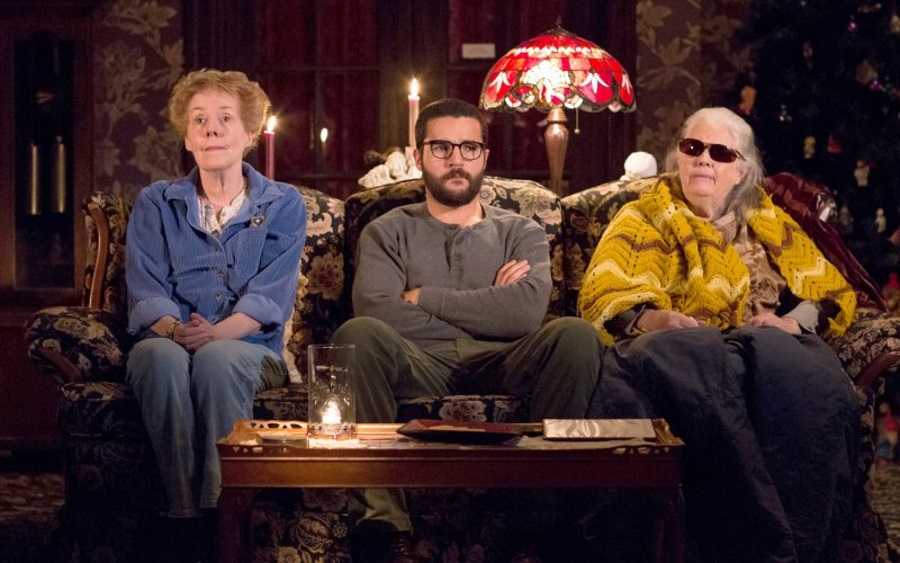
I can think of a time an audience just went crazy for you: In Annie Baker’s John, when you came out to do that speech at the start of the second intermission.
Wasn’t that fun?
Amazing. Everyone’s just leaving and then you come out from behind that big red curtain and you start talking.
There were people afterwards, who were so mad they missed it. They didn’t know it was going to happen; they were already gone.
I almost missed it. And then I heard your voice and ran back inside. That year, 2015, you also had Marjorie Prime.
It was a crazy year. We did Marjorie Prime at the Taper and then, not long after that, I did a play at Steppenwolf, which Frank Galati directed, called The Herd. Then I came back to New York. I think that’s when I first read Lily Thorn’s play, Peace for Mary Frances, and then I went straight into John and then straight into the movie of Marjorie Prime, and then straight—truly, the next day after we finished shooting—right into the Playwrights Horizons production of Marjorie Prime. I don’t think I’d ever had so much good, interesting, exciting work pile up on top of each other. But it was horrible because my beloved, David Margulies, was sick and getting sicker and sicker. He died during all of that; it was awful. I didn’t even understand for a while afterwards how much in shock I was through parts of that year. It was…It was really awful. It was wonderful, but it was awful. It was just one of those…one of those things.
It must have been overwhelming. And to have so much attention on you at that time, in your career…It really was a huge year for you.
Yeah, it was a huge year.
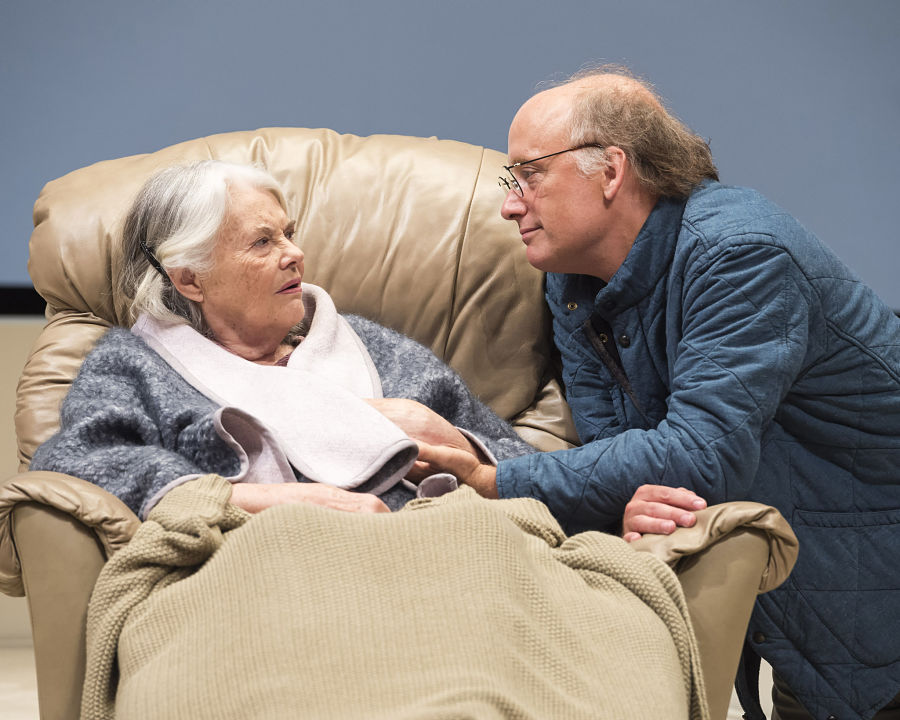
I think Marjorie Prime and John are two of the most important plays of the last 25 years. Certainly, two of the most memorable nights I’ve spent in the theatre. Do you still see a lot of theatre? I know I’ve spotted you in quite a few audiences.
After the pandemic, I sort of made a point of it. It’s one of the most important things I do.
What do you look for in a play when you’re a member of the audience? What do you hope for when you go to the theatre?
I don’t know if I go with a hope; I think I go with a habit. Still, there’s that little happy feeling, a hopeful feeling, at the beginning, right before a play starts, being there together. What do you hope for?
I think I hope I’ll be surprised.
Yes, surprise is one of the best things, isn’t it? I agree. We need it.
What are you thinking about these days? How do you like to spend your time?
I love to read novels. That hasn’t been as true lately. When The Steel Harp became a reality, I kind of stopped reading. I just spent all my time on that script. I don’t think I’ve ever been a hasty person, but I’ve become much more of a slow mover than I used to be. Everything is slower, I think. I take too long to read the Times in the morning.
But what’s too long?
No, you’re right. It’s a morning ritual. David and I always used to read the Times together in the morning; I think that’s part of why I continue doing it. That’s how my day begins.
Now I’m organized around social dates, theatregoing dates: dinner with friends, theatre with friends. I’m 95. Many things are different. I’m not as strong. But I can still work, and with pleasure, thank God. I just had a television job that dropped in for a couple of days. There were things I couldn’t do physically, but it turned out to be okay. I love working. I really do.
What do you hope for the future of the theatre?
I haven’t thought a lot about that. It’s hard to think about the future of theatre without thinking about what kind of world it will exist in. I guess I would say that the things most precious to me—the interconnectedness of people and experience, thought and concern—that they be present in the work. I don’t think I have a clear vision or hope for the future, except that it be…rooted.
Lyndsey Bourne is a Canadian writer, teacher, and doula working with The Doula Project. Her plays include The Second Body, Mabel’s Mine, and I Was Unbecoming Then. She teaches playwriting at Playwrights Horizons Theater School (NYU Tisch).