Since the start of the regional theatre movement, most nonprofit professional theatres in the United States of America have been led by white male artistic directors. Then, about a decade ago, something happened. As people’s artistic sensibilities expanded, audience demands for more diverse offerings increased, and community demographics changed, there seemed to be a sense of urgency around diversity, not only onstage but in the C-suite as well.
The global majority is expected to also become the majority in the U.S. population by 2030. From 2015 to 2021, directors Rebecca Novick and Evren Odcikin tracked artistic leadership changes across the country to see how theatre leadership positions would be filled in terms of gender and racial background. Around 2018, several theatre boards seemed to draw the same conclusion: Why not bring in an artistic leader of color, and/or a woman, and see what they can do?
Specifically, six of the nation’s most prestigious professional theatres brought in new leadership. In 2018, Maria Manuela Goyanes took the helm of Woolly Mammoth Theatre Company and Stephanie Ybarra was named artistic director of Baltimore Center Stage (BCS). In early 2019, Jacob Padrón took over at Long Wharf Theatre, and in summer 2019 came three more momentous turnovers: Robert Barry Fleming at Actors’ Theatre of Louisville (ATL), Nataki Garrett at Oregon Shakespeare Festival (OSF), and Hana Sharif at the Repertory Theatre of St. Louis (The Rep).
Padrón and Fleming are the first people of color to occupy the post of producing artistic director for their respective organizations, while Goyanes and Sharif were the first women and persons of color to hold the position at their respective theatres. At OSF, Garrett served as the first woman of color, though she had a white woman predecessor in the role, Libby Appel. Ybarra replaced a Black man, Kwame Kwei-Armah, named BCS’s first leader of color in 2011, who for his part had replaced a white woman artistic director, Irene Lewis.
American Theatre has chronicled this change theatre by theatre, as well as in trend pieces like “The Big Turnover” (AT, April ’19). A recent online Q&A with Ybarra, who left her post at BCS earlier this year, referred to the aforementioned artistic leaders as “The Talented Six,” evoking W.E.B. Du Bois’s “The Talented Tenth” essay, which suggested that the 10 percent of the most talented and educated Black people would advance the entire race—an analogy that also suggests the impossibly high expectations placed on these leaders of color, who in the years since they were hired have faced a seismically shifting theatrical landscape, as well as the unforeseen challenge of the COVID-19 pandemic.
The Art of the Possible

Until recently, the artistic director has been thought of as the singular person whose vision drives the programming and culture of a theatre. That idea has both eroded and expanded over the last 15 years. More often, season plans are collaborations among multiple departments at an institution, not the decision of a single person. And increasingly artistic directors are tasked not only with thinking about the art but also courting donors, building and maintaining boards of directors, boosting staff morale, and stating advocacy positions on a variety of issues impacting their communities.
It’s a big job, in short, and as such it’s often more than any one person can handle. At some theatres, this has led to the introduction of shared leadership models—something that most ethnically and culturally specific theatres have used since their inception. But many theatres still follow the singular leadership model. When, five years ago, the faces of those artistic directors began to change, so did their approach to the job.
When Jacob Padrón was hired to lead Long Wharf Theatre, he was excited to serve artists and the New Haven community at a theatre with a solid reputation for developing new work. In collaboration with Long Wharf’s board of directors, he set the goals of creating a more inclusive and welcoming culture, building stronger bridges in the community, and continuing to make great art. He and his staff successfully developed new programs to engage communities of color, diversified the board, and produced and commissioned new work by more women and people of color.
The 2020-21 season was the first one Padrón fully planned, and it included the world premiere of Torera, about a young woman who finds herself in the bullfighting ring; a reimagined staging of A Midsummer Night’s Dream; the Pulitzer-nominated The Elaborate Entrance of Chad Deity; Madhuri Shekar’s comedy Queen; and a revival of the beloved musical Jelly’s Last Jam. A bold slate, but not a huge departure from the theatre’s past.
Padrón’s season announcement was barely made when the COVID-19 pandemic shut down all theatres. Padrón had known going in that Long Wharf had fiscal challenges; indeed, the theatre had not been in the black for several years, according to their 990s. The inability throughout 2020 and most of 2021 to produce live, in-person shows, coupled with the acceleration of the trend of people dropping their subscriptions, exacerbated an already tenuous situation. Another hurdle: the cost of maintaining Long Wharf’s older building held a six-figure annual price tag.
So last year, Padrón and the board made the difficult decision to move out of their longtime space on Sargent Drive and offer a 2023-24 season at various spaces across New Haven. They had already experimented with this idea in 2021-22, partnering with local libraries, art galleries, and community centers to present scaled-down versions of their planned season offerings. They aren’t the first major regional theatre to take on an itinerant model: Atlanta’s Alliance Theatre did an on-the-road season in 2018 while their space was under renovation. Still, the decision to move out of the theatre’s historic location has made Padrón the object of much vitriol.
“We’ve had hurtful emails and phone calls,” Padrón said. “People called for my resignation. It can feel demoralizing, because I’m trying to support a theatre so it can be around for another generation. Tearing me down without giving the model a chance has been disheartening.”
The “Theatre of Possibility” season, as he’s calling it, launched in September with the return of “Black Trans Women at the Center,” a live-streamed festival of short plays. This has been followed by a one-woman salon theatre production of the stage adaptation of Joan Didion’s memoir The Year of Magical Thinking at local New Haven homes. Later in the season, Padrón will direct Martyna Majok’s Sanctuary City in partnership with TheaterWorks Hartford. As for the search for a new permanent home, that is not his focus right now.
“While the finances contributed to our decision to leave our building and adopt a new model, the decision was also motivated by a desire to lead with courage and bring theatre to the people,” Padrón said. “We want to use this time to listen, learn, and hear from the community. One idea we’re exploring is a ‘hub and spoke’ model, where we have an anchor space that could serve multiple purposes, such as a rehearsal space, scene shop, community site, etc.”
Moving Through Resistance
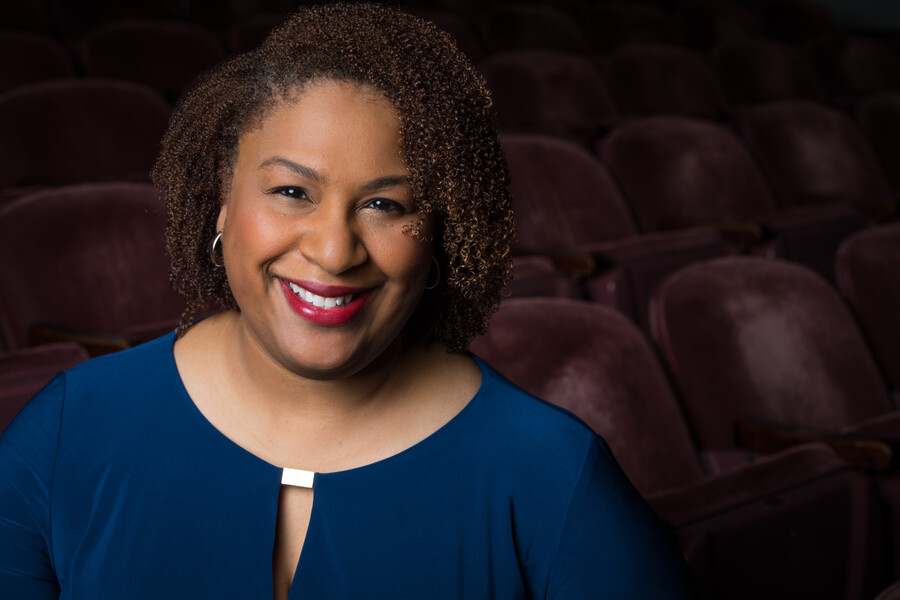
Often when artistic leaders of color come into a predominantly white institution, they are tasked not only with leading the organization but also with integrating it. This was the case for Sharif, who said that when she came to lead the Rep, there were two full-time staff members of color—despite the fact that, according to the U.S. Census Bureau, people of color make up more than 50 percent of the population of St. Louis. Now, there are a handful of people of color on staff, plus dozens more artists of color in the season.
Sharif’s mandate from the board of directors was to ensure the sustainability of the theatre for the next 50 years. She knew this meant bringing in new audiences, so she started her tenure with a huge block party to open the 2019 season. Sharif wanted to take the Rep from being seen as a “castle on a hill” to a place where the entire city of St. Louis felt welcome. She envisioned an outdoor stage with performances, plus food trucks, vendors, and other bells and whistles. Not everyone shared her enthusiasm.
“One of the tactics I and my colleagues have experienced is intentionally delaying progress on a project—they sit on it and then run out the clock,” Sharif said of resistance from the Rep’s predominantly white staff. “We got to a meeting where I said, ‘This is happening, so we can wait till three days before, or you can do it now.’”
“I only know how to move through and over problems as a Black woman in this body my whole life,” Sharif continued. “If I know what I’m moving toward is in alignment with purpose, then I just move through. Even if I have to put you on my back and carry you over the hill, I just move through.”
Move through the Rep did, welcoming more than 800 people to the block party, many of whom had never been to the theatre. Later that fall, Sharif’s production of Pride and Prejudice became the highest-grossing show in the theatre’s history. Sharif considers both events profound successes, though the victory was short-lived. The constant convincing of her staff became exhausting, she said, and then COVID-19 hit.
For Sharif, this meant shutting down, then returning to live in-person performances in 2021 at 28 percent capacity. The Rep decided to try a fully flexible model where it was first-come-first-serve best available seating for in-person shows. Sharif said this new model led to tremendous blowback from longtime subscribers, who started a letter-writing campaign threatening that they wouldn’t return without a guarantee of assigned seats. Ultimately, the theatre landed on a hybrid model that offered both a classic subscription to meet the demands of historic patrons, and a flexible model to meet the needs of new audiences, which is currently in place.
“More now than ever, you’re seeing artistic directors navigate the fiscal realities of reopening and meeting non-sustainable expectations,” Sharif says. “You have core audiences you need attached to an insolvent model, and you have new audiences who are drawn to the changes. Theatres are facing unknown circumstances, while trying to appease existing audiences and usher in new ones.”
Sharif is now facing these challenges at a new venue: Earlier this year she was named artistic director of Arena Stage in Washington, D.C., succeeding Molly Smith at a theatre where, though Sharif is the first artistic director of color, she is not the first woman leader but the third (after Smith and founder Zelda Fichandler).
Identity Politics or Politicized Identity

Developing stronger community connections was a top priority for Stephanie Ybarra when she arrived at Baltimore Center Stage in 2018. BCS had seen a person of color and a woman leader prior to her tenure, and both had programmed their share of edgy new work. But when Ybarra announced the theatre’s 2019 20 season, she said the response broke the theatre’s website.
The season included six mainstage productions, five of which were written by women or people of color. One of the highlights of the season was the Broadway-bound Thoughts of a Colored Man by Keenan Scott II, which was co-produced with Syracuse Stage. Like other leaders, including ATL’s Robert Barry Fleming, Ybarra also invested in providing virtual access to shows, an emphasis that proved prescient once the pandemic hit.
“The majority of folks were incredibly supportive, but sometimes the loudest voices are most negative,” Ybarra recalled. “Stakeholders asked me if the theme of the first season was race. They asked, ‘Why is it so political? White people need to see their stories too. When are you going to cast white people again?’” Ybarra realized that “people whose identities are politicized become political capital for people whose identities are not politicized.”
That first season was a bumpy one for Ybarra, who said she received hateful letters, emails, and phone calls on a weekly basis. It got so bad that she was ready to resign after just a year in the job. But the board of directors and staff, she said, inspired her to keep going, in spite of significant subscriber attrition.
This is not an uncommon pattern: Whenever theatres have a leadership transition, there are always people who fall off. Indeed, during significant changes, theatres can expect to lose about 10 percent of their subscriber base, which they can work over time to replace; many boards have no attrition survival plan when this happens. When the pandemic hit, the ground felt even shakier. At that point, Ybarra turned her focus from producing plays to keeping as many staff paid as possible, and her decision had ample board support in spite of the financial obstacles. And her decision earlier this year to leave BCS for a job as program officer in arts and culture at Mellon Foundation was not made in haste or rancor, she made clear.
This fall, BCS announced that Stevie Walker-Webb, who helmed the Tony Award-nominated production of Ain’t No Mo’ on Broadway, would be the theatre’s new artistic director. Walker-Webb’s previous BCS credits include Thornton Wilder’s Our Town, The Folks at Home by R. Eric Thomas, and Life Is a Dream, an adaptation of Pedro Calderón de la Barca’s play by María Irene Fornés.

Nearly 3,000 miles away, Nataki Garrett was met with skepticism from some quarters when she stepped into the producing artistic director role at OSF in 2020. Garrett’s first official season was programmed and planned by her predecessor, Bill Rauch, and produced by her: It included A Midsummer Night’s Dream, Peter and the Starcatcher, and The Tempest, but it also included evocative titles such as the world premieres of The Copper Children by Karen Zacarías and Confederates by Dominique Morisseau.
What neither Rauch nor Garrett could have prepared for, though, was the pandemic and the racial reckoning of 2020. The destination theatre economy of Ashland was especially hard hit by the former, as not only the festival but many businesses in Ashland depend on tourism dollars from multiple-ticket-buying theatre patrons to survive. For the 2021 season, Garrett and the OSF staff planned a hybrid season of in-person and streaming offerings that included a mix of Shakespeare and new works. She saw herself as continuing the legacy of her predecessors, but her programming choices were scrutinized from the start, she said.
“I knew the privilege of the position doesn’t turn a Black woman into a white man,” recalled Garrett, who left the job at the end of May in the midst of an emergency fund-raising campaign. “If they ever allowed a Black woman to be the overseer on a plantation, it wouldn’t make her the owner. I was clear that how people take in my natural hair, dark skin, and African name was going to be how they regarded the position. I prepared myself for that.”
But changing the skin complexion of leadership does not foreclose the pitfalls most theatres faced in the past few years, especially ones like OSF, which rely on repeat customers. According to the 990s, revenue decreased from $45 million to $25 million from 2019 to 2020, due to the pandemic closure. Garrett said OSF was forced to refund or voucher millions of dollars in tickets that had been presold; some of those vouchers were honored in 2021 and 2022, which also lowered revenue in those years. Garrett’s eight-show 2022 in-person season—a mix of Shakespeare, musicals, and new works—had trouble filling seats.
Over the course of the pandemic closure, which at OSF was from March 16, 2020 to July 4, 2021, Garrett says she raised $19 million, primarily from foundations and the federal and state governments. In her last month, she raised $1 million for the “Save the Season” campaign.
Meanwhile, Garrett said, she was facing headwinds with individual donors.
“Most of us who came into leadership in the last five years came into roles where the artistic director was seen as a social director for development, often stewarding the resources before stewarding the art, and making very wealthy people feel like the spaces were theirs,” Garrett said. “I believe the space is for the artist.”
Currently, most theatres receive funding from three sources: subscriptions and single ticket sales; individual giving; and foundation, corporate, and government donations. But with fewer guaranteed subscription sales and rising labor and supply costs, theatres have become more dependent on the donors with the deepest pockets and corporate gifts. Couple that with historic attitudes about people of color and women with money, and things get complicated. It seemed as if the theatre’s critics were looking for someone to blame, and Garrett became an easy target.
Garrett’s experience in Ashland was also marked by several instances of outright racism. She recalls someone calling her a “Black bitch” while she was unloading groceries from her car. Another time, a group of people sang “Dixie” beneath the window of her home. By the time she resigned in May 2023, Garrett says there was “a war waged against me on the NextDoor app.”
“Somebody opened up the doors to the theatre during August Wilson’s How I Learned What I Learned and demanded to see me,” Garrett said. “When I weighed my ability to be successful, it wasn’t there. I love the art of making theatre too much to work in a community where I’m simply being tolerated.”
Tim Bond, who was associate artistic director at the OSF in the 1990s, has been named as Garrett’s replacement. He has previously been producing artistic director at TheatreWorks Silicon Valley and Syracuse Stage. The 2024 season will include a series of solo performances, two Shakespeare classics, a stage adaptation of Jane Eyre, and the rock musical Lizard Boy, an assortment that exemplifies the piecemeal rebuilding the theatre has embarked on.
Experimentation and Resignation
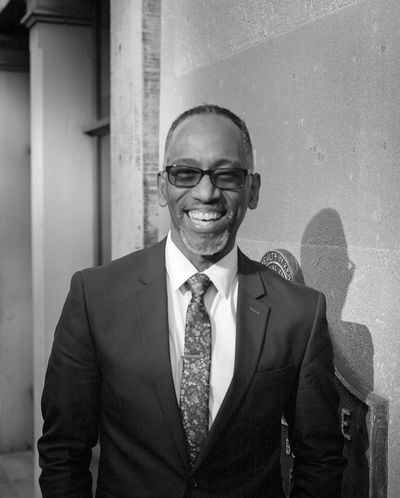
New audiences are what Robert Barry Fleming has been focused on since returning home to his native Kentucky to lead Actors’ Theatre of Louisville in 2019. He said he sees theatre as a place of belonging for all people to express themselves and explore their biggest dreams. At ATL, Fleming had initially planned a first season of mostly familiar titles, including Chasin’ Dem Blues, Dracula, Steel Magnolias, A Christmas Carol, and Romeo & Juliet.
Then, as with theatres everywhere, COVID interrupted business as usual, and a few months later, protests broke out over the killing of Breonna Taylor by Louisville police officers. Fleming knew he couldn’t continue programming as usual, so he went to work expanding the theatre’s offerings to include a robust digital streaming program, virtual reality experiences, and an original video game. His team also created community support programs for nurses and activists in southern Indiana and northern Kentucky.
“Most of us knew it wasn’t going to be an easy road, but what we couldn’t anticipate was two public health crises: COVID-19 and a gesture towards a racial reckoning,” Fleming said. “These crises made it necessary to re-center the questions, why we are doing this work, and for whom? Historically, theatre has had multiple and fluid societal functions, ranging from delighting and diverting the bourgeoisie to the ritualized sharing of cultural knowledge, spiritual insight, as well as prompting profound inquiries and investigations of what it means to be human.”
Fleming’s programming has met some resistance, but he may have received the most feedback—and flak—about a programming decision beyond his control. Since the late 1970s, ATL was known for producing the Humana Festival of New American Plays every spring, which grew into one of the nation’s preeminent new-play showcases. But after its iteration in 2019 and cancellation due to COVID in 2020, the Humana Festival as we knew it had its last hurrah as a digital-only festival only in 2021. It was announced in early 2022 that the Humana Foundation would not sponsor another festival.
But Humana was always only a piece of ATL’s programming. Unfazed, Fleming is charging ahead with other partnerships to coproduce three of ATL’s shows next season.
“Creative abrasion is necessary for progress, and it’s a loving act,” Fleming said. “We have been able to root ourselves more meaningfully in Louisville and Kentucky.”

If producing more diverse theatre proved to be one challenge, then the so-called “great resignation” was another that theatres didn’t see coming. At Woolly Mammoth, Maria Manuela Goyanes said that onboarding and training have taken up a significant amount of time and resources over the last few years. Many recent college graduates had to take technical theatre classes online, so they don’t have the hands-on experience of previous cohorts. This has also increased demand for more seasoned talent.
“The biggest issue has been turnover, because you’re onboarding people all the time and losing institutional memory,” Goyanes said. “There’s a part of me that thinks Woolly needs to embrace the idea that we help people get to that bigger next step. If we embrace that, what does that mean? What does that look like?”
Goyanes has committed to paying every full-time employee a living wage, which in the Washington-Arlington-Alexandria metro area is $22.07 per hour, or $45,906 annually. She is also trying to figure out how to attract new audiences post-pandemic. Recognizing that word of mouth is key, actors at Woolly Mammoth are given cards that say “you just met a cast member” to give out as they explore D.C. to encourage people to come to the show.
“I am predisposed as a person to figure out how to make things work, but I think it’s worth saying that this is a moment in time that it’s really difficult, just like the 2008 recession,” Goyanes said. “When the pendulum swings back, what will the theatrical landscape look like? I don’t have a crystal ball about it. We’re on a long journey, and I feel grateful to be the steward of a theatre like this because of the values and risk profile.”
The Future Favors the Bold
When any new artistic director enters today’s theatre institutions, they have challenges similar to, but also very different from, what their elders faced at the beginning of the regional theatre movement. They still struggle for public and private dollars, but they’re doing so at a time when people have far more entertainment options.
Then and now, most major regional theatres with an operating budget of $1 million or more are led by white men, even though the country is increasingly brown. But when the leader is a person of color or a woman, or both, who doesn’t have the trust, connections, and benefit of the doubt that is afforded to white men regardless of merit, the operational challenges of making theatre in 2023 are only magnified.
“You can only bring along those who have been brought along,” Fleming says. “Sometimes we think appointments change the natural reality of things. This is about connection with human beings. You take what contribution you made. This isn’t about my own kingdom or production company. I hope to illuminate certain human truths through storytelling.”
Of the six leaders who took the helm of theatres in 2018-19, half—Garrett, Sharif, and Ybarra—have moved on, and only one of them, Sharif, to another artistic director position. Fleming, Goyanes, and Padrón remain in their posts. It is still too soon to tell what the long-term impact of these artistic directors of color will have on the regional theatre field. But of course it’s also an unfair and unreasonable expectation to hold a handful of people responsible for correcting decades of inequity and untenable business practices.
What is certain is that these leaders will leave their institutions with more diverse administrative staff and artists, as well as more diverse programming, than they started with. Through the Shared Space Initiative, Ybarra invited other artists in Baltimore to experiment with new work on their stages. With expansive digital programs, Fleming has pushed ATL’s national reputation to a global audience. If more diverse and inclusive representation is key to new audience development—and the sustainability of the profession—
then it’s an easy hypothesis to say that the future depends on more bold moves.
Goyanes said that at Woolly, she’s encouraged by the way more diverse stories bring more diverse audiences. She says this is especially true on pay-what-you-can nights, of which the theatre offers two per production.
“I’m not seeing the same old people,” Goyanes said. “I see young people, people of color—and it depends on the play. We just ended Incendiary by Dave Harris, and the makeup of the audience looked like what I’d like all of our audiences to look like.” Still, she said, one play is not enough. “I want more of that.”
Kelundra Smith (she/her) is the managing editor of American Theatre.