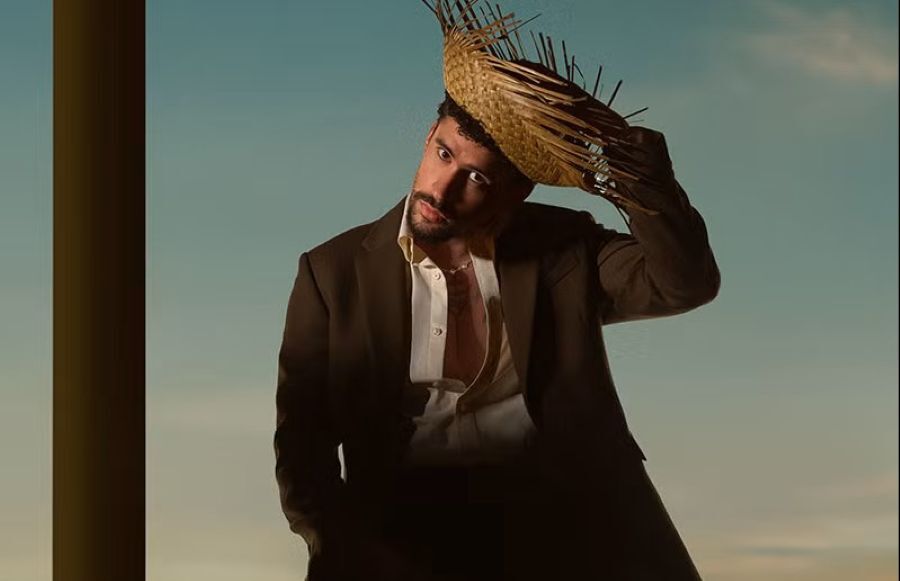

“In any performance we create, we’re calling into existence things that existed already.” Raquel Torre invokes numerous references as we speak about the theatricality of February’s “Benito Bowl,” when Benito Antonio Martínez Ocasio (Bad Bunny) dramaturged Boricua resilience and the history of Latine migrant music through his 13-minute Super Bowl halftime performance at Santa Clara, California’s Levi’s Stadium. For those 13 minutes, Latin American folks and allies around the world gathered in parties, on street corners, and in green rooms to experience the moving moment.
For her part, Torre was in a production meeting for AQUÍ O ALLÁ: a circus story. While directing the nonverbal migratory tale, she’d also been teaching her Latinx Theatre course at Aurora University, a Hispanic-Serving Institution. After those 13 minutes, she knew she’d need to furiously fashion a brand-new lecture overnight.
“This is theatre,” she says of the televised performance, highlighting the many cultural callbacks and instances of community-based storytelling, from sugarcane and its Caribbean histories, to campo pride and pava hats, to familiar musical motifs, to real Boricua community members from the island and its diaspora.
The performer roll call included a recognizable Old San Juan piraguero and basketball player Juan Pablo Piñeiro, Maria Antonia “Toñita” Cay of the Caribbean Social Club (one of the last Caribbean or Latine social clubs in operation in New York City), music trailblazer Ricky Martin, a real couple getting married onstage, and dancers rocking natural curls and evoking vivid celebrations of Boricua and Latine life. There were circus/stunt artists Jewelianna Ramos-Ortiz, Justin Ortiz, TaVon McVey, and Andreas Alfaro, representing linieros fighting for the island’s life, suspended to repair high-voltage electrical wires during an apagón, as choreographed by Kianí del Valle. Benito danced atop a white 1970 Ford F-Series bumpside pickup truck, gathered people en la casita, and awoke a child mid-party as he slept on chairs pressed together. He broke through walls.
Latine New York City storefronts. White plastic chairs and banana groves. Este hermoso escenario designed by Julio Himede’s Yellow Studio and Harriet Cuddeford. White clothing, an ode to jíbaro farm workers and Santería and Yoruba traditions (designs by Clothing by Zara, Luar, and Jomary “Joma” Segarra’s independent Borica brand Yomas). The defiant, historic version of the Puerto Rican flag from the independence movement and the enduring flor de maga. La mezcla de música choreographed by Karina Ortiz, Charm La’Donna, Melany Mercedes Skydancer, and Jovanni Soto. Music directed by Brazilian artist Miguel Gandelman. The orchestra led by Chicago’s famous Nicaraguan conductor Giancarlo Guerrero. Reggaeton to salsa to folk—each movement reaching back and back, joining generations. “Seguimos aquí.” A mosaic of centuries of survival.
In her class, Torre seeks to ground students in an understanding of where the term “Latinx” comes from in the U.S., and tracks timelines of Latinx theatre history, from precolonial examples of performance in Abya Yala, to theatre of Iberian colonizers, to modern-day performance in Spanish, Portuguese, Latin America, and diasporic communities. Everything comes from something, and dramaturgically, each history is key to understanding the whole.
“I’m feasting on all this research,” Torre says, “and I tell my students I’m not just squeezing a whole house inside a suitcase—I’m squeezing a whole neighborhood.” An apt metaphor for the migrant experience, for the Super Bowl performance, and for theatre as a whole: compressing and carrying multitudes. She says her lecture’s quick, sleepless turnaround was worth it: Surprised by the topic, her students just wanted to keep the dialogue going.

“They were so excited to talk about it, and in their weekly response paper, all they talked about was the Super Bowl class,” says Torre. “Especially how he ended the show mentioning all the countries in the Americas to remind that, even though the United States is colloquially referred to as America, America is a whole Western Hemisphere, really—which tied into our coursework looking at maps and understanding names, places, signifiers as we talk about Latinx theatre.”
This cathartic performance landmark stayed true to el idioma y la cultura, encouraged a level of cultural competency or intentional research to fully appreciate it, and still managed to capture public attention amid our fast-paced, forgetful pop culture landscape. In his 13 minutes, Bad Bunny compressed generations of story and forced all viewers to stop, to remember, to recognize Puerto Rico’s history of oppression and survival, and to embrace togetherness across all communities in Latinidad and the Americas. While other pop culture and viral moments lean into a conveyor-belting of digestible content, a fast-food approach to universal creation, this particular one both resisted simplicity and resonated with a very wide audience.
May this be a reminder to us theatremakers that our skill sets are indeed uniquely positioned to meet this moment—and that it is possible to break through the noise, while staying true to your motherland, tongue, and artistry. That the paradox of performing without performing under a dominant gaze is indeed possible. Addressing the weight of the world, Benito wielded his platform to invite the memory of joy back into the hollow halls of geopolitical grief. Reminded us that so long as we are still here, we will still dance.
“He’s so forward‑thinking, while every step he takes really honors and lets you know where he comes from,” concludes Torre. “It’s emotional to see somebody be so unabashedly themself on a big international stage.”
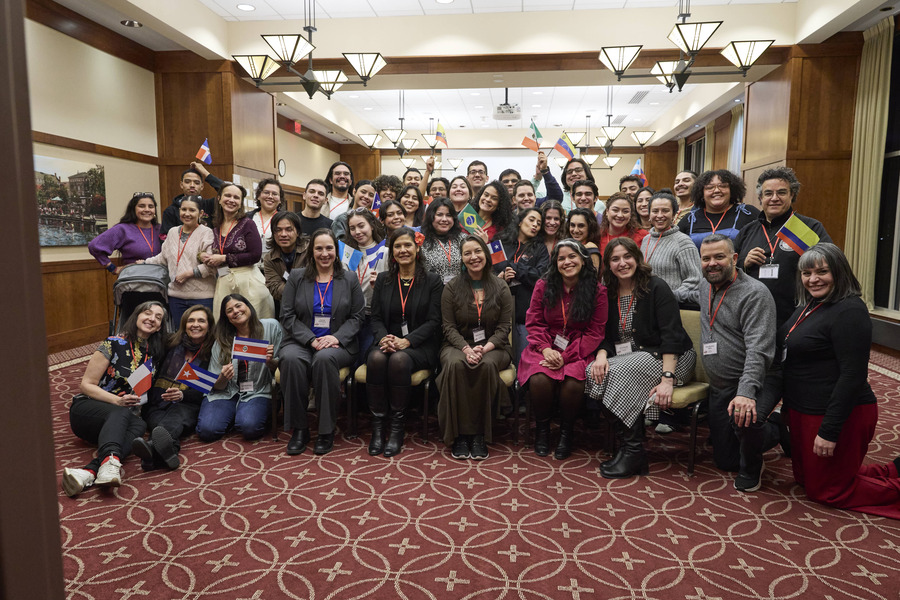
In our industry, sometimes performers must unlearn their sounds and souls to embody other characters, and predominantly white institutions encourage those who don’t fit the norm to leave behind the dramaturgies that raised them, to become “blank slates,” implying that there is a “default” form of speech, feeling, being, storytelling. But the Latinx Theatre Commons, like Benito, is fighting to not only expand Latine visibility, but artists’ toolkits for authenticity. What happens when you are cast in a Latine role and must craft that character with specificity? Or land a role in which you’re allowed to bring your own background—but have never been asked to bring that to your acting before? The LTC’s first Actor Training Laboratorio, which ran March 27-30 at the University of Wisconsin-Madison Department of Theatre and Drama, put dreams into practice from Latinx Actor Training, a treasured volume co-edited by Cynthia Santos DeCure and Micha Espinosa.
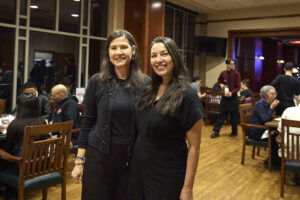
“What we do is we show the authenticity—we have to double down on authenticity,” says DeCure. The Yale School of Drama professor and her colleague Espinosa, a professor at University of Wisconsin-Madison, have been at this project for nearly 20 years; when they began the book, a Laboratorio to explore its practices was only a distant dream.
DeCure and Espinosa met through shared scholarship and realized their common goals around mining, questioning, and repairing, as Espinosa puts it, “what happens to Latinos when they enter the Eurocentric environment of theatre.” They recall their early commiserations over an array of issues: producers not seeing Latine talent, academia not training Latine talent to tell deeply diverse diasporic stories, stereotypes boxing in and compressing the complexities of lived experience, harassment and harm too painful to name.
DeCure emphasizes to me the impact of meaningful representation and embodied authenticity, saying, “When we proliferate that, that actually erases the old image, the stereotype, and the populace begins to see, ‘Well, that was a stereotype. This is authentic.’”
An old image of a Boricua, for instance, predominantly came from the brownface and misrepresentations in such shows as West Side Story. There are many forms of colonization: Hay lo que le pasó a Hawái, pero hay también a cultural occupation that grips us from within. El mundo sostiene en su conciencia colectiva imágenes de nuestras culturas latinas under a gaze that isn’t our own. But beyond WSS and such histories, we now have José Rivera and Marisol, Carmen Rivera and Maria (La Gringa), Migdalia Cruz and El Grito del Bronx, Quiara Alegría Hudes and Lin-Manuel Miranda and In the Heights, even Bad Bunny and DtMF, and more who can overshadow the harmful depictions. Indeed, there have been extraordinary developments in work by and for Latine performers, many of them as a result of María Irene Fornés’s teaching at the INTAR Theatre’s Hispanic Playwrights-in-Residence Laboratory. Espinosa and DeCure, whose motto has become, “Change the training, change the industry,” wondered: What could be the actor’s equivalent?
Bueno, to change the training, they cite the importance of first rooting oneself in ancestral knowing and what has come before. DeCure and Espinosa begin their book thanking ancestors, and they invoke Jorge A. Huerta, who wrote the foreword and created the Hispanic Acting program at UC San Diego (1990-1994). “Jorge Huerta has really been an authoritative, expert scholar for Latinx theatre—he mentored so many of us, or was a role model for many of us, or championed us,” says Espinosa. Imagínate, I thought, an all-Latine program, speaking my languages and sharing my questions, worries, hopes, and triumphs.
Though there is no longer a graduate program like this in the U.S. now, LTC aims to name and fill those gaps. Originally a HowlRound flagship program, their first full year as their own independent organization is coming up in July. They strive to keep the score of what has come before and build upon the work of Latine programs that have dissolved.
Elaborating, LTC producer Jacqueline Flores says, “I think that the LTC as a whole, and this Laboratorio, is a testament to this: Everyone involved in the LTC continuously dares to imagine a world that doesn’t exist and then creates that.”
This first edition focused on 32 mostly early- to mid-career actors, allowing for very focused, personalized work with each one. On the first evening, the LTC honored iconic playwright Josefina López with a special recognition and hosted Dr. Chantal Rodriguez for a keynote lecture. The weekend featured an all-star Latine faculty from all over, including contributors to the book. Marissa Chibás, for instance, taught “Mythic Imagination and the Actor,” and Michelle Lopez-Rios taught voice. Daniel Irizarry, Antonio Ocampo Guzman, Tony Ramirez-Mata, and Joann Yarrow were also presente, enseñando. Daniela Thome, participant and LTC Laboratorio Committee Member, describes una clase emocionante.
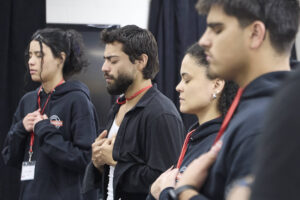
“Latino texts are important and have heightened language that demands our attention, just as much as Shakespeare or any other heightened language,” Thome says. And in Lopez-Rios’s workshop, she got to experiment with a kind of “breath release play” in which students went deep into breath work, read text in a “choral” way, then played with it as though they were different ages—4, 92, or otherwise. She continues, “We tapped in and let go, since some ages you’re not overthinking, or you’re not stuck in your head and cutting off from your own body and voice.” After building on that throughout Laboratorio, her work culminated in a powerful class with Chibás, in which Thome released blocked emotions in her monologue through breath, and could “access this monologue in a way I never had before,” she shares.
Another participant, Kenia Munguia, wrote to the instructors in gratitude, “Latinx actors are often pitted against each other in a landscape of scarcity, conditioned to see one another as competition. The Laboratorio offered something different: a collaborative space with artists who spoke my mother’s language and approached this craft as a calling en nuestro idioma.”
That communal exchange also profoundly impacted instructors, as Latine faculty and scholars from different institutions exchanged ideas among themselves, in contrast to the siloing that many Latine artists in academia feel right now. The hope is to schedule another Laboratorio and plan out different editions: DeCure mentions a desire to focus on folks in the more mid- to late-career demographic next time, possibly even creating space for self-generated projects. Above all, she and Espinosa hope that this program doesn’t join the list of vital opportunities for our communities that have dissolved over the years.
“This was space of gathering, replenishing, and reimagining what becomes possible when Latinx artists are centered in the room,” says Espinosa. “To see it come to fruition was deeply moving, and it also feels clear that this is just the beginning.”