ADV – Leaderboard

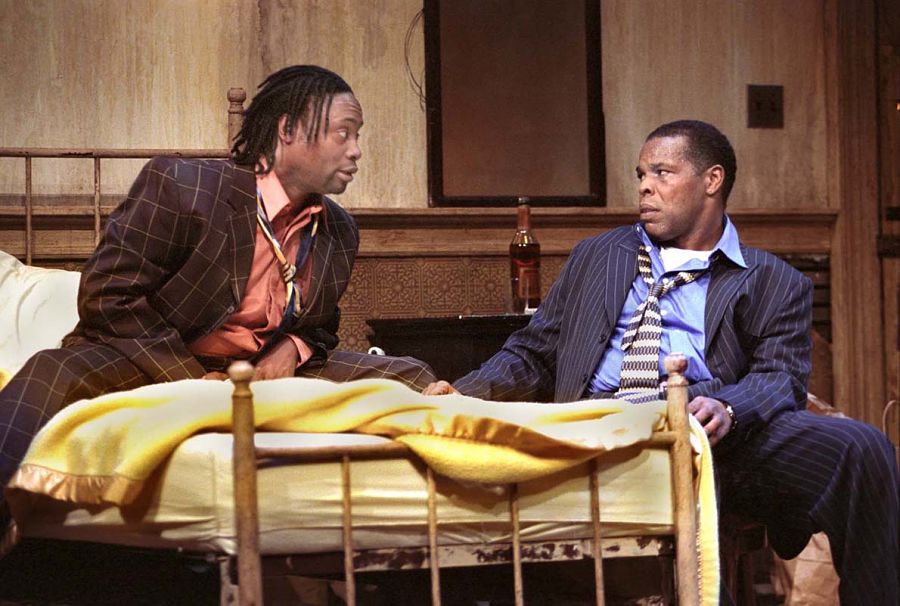
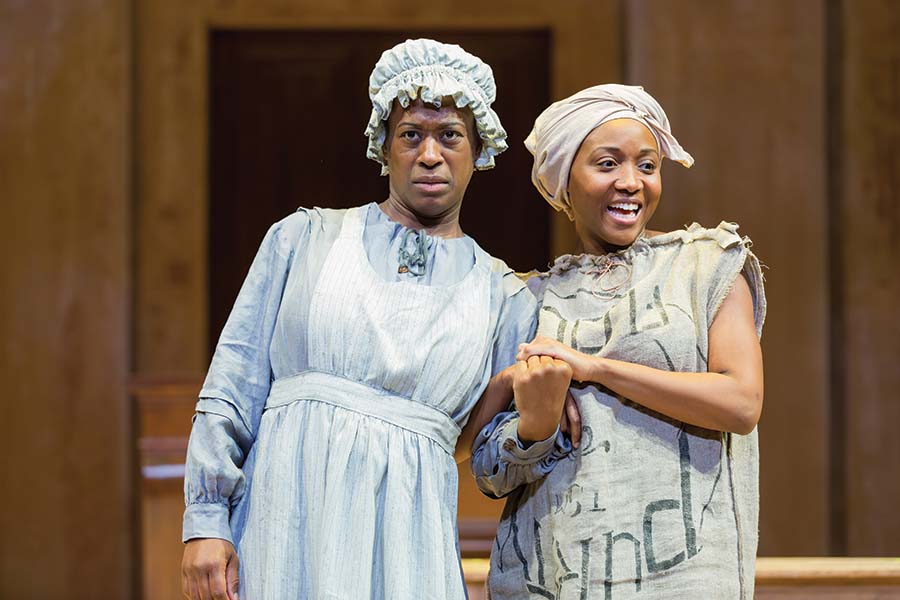
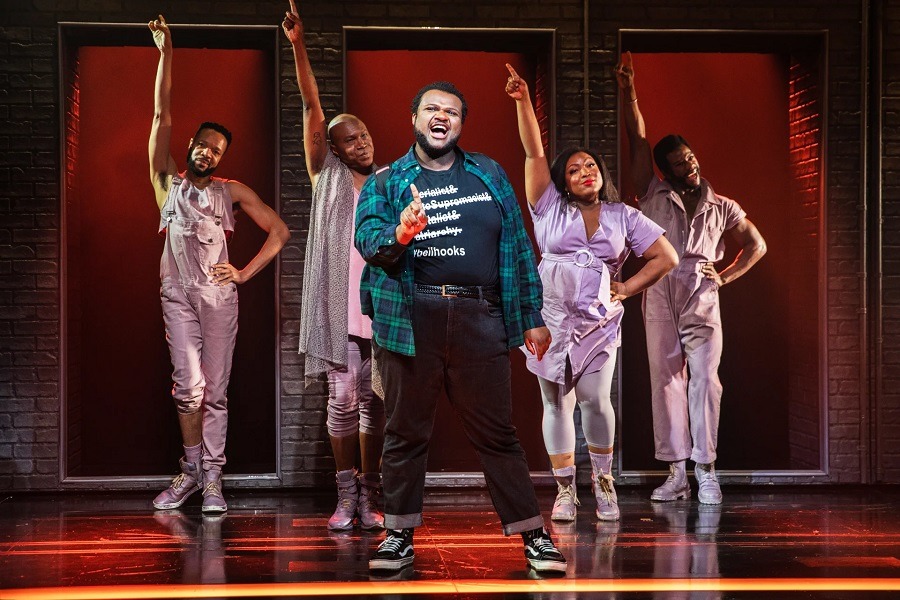
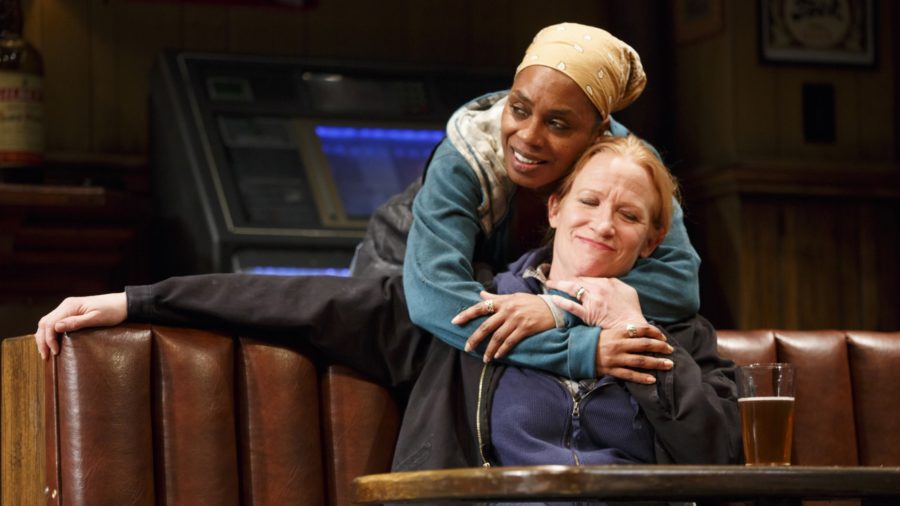
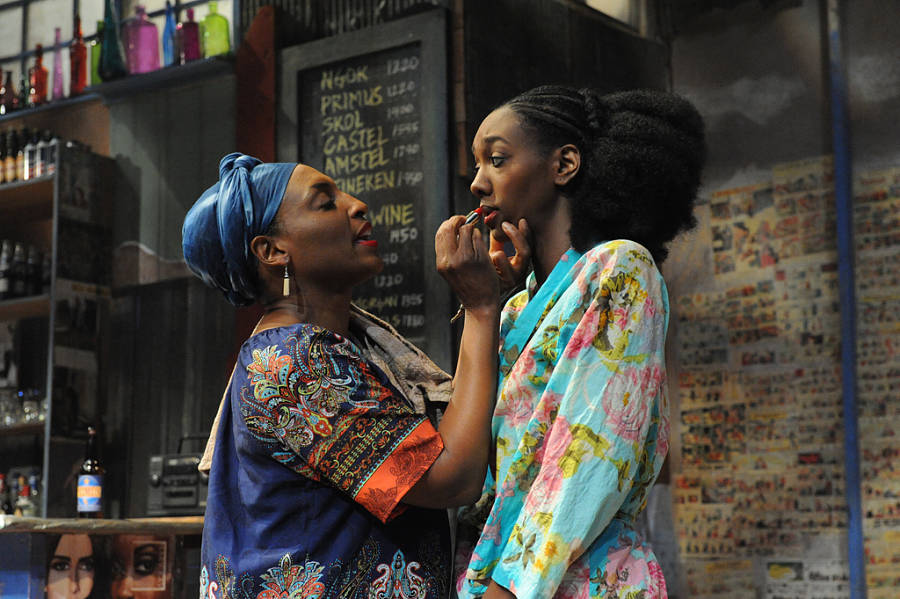
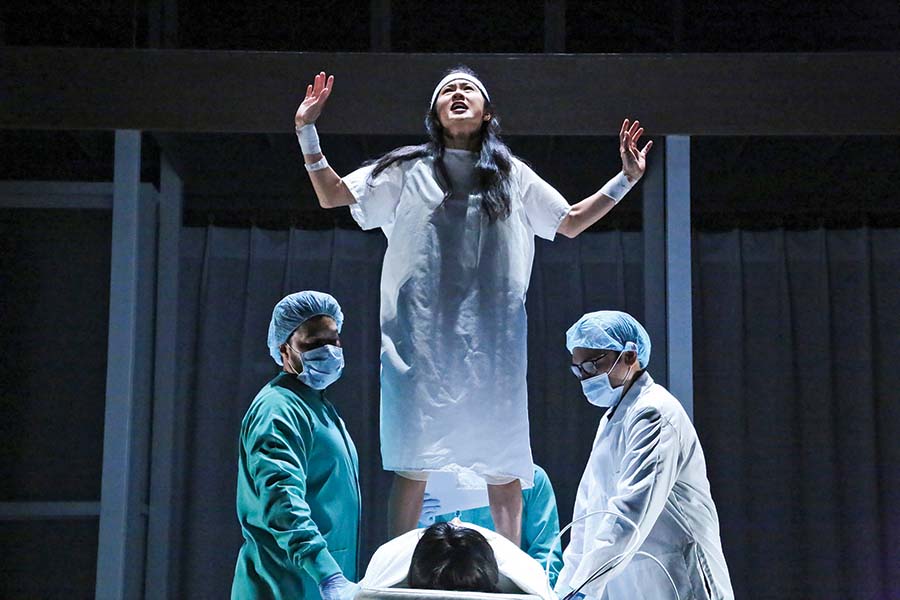
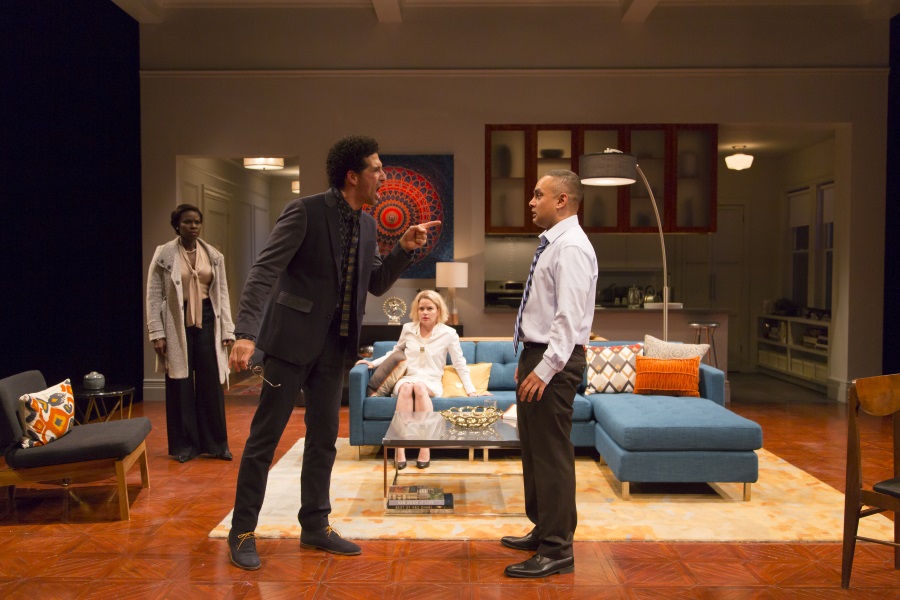
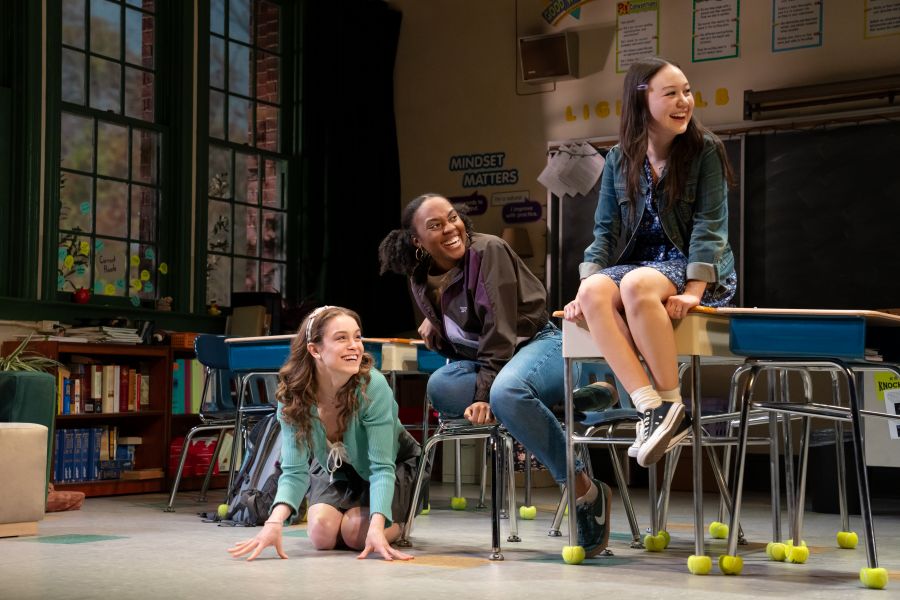
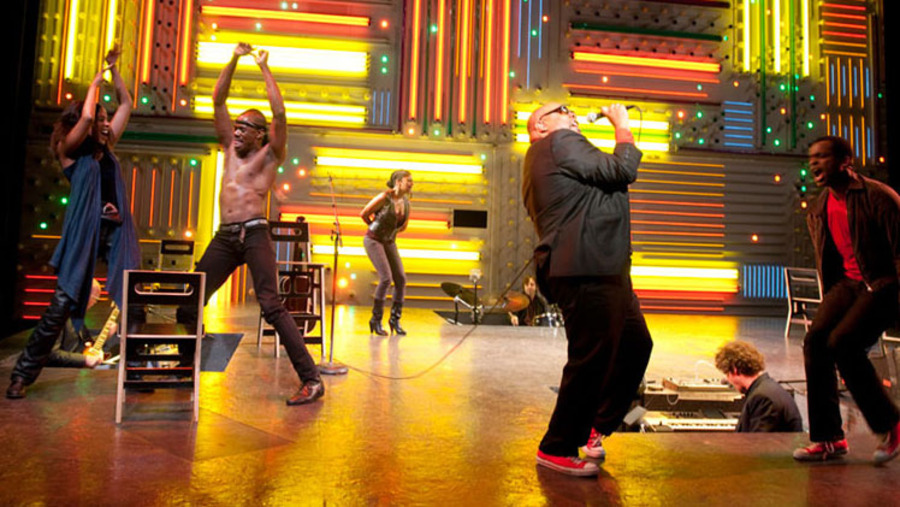
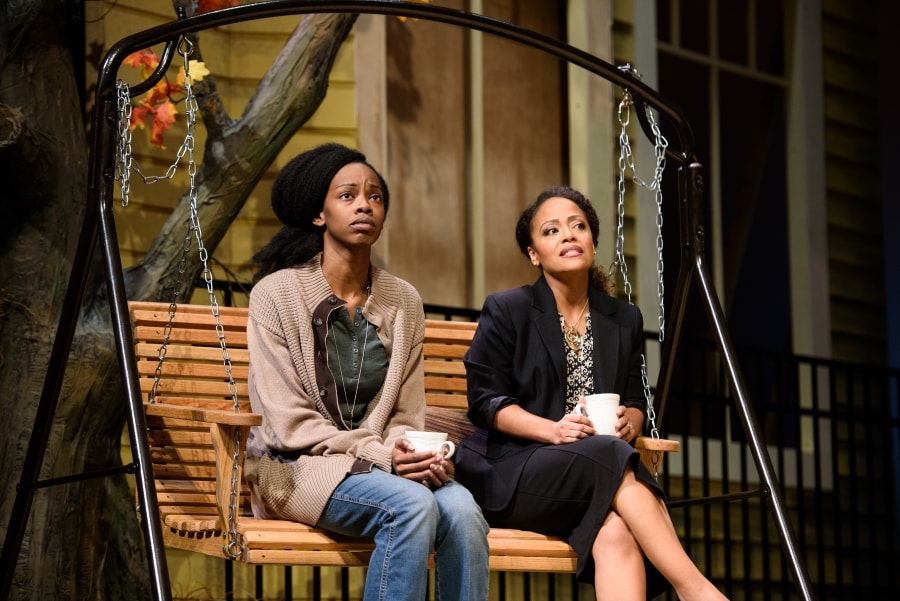
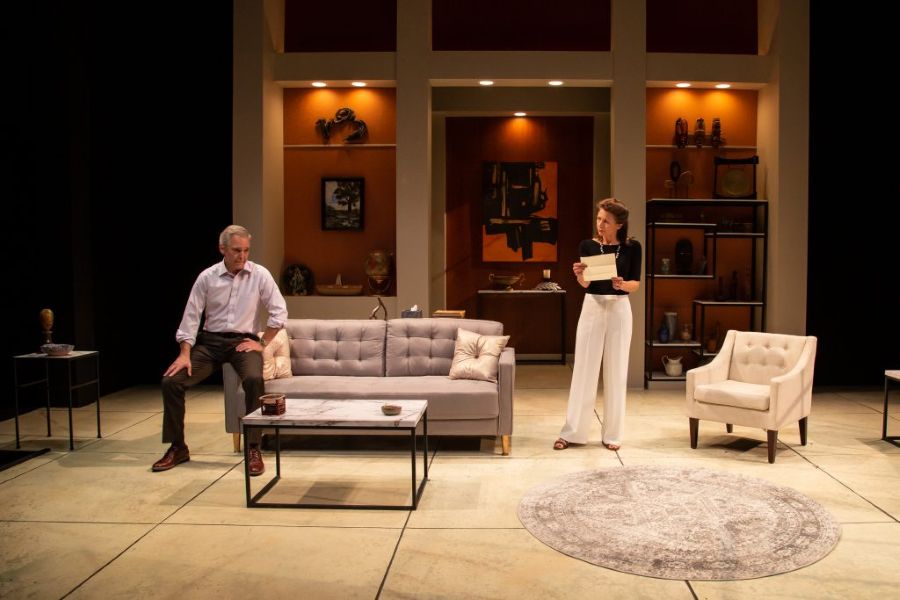
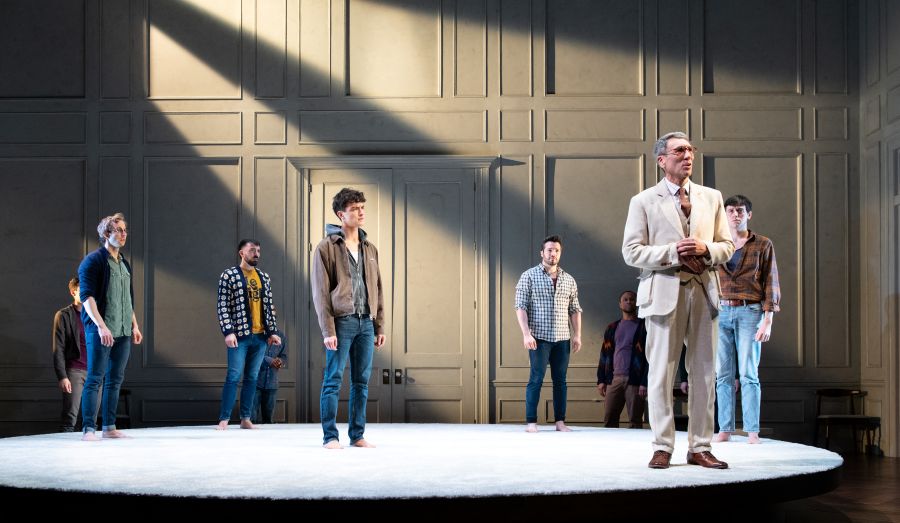
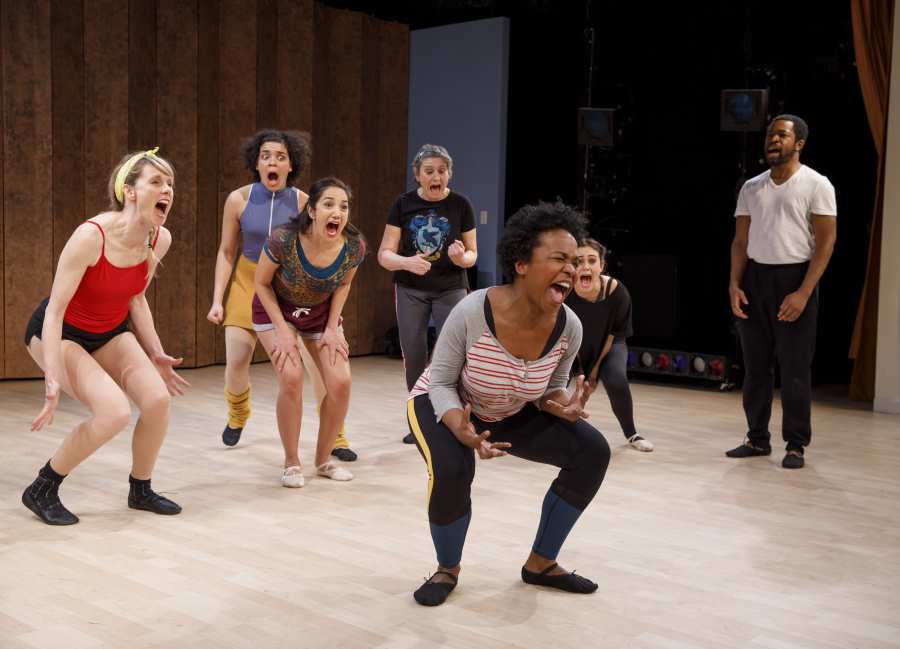
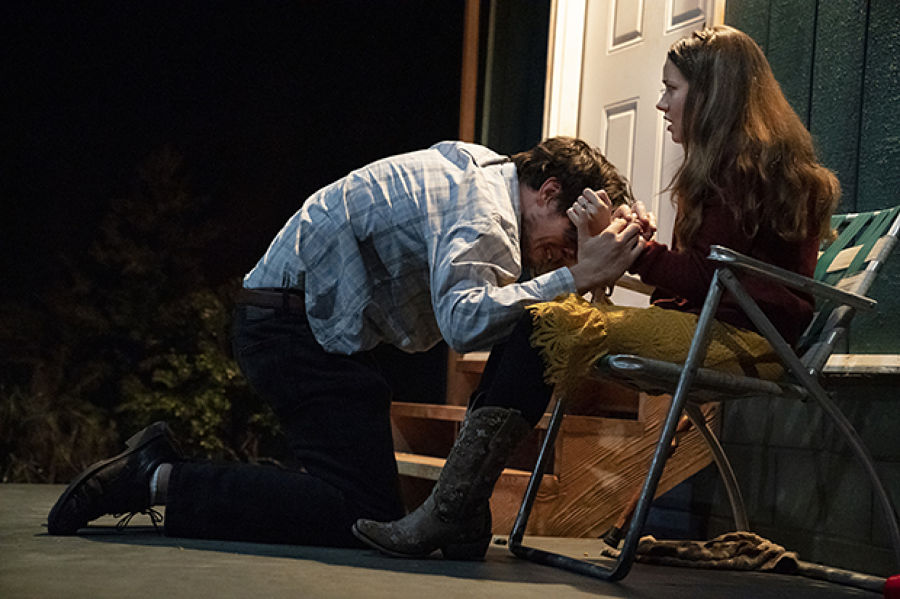
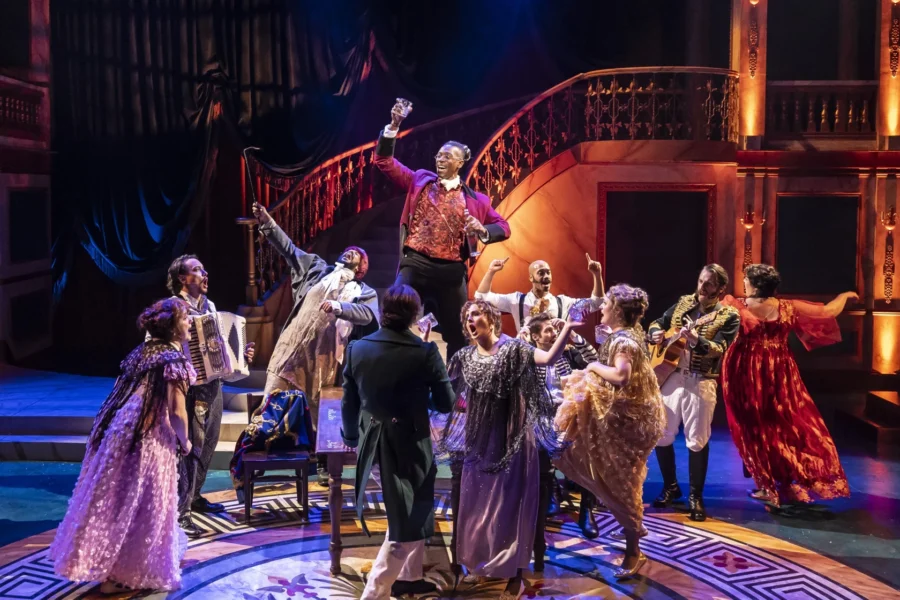
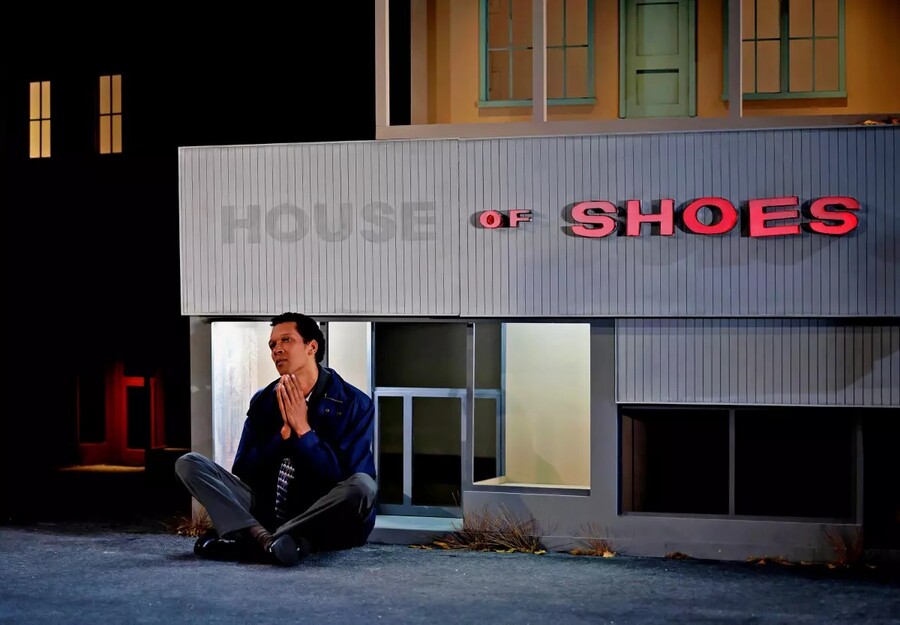
Top row: Lin-Manuel Miranda and Robin de Jesús in "In the Heights" (photo by Joan Marcus); Roslyn Ruff in "Fairview" (photo by Julieta Cervantes); Idina Menzel in "Wicked" (photo by Joan Marcus); Maria Dizzia in "Eurydice" (photo by Joan Marcus); bottom row: Tracee Chimo, Deirdre O'Connell, Heidi Schreck, Reed Birney, and Peter Friedman in "Circle Mirror Transformation" (photo by Joan Marcus); Sterling K. Brown and Andre Holland in "Marcus; or The Secret of Sweet" (photo by Joan Marcus)

The Shows That Reloaded the Canon for the 21st Century

To compile this list of the new millennium’s influential plays and musicals, we turned to industry workers, leaders, and observers to come up with 50 that pushed theatre forward.

A lot can happen in 25 years: wars, recessions, pandemics, Survivor seasons, new forms of media and technology. If you’re reading this, you’ve likely lived firsthand through much if not all of the world’s changes since Y2K, Bush v. Gore, and 9/11.

One thing that hasn’t changed much since the new millennium dawned, for better or worse: the theatre. Despite its dramatic ups and downs, and amid a long overdue and still ongoing diversification of its personnel and audiences, the format remains stubbornly the same: People gather in rooms to watch other people move and speak, sing and dance, to share a live experience that can never be exactly repeated. Why do people still bother to do this when they can now create content and watch it on a smartphone from anywhere?

That may be a subject for another column—or maybe not. For in the list of titles we’ve compiled below from a survey of hundreds of industry workers, leaders, and observers, you can glimpse not one but 50 answers to the question of why theatre persists against the odds. With a group of plays and musicals this various and vibrant, many of which push theatre forward in so many unpredictable and exciting ways, who wouldn’t want a piece of this irrepressible art form?

Let’s get one thing out of the way at the top: This is not a “best of” list. What we asked hundreds of theatre folks to do was send us 10 titles they felt had been the most influential on the theatre in the past 25 years. We did not ask them to rank them, or to distinguish between plays and musicals, and we did not mandate that the work’s authors were American; the only criterion for inclusion was that every title was a show that had its U.S. premiere any time since 2000. Some told us in comments that they listed shows they found “memorable” or that they felt “broke barriers,” while others said they made “personal” or “idiosyncratic” choices, interpreting “influence” in more subjective ways. Looking at the resulting list, we would only add the observation that just as success can be measured economically as well as critically, so can influence: Many of the titles on this list have been as important to theatre’s bottom line as they have been crucial to its soul.

We must also add that our editorial team was as intrigued and excited by the titles that made the list as we were surprised, even shocked, by the ones that were missing, including in no particular order Jesus Hopped the ‘A’ Train, Urinetown, Guards at the Taj, The Christians, Thom Pain (based on nothing), The Wild Party, Father Comes Home From the Wars, A Bright New Boise, Bloody Bloody Andrew Jackson, The Elaborate Entrance of Chad Deity, School Girls: The African Mean Girls Play, What to Send Up When It Goes Down, Marjorie Prime, How to Dance in Ohio, The Thanksgiving Play, Mamma Mia!, Electricidad, Dear Evan Hansen, Gone Missing, The Band’s Visit, Mariela en el Desierto, Sojourners, The Mountaintop, When She Had Wings, The Trump Card, The Chinese Lady, Pass Over, The Drowsy Chaperone, That Pretty Pretty; or, The Rape Play, Is This a Room, Harry Potter and the Cursed Child, And in This Corner: Cassius Clay, Once, la ofrenda, You and Me and the Space Between, Where We Belong, The Lieutenant of Inishmore, Vietgone, Water by the Spoonful, Becky Shaw, and Small Mouth Sounds, among several others.

We also felt a mix of joy and sadness to observe the demographics of the writers and stories represented on the list: While exactly half of the titles have credited women authors, and two have genderqueer or non-binary authors, 28 of the titles have white writers, while 22 have writers of color. (To be specific: The list includes 13 Black writers, four Middle East/North African writers, three Latine writers, and two Asian American authors; there were no works by Native American playwrights with enough mentions to make the list.)

There is always a danger in compiling a list like this that its inevitable exclusions and blind spots only reinforce existing biases and hierarchies, and that they give a victory lap to the already celebrated. We take that risk seriously, which is why we regularly dedicate our editorial coverage to artists and work that are under-covered and deserve wider attention. Indeed, we wrote about many of the authors and plays on this list and in the paragraph above (and even published a number of them) when they were relative unknowns, and we plan to keep doing that for the influential artists of tomorrow.

On the other hand, we also see the value in cheering for some of the most indelible theatre that has been made in the U.S. throughout the tumultuous last quarter century—plays and musicals whose influence has been felt not only within this art form but outside the theatre walls. If the next 25 years of American theatre are as rich and rewarding as the last 25 have been, we’ve got our work cut out for us.
Jump to:     1     10     20     30     40     50     Full List

1

Book, music, & lyrics by Lin-Manuel Miranda

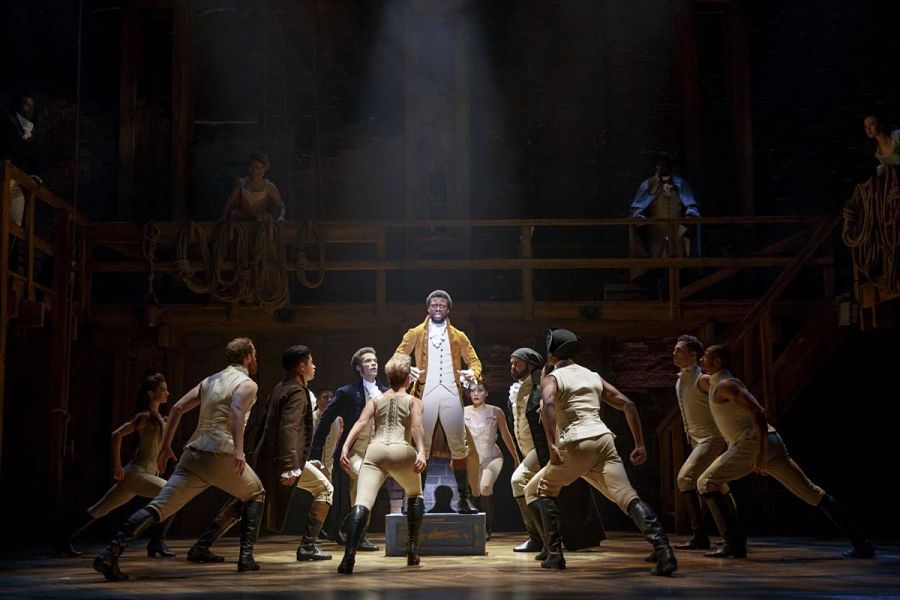
"Hamilton" on Broadway. (Photo by Joan Marcus)

Lin-Manuel Miranda’s generation-defining musical was a clear and inevitable repeat on our survey. This Pulitzer-winning hip-hop popera blended history of both the textbook and musical theatre kind to make America’s Founding Fathers sing and rap with fresh relevance for contemporary audiences. Inspired by Ron Chernow’s biography, the musical also did the seemingly impossible: It put theatre back into the mainstream conversation. The show’s still running Broadway production set a record for Tony nominations (16), the highest gross in a week multiple times, and most expensive Broadway ticket price. Its soundtrack was the first Broadway cast album to be certified “diamond” status by the RIAA (selling the equivalent of 10 million units), as well as the highest-charting cast album on the Billboard 200 since 1969’s Hair. The show’s defining triumphs, though, were in its revolutionary overhaul of the musical form—and who can claim it. While its late Obama-era premiere in 2015 captured an era of optimism and hope in the promise of inclusive democracy that seems more distant now, Hamilton normalized expansive, color-conscious casting practices in the wider American theatre and gave pop culture some of its defining anthems and memes for decades to come.

2

By Tracy Letts

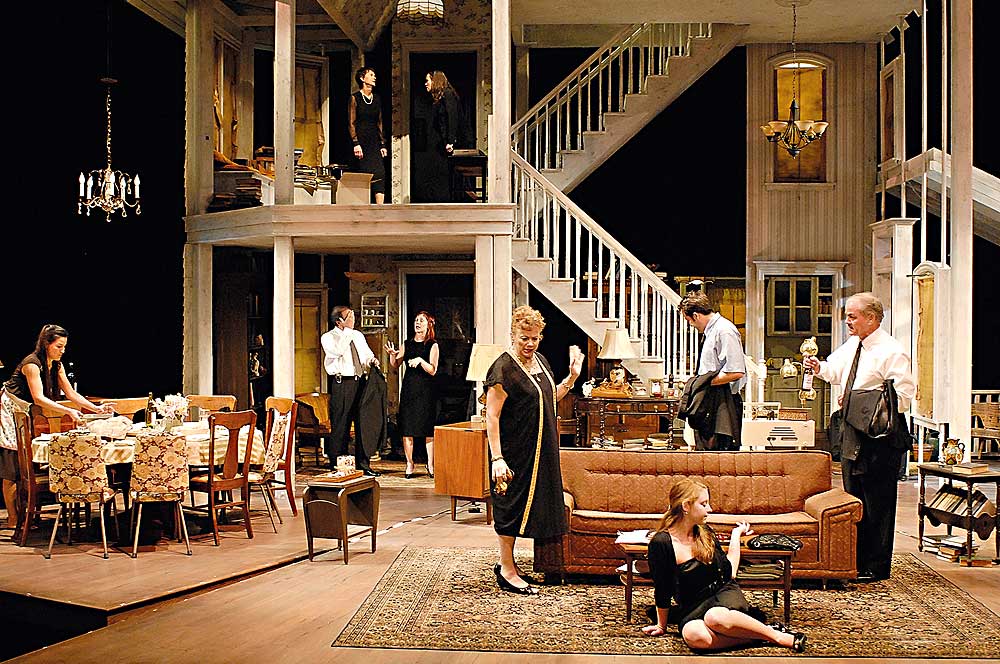
"August: Osage County," directed by Anna D. Shapiro, in its original run at Steppenwolf Theatre Company.

When August: Osage County premiered in 2007, Tracy Letts’s hurricane of familial annihilation sent a reminder around the world that the American family drama could still draw blood. Charles Isherwood, reviewing the show’s world premiere at Steppenwolf Theatre in Chicago for The New York Times, called it a “tastily nasty, ferociously enjoyable tale of a family shredded to tatters” from the playwright who already had Killer Joe and Bug under his belt. Indeed, with echoes of O’Neill laced with contemporary bite, Letts’s story of a forced family reunion around the cancer-ridden, drug-addled matriarch, which quickly curdles into scorched-earth screaming matches around generational trauma and resentments, delivers a blunt, devastating message: Families wound each other in cycles, and surviving often requires stepping outside of whatever legacy you’ve inherited. In the decades since it won the 2008 Pulitzer and Best Play Tony, its legacy has served as an inspiration for any number of dinner-table-turned-battlefield plays, and as a 21st-century benchmark for American realism onstage.

3

By Suzan-Lori Parks

Billy Porter and Ray Anthony Thomas in "Topdog/Underdog" at Pittsburgh's City Theatre Company in 2011. (Photo by Suellen Fitzsimmons)

It might be tempting to blame Suzan-Lori Parks for the proliferation of two-handers that has swept the budget-conscious American theatre in the years since this searing, irreverent dark comedy marked her Broadway debut and won her the Pulitzer Prize in 2002. But, even granting that this was her most straightforward play to date, after years of such experimental works as The America Play and The Death of the Last Black Man in the Whole Entire World, Topdog/Underdog hardly provided a safe or easily imitable commercial model: In it, two Black brothers named Lincoln and Booth uneasily share an apartment and vie for dominance, with the kicker that Booth is a three-card monte hustler and Lincoln’s job is to pose as his namesake president in a Coney Island shooting gallery. Speaking about the play’s Tony-winning 2023 revival, Parks suggested another reason for the staying power of a play which originally starred Jeffrey Wright and Mos Def and has more recently featured real-life brothers Jason and Brandon J. Dirden, not to mention Yahya Abdul-Mateen II and Corey Hawkins: “It’s written for brothers to shine.”

4

Music by Jeanine Tesori, book & lyrics by Lisa Kron

Beth Malone, Michael Cerveris and Sydney Lucas in "Fun Home" at the Public Theater. (Photo by Joan Marcus)

Fun Home’s Broadway debut a decade ago marked a significant milestone for gender representation in American musical theatre: It was the first musical written by a team of all women to win the Tony for Best Musical, and the first with a lesbian lead character. But that’s not what makes this nonlinear family story memorable: Based on Alison Bechdel’s graphic novel memoir, Lisa Kron’s script and Jeanine Tesori’s music artfully dramatize Alison’s formative relationship with her closeted gay father across three ages of her life. As Tesori once put it in these pages, the musical strives to capture “that yearning between parent and child—what happens when it’s unfulfilled.” Fun Home’s potential is hardly unfulfilled: As regional productions of this intimate musical proliferate, its impact lies in its intergenerational depiction of discovery, denial, and acceptance, its uplifting of queer voices, and its deft but unflinching treatment of grief. 

5

By Branden Jacobs-Jenkins

Erika Rose and Shannon Dorsey in "An ­Octoroon" at D.C.’s Woolly Mammoth Theatre Company. (Photo by Scott Suchman)

Part minstrel show, part nightmare, An Octoroon was Branden Jacobs-Jenkins’s breakthrough achievement. Based on Dion Boucicault’s 1859 melodrama The Octoroon, about a woman who is one-eighth Black, the play’s cringey send-up of racial stereotypes takes audiences from laughing out loud to complete shock at the cost of their willful ignorance. Its Obie-winning premiere at Soho Rep in 2014 (with the playwright himself in a crucial cameo as Br’er Rabbit) didn’t lead to a tsunami of productions around the country, though it’s been a favorite of more adventurous U.S. theatres. And there’s no gainsaying the impact of its casting, which scrambled racial representation—Asians in red face, Black folks in white face, white folks in blackface—within the frame of plantation-based sketch comedy. Jacobs-Jenkins removes the sting but deepens the ache of the harm done to Black American identity in the Antebellum South and the century thereafter.

6

Book, music, & lyrics by Michael R. Jackson

"A Strange Loop" on Broadway. (Photo by Marc J. Franklin)

Michael R. Jackson’s subversive autofictional musical about “a gay Black man writing a musical about a gay Black man writing a musical” is both a summation of the musical theatre form, building on such models as Company and Passing Strange, and something altogether new. Premiering at Playwrights Horizons in 2019 and taking the subsequent year’s Pulitzer before its 2022 Broadway bow, A Strange Loop follows its lead character, Usher, through a series of vignettes as he processes feelings of hope, trauma, self-hatred, and isolation, and tries to overcome his self-destructive tendencies. Like Sondheim before him, with this musical Jackson lays down a marker that says: Musicals can take any form or subject, and the best way forward is to cut your own path. Or, as one of Jackson’s muses, Liz Phair, put it: “The fire you like so much in me / Is the mark of someone adamantly free.”

7

By Anne Washburn

Andrea Wollenberg in "Mr. Burns, a Post-Electric Play" at American Conservatory Theater in San Francisco in 2015. (Photo by Kevin Berne)

Anne Washburn’s dystopian fantasia, first produced at Woolly Mammoth in 2012 and then at Playwrights Horizons in 2013, is almost as hard to sum up as it surely is to stage: Set in a near future where an unexplained calamity has erased the world’s digital memory, the play’s three parts trace the way cultural memory is passed on and reified, first as campfire stories, then as theatrical recreations, and finally as ritual drama—with the odd and delicious twist that the bit of cultural memory being preserved is the “Cape Feare” episode of The Simpsons, right down to Sideshow Bob’s rake-stepping gags. The rhapsodic third act, set to music by Michael Friedman, is a kind of cantata that reaches the pitch of Greek tragedy. Imagine Fahrenheit 451 as retold by Kurt Vonnegut and you’re close—but not all the way—to what Washburn pulls off here.

8

By Lynn Nottage

Michelle Wilson and Johanna Day in "Sweat" by Lynn Nottage on Broadway. (Joan Marcus)

Though Lynn Nottage wrote Sweat before the 2016 election (its premiere was at Oregon Shakespeare Festival, which commissioned it with Arena Stage in 2015), by the time it hit Broadway in 2017 (and won that year’s Pulitzer), it felt like Nottage had looked into the future of a country threatening to break itself apart. Set in a Pennsylvania factory town in the early 2000s, and based on the real city of Reading and interviews with its residents, Sweat follows a group of friends as layoffs and economic strife hit their plant and community. Ben Brantley of The New York Times called it “the first work from a major American playwright to summon, with empathy and without judgment, the nationwide anxiety that helped put Donald J. Trump in the White House.” As she did in Ruined, Nottage reminds audiences that politics aren’t an abstract concept; they’re felt in the body. Sweat has since become a touchstone for playwrights aiming to dramatize political reality, and a master class in drama as reportage. Nottage proves the value of telling audiences not what to think but where to look.

9

By Heidi Schreck

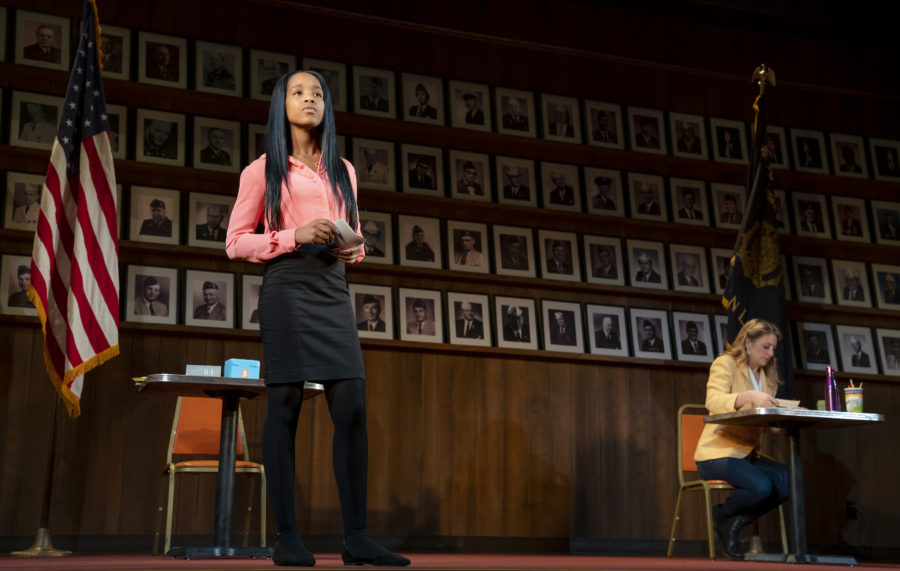
Thursday Williams and Heidi Schreck in "What the Constitution Means to Me" on Broadway. (Photo by Joan Marcus)

Heidi Schreck’s powerful, political, and personal What the Constitution Means to Me topped American Theatre’s most-produced plays list for two years in a row since its 2018 premiere, and with good reason. It’s not just the unfortunate timeliness of its content that has made it so popular. Using the conceit of recreating a real-life high school speech Schreck once gave as part of an American Legion-sponsored competition, she interrogates the ways the Constitution has impacted generations of women in her own family, for better and definitely for worse. And though it follows the rough form of a one-woman show, Schreck has some tricks up her sleeve: a surprisingly intimate moment for the stern legionnaire who’s monitoring her speech, and—mild spoiler—a riveting closing debate about the Constitution’s fate between the performer who plays Schreck and a teenage debater, selected from a local team. Seldom has the fourth wall been broken in such a fresh and urgent way.

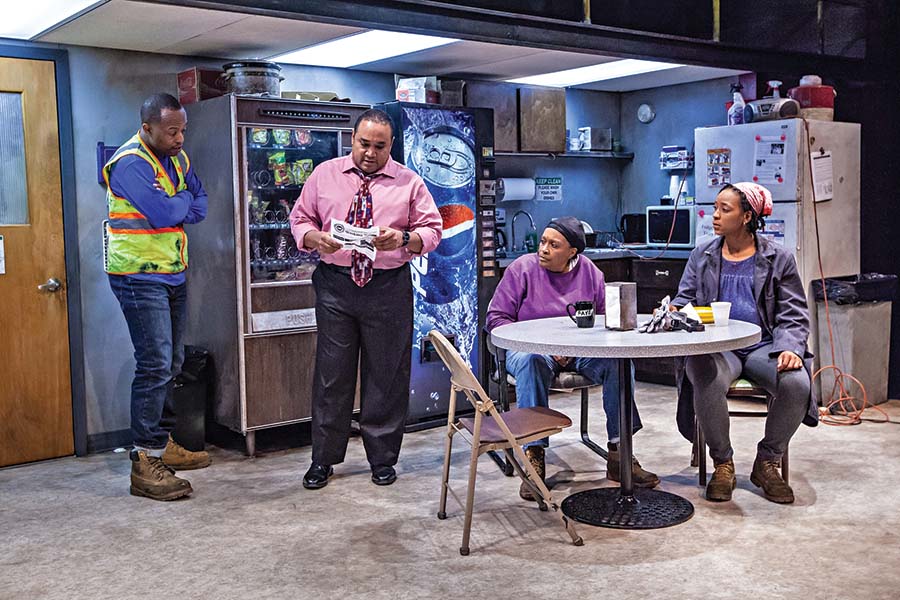
10

By Jackie Sibblies Drury

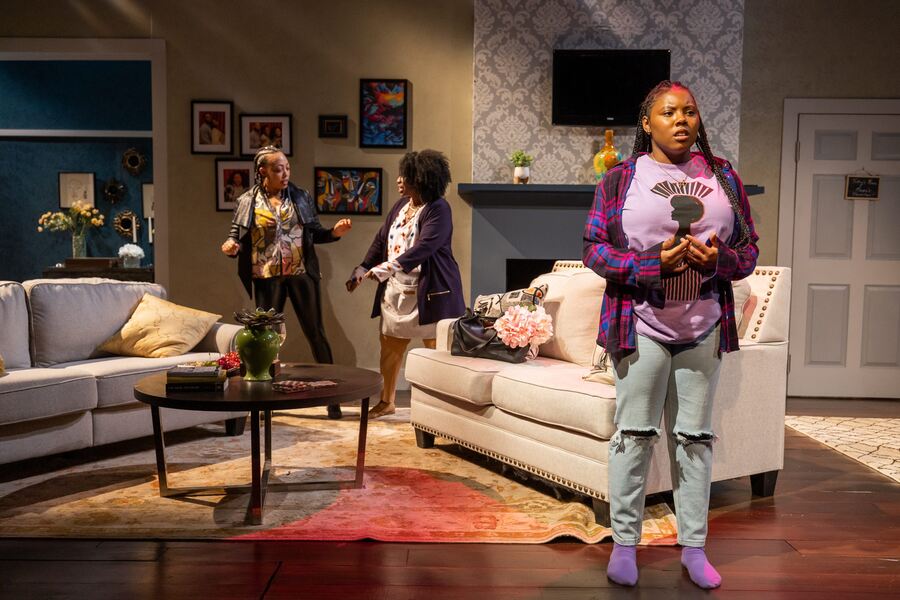
Lyndsay Allyn Cox, Yewande Odetoyinbo, and Victoria Omoregie in "Fairview" at Boston's SpeakEasy Stage Company in 2023. (Photo by Nile Scott Studios)

After bursting onto the scene with the ambitious, and ambitiously titled, We Are Proud to Present a Presentation About the Herero of Namibia, Formerly Known as Southwest Africa, From the German Südwestafrika, Between the Years 1884-1915, Jackie Sibblies Drury took meta-theatre to a bracing and disorienting new level with this multilayered interrogation of race and theatrical tropes, which premiered at Soho Rep in 2018 and won the next year’s Pulitzer. Opening on what seems like a straightforward comic drama about a Black American family planning a surprise party, Fairview soon unravels into an upside-down version of itself, as white interlopers try to control and reframe what’s onstage—until the playwright breaks the frame altogether and literally invites some of the audience to enter it. Years before We See You, White American Theater, Sibblies Drury challenged us to see what she saw.

11

By Annie Baker

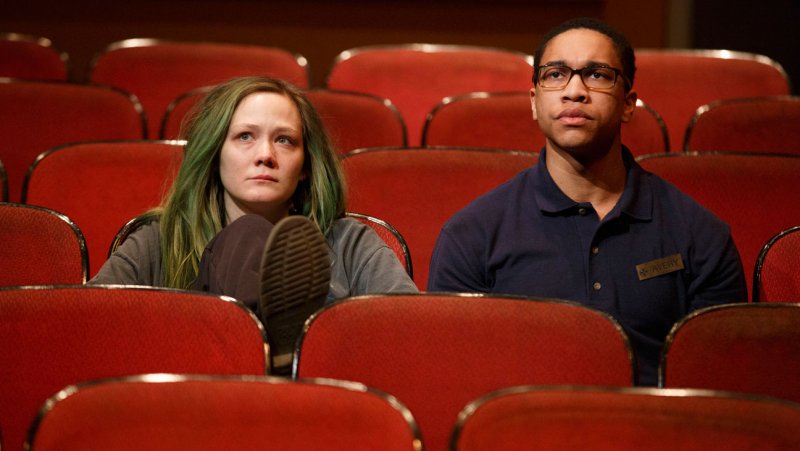
Louisa Krause and Aaron Clifton Moten in "The Flick" at Playwrights Horizons in 2013. (Photo by Joan Marcus)

How could Annie Baker’s three-hander about underpaid young workers at a small, under-attended Massachusetts movie theatre be so divisive, winning the Pulitzer in 2014, a year after the artistic director who programmed it at Playwrights Horizons felt the need to quasi-apologize to some patrons for having staged it? For Baker aficionados, it felt like a culmination of her hyper-naturalistic work with director Sam Gold, with David Zinn’s realistic cinema-seating set acting like a mirror for the audience as we watched its characters clean the theatre, kill time, and try, mostly in vain, to connect with each other. The studied anomie and long stretches of uneventful silence drove some theatregoers batty, apparently, but those who stuck with it had its lingering afterimage of quiet despair happily burned into our souls.

12

By Jeremy O. Harris

James Cusati-Moyer and Ato Blankson-Wood in "Slave Play" on Broadway. (Photo by Matthew Murphy)

By the time Jeremy O. Harris’s Slave Play made it to Broadway in 2019, it was already igniting fierce debates and a rare level of mainstream attention as it blended farce, melodrama, and BDSM sex comedy to tell the story of three interracial couples participating in a radical form of reenactment therapy. On one side were denunciations of Harris’s depiction of Black women (a Change.org petition called it “one of the most disrespectful displays of anti-Black sentiment disguised as art”); on the other were many who said it forced audiences to rethink their assumptions around race and power. As Jesse Green put it in The New York Times, he was “grateful to hear so plainly the idea that Mr. Harris puts forward in the silent space his play insists on clearing: that one race lives with history each day while another pretends not to.” Slave Play’s Broadway run got a record-breaking 12 Tony nominations (though it won zero) and gave rise to “Black Out” performances aimed at bringing Black folks together at the theatre. Above all, Slave Play was a reminder that a play can create a cultural event that demands to be seen and discussed.

13

By John Patrick Shanley

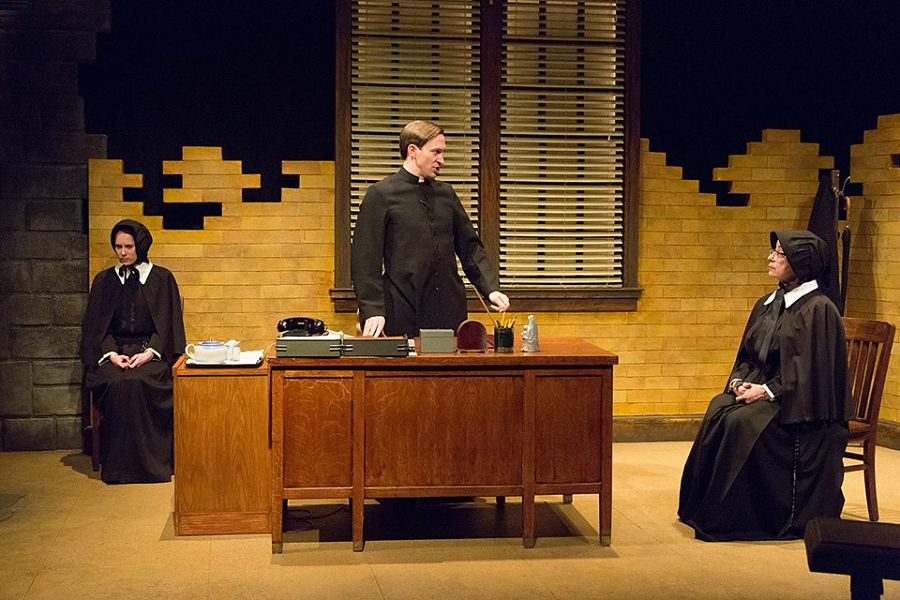
Clare Mahoney, Ben Dibble and Mary Martello in "Doubt" at the Lantern Theatre Company in Philadelphia in 2015. (Photo by Mark Garvin)

Emerging at a time when American confidence in institutions was already beginning to fray, John Patrick Shanley’s Doubt transformed that national unease into a sharp moral drama that luxuriates in ambiguity. Premiering in 2004 at Manhattan Theatre Club before its Tony-winning 2005 run (it also won that year’s Pulitzer), Doubt is set at a Catholic school in 1964, where a rigid nun grows suspicious of a priest’s relationship with a student. As her pursuit of the truth escalates through a series of confrontations, evidence remains circumstantial and the truth remains elusive. Doubt has been praised for its balance and its determined commitment to uncertainty, which has helped secure its status as one of the century’s defining moral thrillers. Shanley treats doubt itself as a dramatic engine, serving as an inspiration to those looking to craft a psychological drama that thrives on unresolved questions and post-show arguments that refuse to fade.

14

Wicked

Music & lyrics by Stephen Schwartz, book by Winnie Holzman

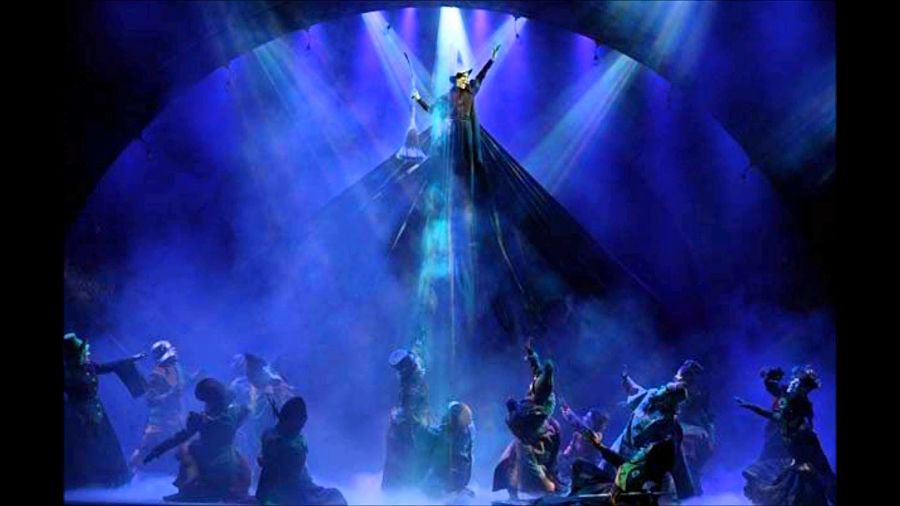
A scene from Broadway's "Wicked," with lighting design by Kenneth Posner.

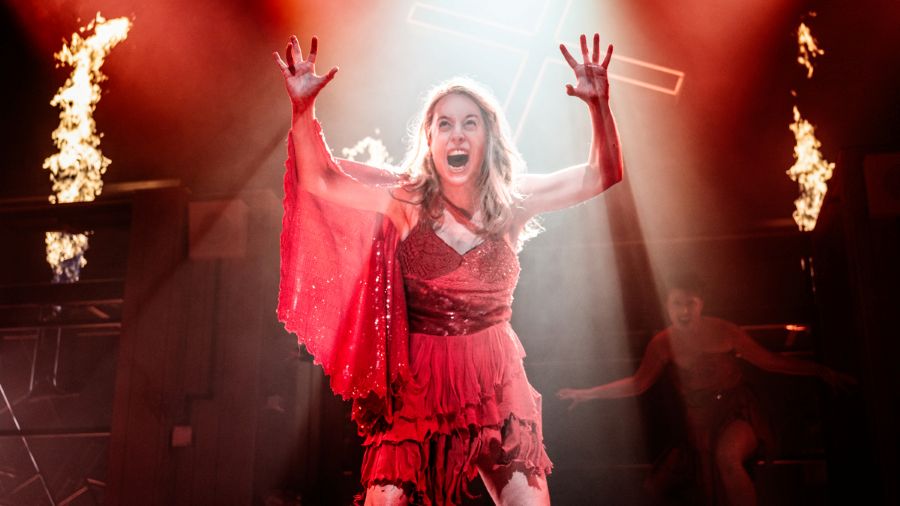
“I know about popular.” Stephen Schwartz and Winnie Holzman’s Wicked definitely does! The 2003 adaptation of Gregory Maguire’s book offered audiences a magical world of pop-infused music, dazzling spectacle, misunderstood characters, and a hit that resonated across many age and demographic groups. The original Broadway musical opened to a generation of Americans caught between the excruciating grief of 9/11 and the frightening dissonance of the so-called war on terror. It also did its share of defying gravity, overcoming mixed reviews and an upset at the 2004 Tonys (see Avenue Q below) to become an unstoppable box office juggernaut that has enchanted successive generations of theatregoers and became synonymous with Broadway itself (and has gone on to spawn two hit movies). Its indelible power ballads and charm songs have also launched the careers of many important Broadway leading ladies: Idina Menzel, Kristin Chenoweth, Stephanie J. Block, Shoshana Bean, and Mandy Gonzalez, among others. 

15

By Paula Vogel

The cast of Yale Rep and La Jolla Playhouse's production of "Indecent" in 2015. (Photo by Carol Rosegg)

Paula Vogel’s 2015 play is brilliant not only for shining new light on a little known subject, but also for the way she plays with form, time, and structure. When a theatre company comes together to stage Sholem Asch’s God of Vengeance in 1923, Asch is arrested and convicted of indecency, because the play depicts a lesbian kiss onstage. As the play follows Asch’s subsequent story over the ensuing 50 years, Vogel weaves threads between Jewish immigrants abandoning their mother tongues and queer people assimilating to heteronormative culture. Originally co-produced by Yale Rep and La Jolla Playhouse in 2015, Indecent played Off-Broadway at the Vineyard Theatre in 2016, then transferred to Broadway the following year, and has had dozens of regional and collegiate productions since. In a bitter historical irony, Vogel spoke to PEN America recently about how Indecent has landed on some banned-books lists—proof that art imitates life for the revolutionaries among us.
16

Music by Duncan Sheik, book & lyrics by Steven Sater

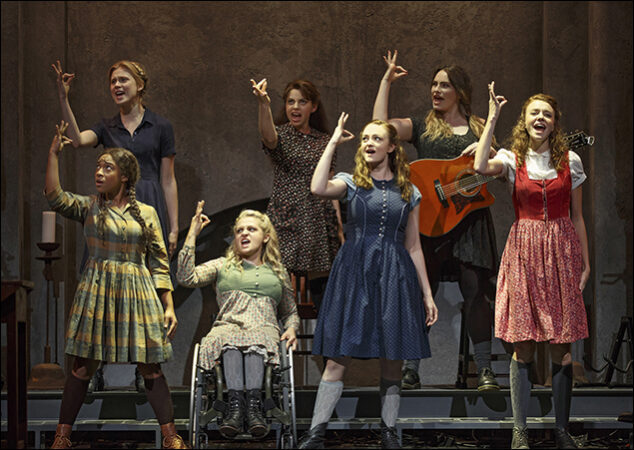
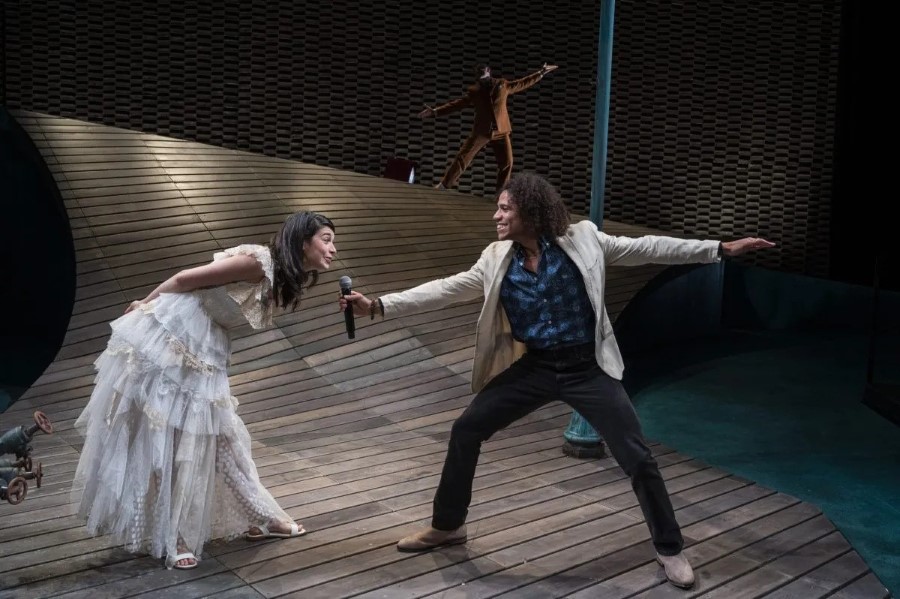
Deaf West's production of "Spring Awakening" on Broadway in 2015. (Photo by Joan Marcus)

Frank Wedekind’s Frühlings Erwachen caused a stir upon its 1906 Berlin debut for its frank depiction of teenage sexuality, abortion, and suicide. Exactly 100 years later, Steven Sater and Duncan Sheik turned Spring Awakening into a musical, keeping Wedekind’s shocking story beats intact and turning up the volume on the teens’ emotions by channeling them through Sheik’s angsty, propulsive pop/rock score, yoking youthful repression and transgression convincingly to a contemporary sound. The anachronistic image of young people in breeches and skirts pulling out handheld microphones to rock out to anthems like “Totally Fucked,” standing on desks and raging their way through Bill T. Jones’s choreography, was a theatrical mashup that paved the way for Bloody Bloody Andrew Jackson and Hamilton. Michael Mayer’s original staging, which took home the 2007 Best Musical Tony, also gave early major roles to Jonathan Groff, Lea Michele, and John Gallagher Jr. Decades later, the musical still speaks to young people, as a 2014 Deaf West Theatre revival (later seen on Broadway), or this post-Parkland mounting, or this pandemic staging, reminded us.
17

By Lynn Nottage

Dawn Ursula and Zurin Villanueva in "Ruined" at Everyman Theatre in Baltimore, Md., in 2015. (Photo by Stan Barouh)

From Troy to Gaza, the violence of war has been waged on women’s bodies for centuries, but their stories often go untold. Lynn Nottage’s play, based on interviews she and director Kate Whoriskey conducted in the Democratic Republic of the Congo, brings that violence home with startling immediacy. Though initially inspired by Brecht’s Mother Courage in telling the story of bar/brothel owner Mama Nadi—who both exploits and shelters a group of women fleeing local internecine conflicts, but must ultimately make a terrible choice—Nottage stopped short of following through to Brecht’s bleak conclusion, giving her characters a shred of hope. Commissioned by the Goodman Theatre in 2007, Ruined premiered in a co-production with the Manhattan Theatre Club in 2009, where it was extended for months and took home that year’s Pulitzer. You can see its influence most clearly in other plays set in Africa—Danai Gurira’s Eclipsed, about women fighters in Liberia, and J.T. Rogers’s The Overwhelming, about the Rwandan genocide—but Nottage’s fine-grained politics-made-personal portraits are all her own.

18

Music by Tom Kitt, book & lyrics by Brian Yorkey

Deedee Magno Hall in "Next to Normal" at East West Players in 2017. (Photo by Michael Lamont)

For a generation of musical theatre artists who grew up on pop/rock musicals in the Rent/Next to Normal/Dear Evan Hansen pipeline (touched on in a 2024 interview with director Michael Greif), Next to Normal was a gateway musical that, as one voter in our survey put it, showed the theatre that “there is an audience for musicals with difficult topics if the story is told well and with heart and compassion.” This rock musical about a woman with bipolar disorder and unexplored trauma stemming from her son’s death as a baby stands the test of time for its frank discussion of mental health (including its handling of electric shock therapy), its family dynamics, and its hopeful takeaway: “There will be light.” Originally titled Feeling Electric, it bowed Off-Broadway at Second Stage in 2008, heading to Broadway in 2009 and taking home the 2010 Pulitzer. It’s especially notable for its challenging lead role, Diana, originated by Alice Ripley, and recently played by Caissie Levy in the West End.

19

Book, music, & lyrics by Irene Sankoff & David Hein

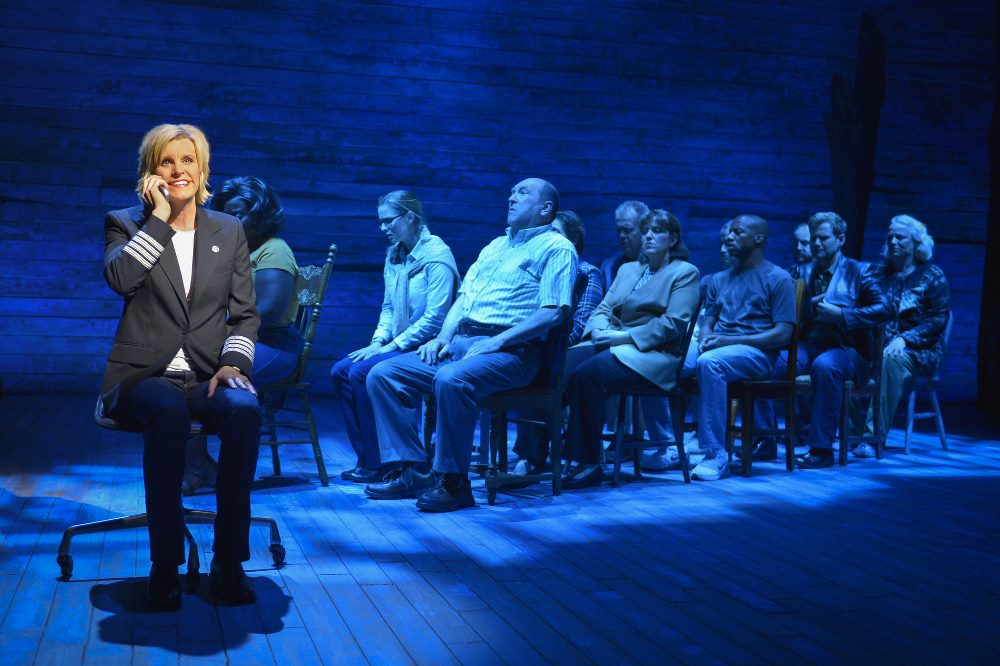
Jenn Colella in "Come From Away" at La Jolla Playhouse in 2015. (Photo by Kevin Berne)

This little-musical-that-could began with Irene Sankoff and David Hein’s research trip to the Newfoundland town of Gander, where they believed there was a story that needed to be told. There they met the small, close-knit community that mobilized with speed and generosity for 7,000 stranded passengers whose planes were diverted there on 9/11, and employed methods similar to Tectonic Theater Project’s docutheatre processes. After development at Sheridan College in Canada, Come From Away made the rounds of a few regional theatres in 2015 (La Jolla Playhouse, Seattle Rep, Ford’s Theatre), then landed on Broadway in 2017. It has since toured the world and is everywhere on U.S. stages this season: As soon as the rights were made available, this title shot to the top of our recent most-produced plays list.
20

By Sanaz Toossi

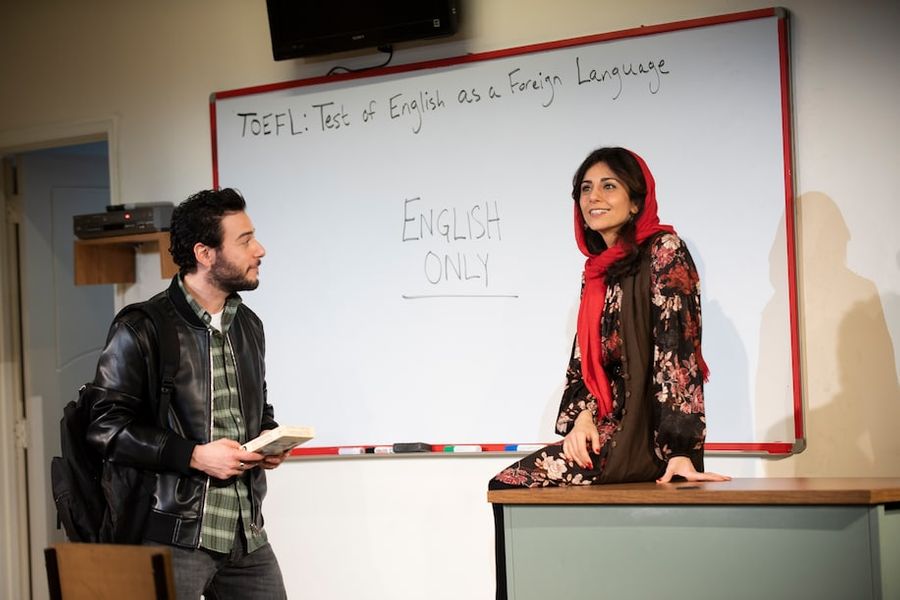
Hadi Tabbal and Marjan Neshat in "English" at Atlantic Theater Company. (Photo by Ahron R. Foster)

Sanaz Toossi’s Pulitzer-winning dramatic comedy about an Iranian ESL class studying for the TOEFL (Test of English as a Foreign Language) debuted at Roundabout on Broadway in 2024 after its Off-Broadway premiere at the Atlantic Theatre in 2022 (plus a slew of regional runs, including a few productions helmed by Iranian directors). In a 2022 interview, Toosi described it as “not just a comedy about language lessons, but a meditation about language itself, both as a tool of communication but also as an aspect of identity,” as well as a way to “scream” about the vilification of Middle Easterners and Muslims. It’s an expertly controlled scream, though, subverting language in a way that updates Brian Friel’s Translations trick: The play’s Iranian American actors speak with fluent contemporary American accents when their characters “speak Farsi,” and use stilted or studied Iranian accents when they “speak English.” Among the few MENA-written plays on this list, it explores identity and communication in a guttingly personal way: What does it mean to feel foreign, and what does it mean to love yourself in a different language? 

21

By Tarell Alvin McCraney

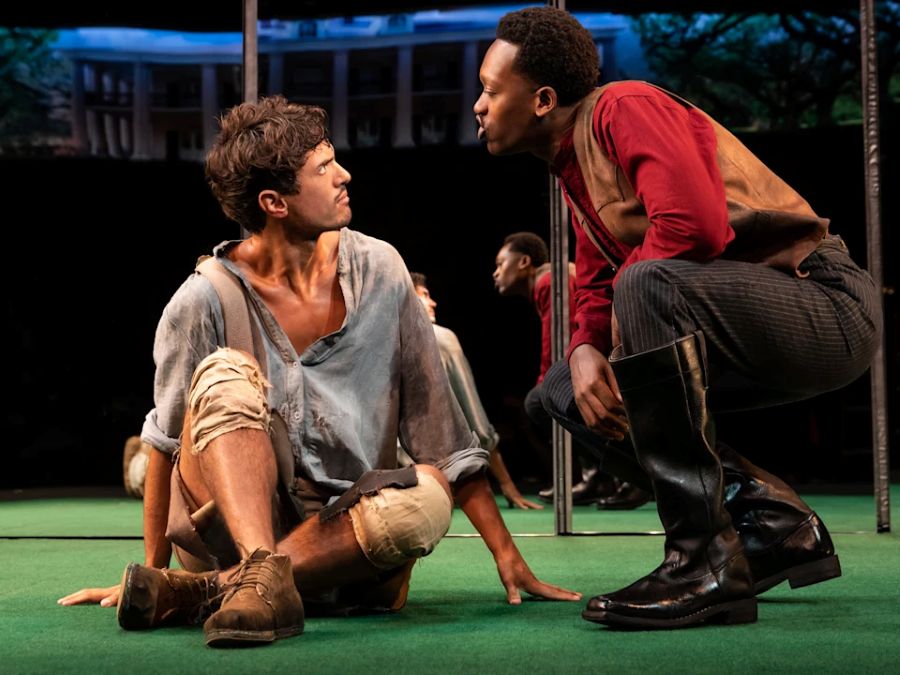
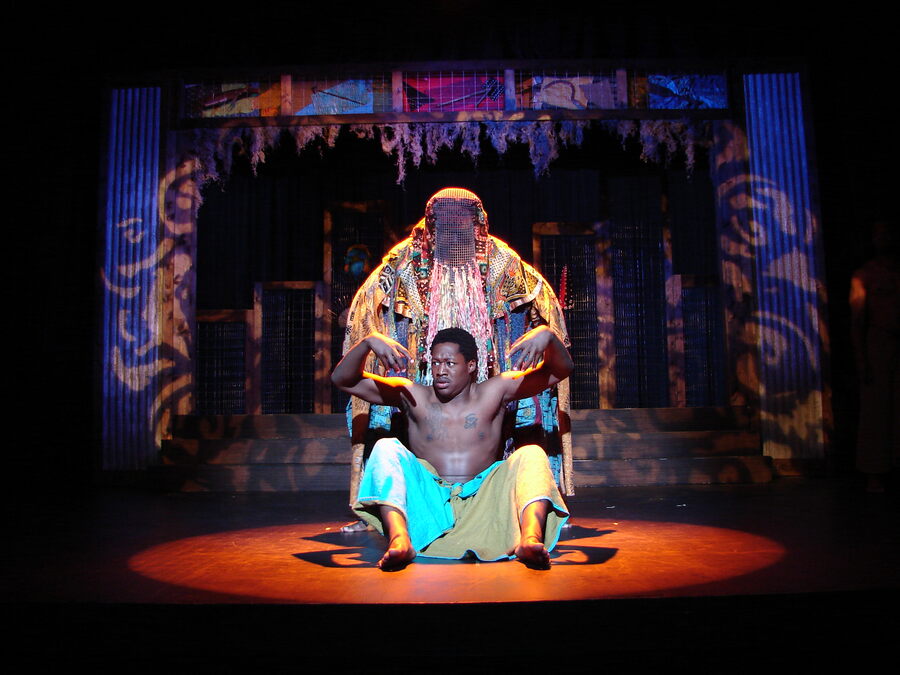
"The Brothers Size" at Norfolk State University in 2025.

Tarell Alvin McCraney’s loosely interlocking triptych of plays about generations of Black folks in the fictional bayou town of San Pere, Louisiana (The Brothers Size, In the Red and Brown Water, and Marcus; or The Secret of Sweet) announced the arrival of a major new dramatic voice when they debuted in 2009 at New Jersey’s McCarter Theatre. Poetic yet earthbound, drawing from the well of his life growing up in Miami and from the Orishas of African religion, McCraney’s work, as Randy Gener wrote in a profile at the time, “mashes up Ifá stories of the Yoruba people, the harsh realities of life in the projects, the ribald cadences of the American South, and the playwright’s personal memories. All of it is impressively and gracefully bound into what Tina Landau calls ‘a folk symphony.’” McCraney’s impact has proliferated not only through these plays and such subsequent works as Choir Boy and the film Moonlight, but through his chairmanship of playwriting at the David Geffen School of Drama at Yale.

22

By Sarah DeLappe

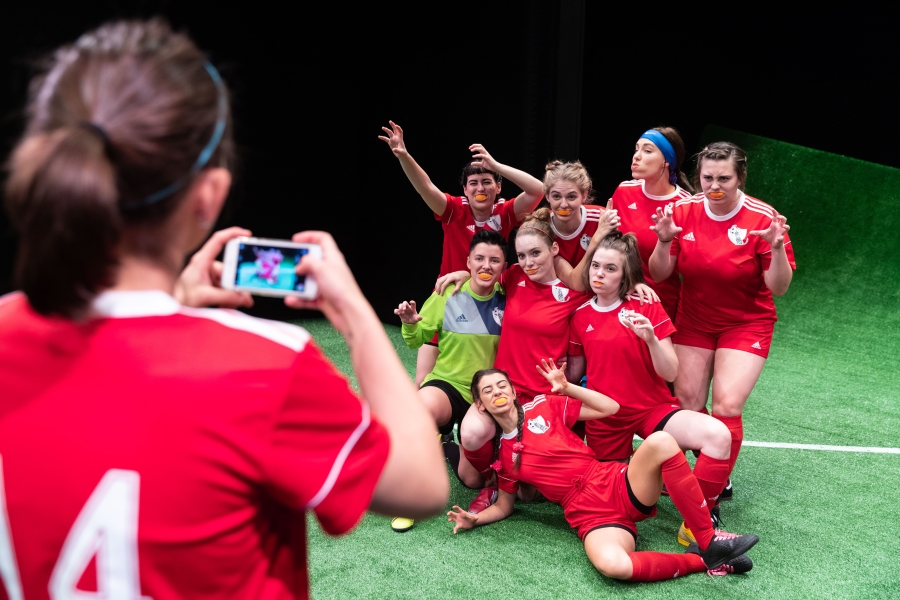
The cast of "The Wolves" at Salt Lake Acting Company in 2018. (Photo by dav.d daniels/ dav.d photography)

In the decade following its 2016 Off-Broadway debut with the Playwrights Realm (restaged a year later at Lincoln Center Theater), Sarah DeLappe’s The Wolves has become the play that everyone’s college theatre department has done, and with good reason. Following a girls’ high school soccer team’s practice sessions—from pushing their bodies to extremes to win games and get scouted for college teams, to their unkind treatment of the new girl even as she rises to become one of their best players—The Wolves’ lowercase-written voice paved the way for a subgenre of 21st-century feral contemporary teenage girlhood plays. You can see its influence everywhere from Dance Nation to Usual Girls to John Proctor Is the Villain to School Girls: The African Mean Girls Play. As Diep Tran wrote of the characters repped in these plays: “These girls are part cruel and kind, sporty and soft, shy and outspoken. In other words, there are whole worlds within teenage girls and they are complicated AF.”

23

Music by Jeanine Tesori, book & lyrics by Tony Kushner

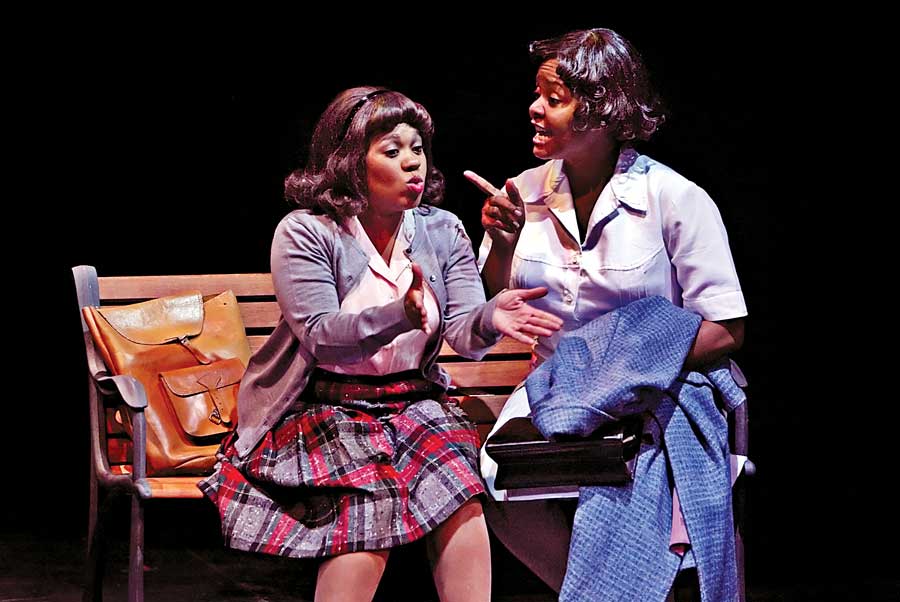
Chandra Wilson and Tonya Pinkins in "Caroline, or Change" at the Public Theater in 2003. (Photo by Michal Daniel)

In Tony Kushner’s semi-autobiographical musical about a Jewish boy growing up in Louisiana in the 1960s and his family’s African American maid, the Angels in America writer shows that race is so much more than skin deep. The premise is simple and devilish: To teach little Noah Gellman to stop leaving change in his pockets, his stepmom tells the housekeeper, Caroline Thibodeaux, to keep whatever she finds when she does the family laundry. Both well-meaning and horribly demeaning, this life lesson sets the show’s tragic conflict in motion, to the accompaniment of Jeanine Tesori’s churning, ambitious score, which sounds like musical theatre but moves like opera. Premiering at the Public Theater in 2003 under George C. Wolfe’s direction, the show transferred to Broadway the following year and played the West End in 2006. A 2018 London revival came to Broadway in 2021 and gave the show a well-deserved second hearing.

24

By James Ijames

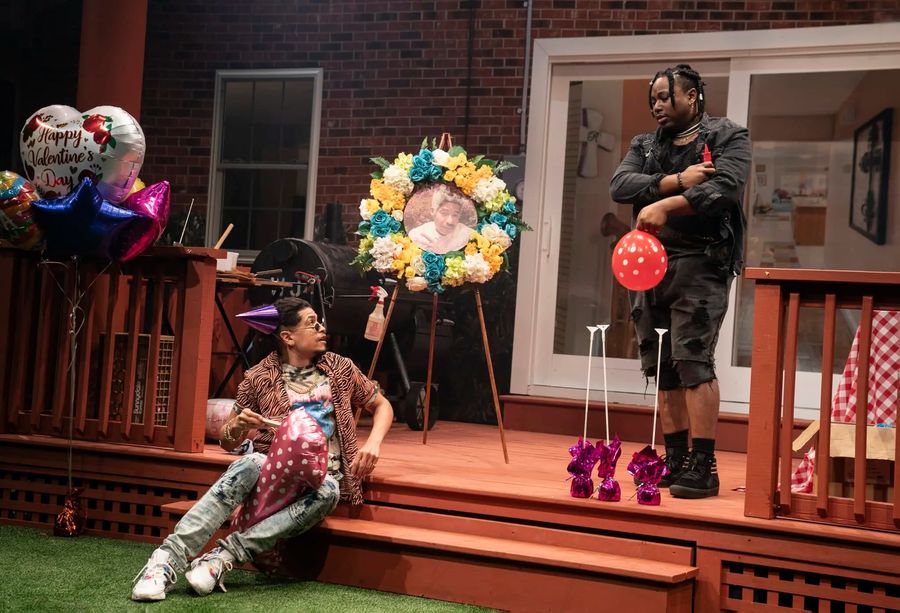
Chris Herbie Holland and Marcel Spears in "Fat Ham" at the Public Theater. (Photo by Joan Marcus)

When the Wilma Theater, which premiered James Ijames’s comedic contemporary riff on Hamlet as a filmed play during the pandemic in 2021, told him they were going to submit it for Pulitzer consideration, he replied, “This weird-ass country play?” In turning Shakespeare’s tragedy into a thorny but thrilling backyard barbecue, Ijames not only subverted a classic with nimble humor and crafty compression, he laced it with unmistakable sweetness and vulnerability, with a memorable assist from Radiohead’s “Creep.” Ijames had the last laugh when, while the play was running at the Public Theater in a co-production with National Black Theatre, it won the 2022 Pulitzer. It’s been on most-produced plays list every year since, and has even played at the Royal Shakespeare Company. Now that’s Juicy!

25

By Cole Escola

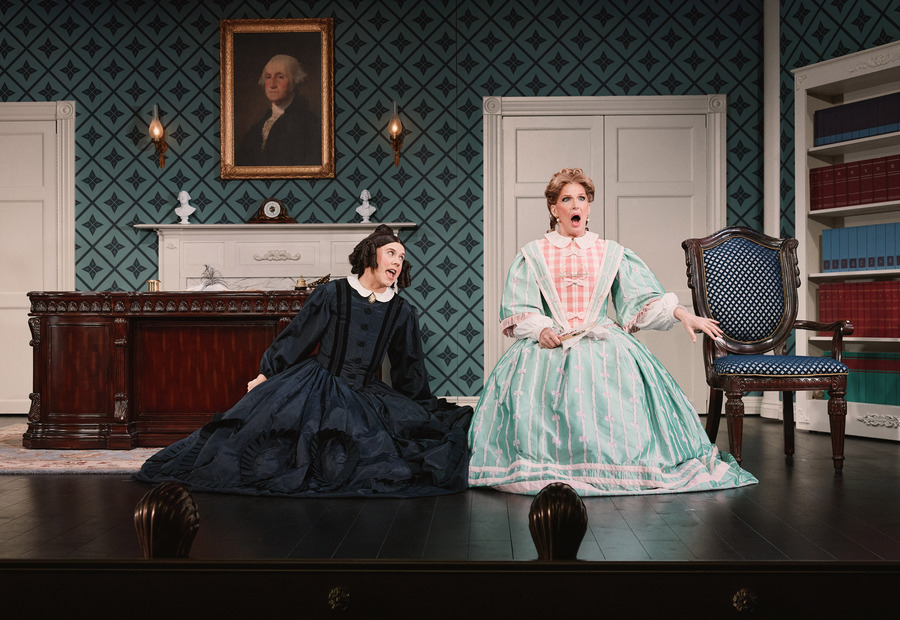
Cole Escola and Bianca Leigh in “Oh, Mary!” (Photo by Emilio Madrid)

Cole Escola’s hilarious ahistorical romp, which envisions Mary Todd Lincoln as a spotlight-hungry diva and the Lincoln White House as a den of exquisite jealousy and bitchery, is currently in the 17th month of  its hit Broadway run. So while it’s probably too new for its influence to have shown up in other playwrights’ work, its runaway success, following a similarly impressive Off-Broadway run, has definitely had an impact on the industry’s thinking about what kinds of shows might have commercial legs (the show’s unconventional curtain times, an under-noted innovation, should also prove eye-opening for producers). Might there be more appetite for Ludlam-esque queer tomfoolery than you might think on the Great White Way? (One bit of news this week points to yes.) Another thing its run has proven, as Jane Krakowski, Jinkx Monsoon, and next John Cameron Mitchell have assumed the role create by author Escola: Oh, Mary! is no more dependent on its original casting than What the Constitution Means to Me or Passing Strange.

26

By Branden Jacobs-Jenkins

Jess Andrews and Lea Coco in "Appropriate" at South Coast Rep. (Photo by Jenny Graham/SCR)

Branden Jacobs-Jenkins’s second play on this list starts as a familiar Southern Gothic family drama and quickly becomes a searing examination of legacy and white American history. It’s a play “so subversive and so original,” as Eric Grode wrote in The New York Times, that it took a decade to make it from its 2013 world premiere at Actors Theatre of Louisville to its Sarah Paulson-starring Broadway run. What distinguishes Appropriate from other similar family inheritance dramas is Jacobs-Jenkins’s wicked deployment of humor as a sort of Trojan horse to reckon with American’s violent heritage, and his refusal to offer the tidy catharsis some might expect. Though it was a long overdue Broadway debut for this generationally talented writer (so overdue that it won a Best Revival Tony), his next family comedy-drama, the 2025 Pulitzer winner Purpose, made it to Broadway in a matter of months after its Steppenwolf Theatre debut rather than years.

27

By Bruce Norris

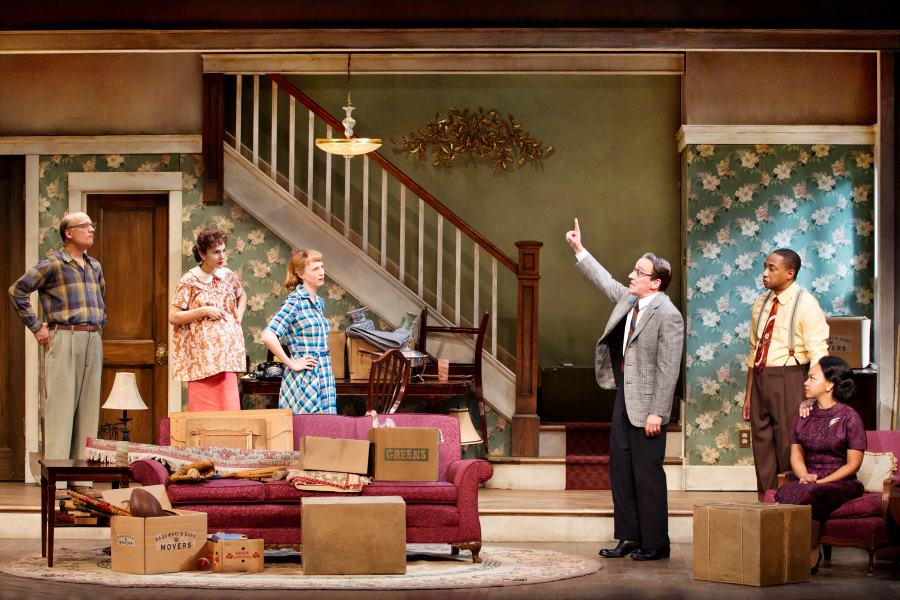
The cast of "Clybourne Park" on Broadway. (Photo by Joan Marcus)

Only a contrarian like Bruce Norris would look at Lorraine Hansberry’s canonical classic A Raisin in the Sun and wonder, “But what ever happened to the white folks who sold the Youngers their house?” Thankfully Norris is also a sharp and exacting craftsman, so that this two-act play about the house’s sale in 1959, and its later reclamation in 2009, manages to be as perceptive and provocative on issues of race and real estate as it sets out to be, and via two historical frames that complicate the picture, as white flight first blights a neighborhood, then boomerangs back into encroaching gentrification. Using a single cast to play different characters across a long time span in a way that’s been influential on such works as By the Way, Meet Vera Stark and Meet the Cartozians, Clybourne Park began its life at Playwrights Horizons in 2010, but its road to Broadway in 2012 (where it won the Best Play Tony) first ran through London, a number of regional theatres, and a 2011 Pulitzer win.

28

By Moisés Kaufman & members of the Tectonic Theater Project

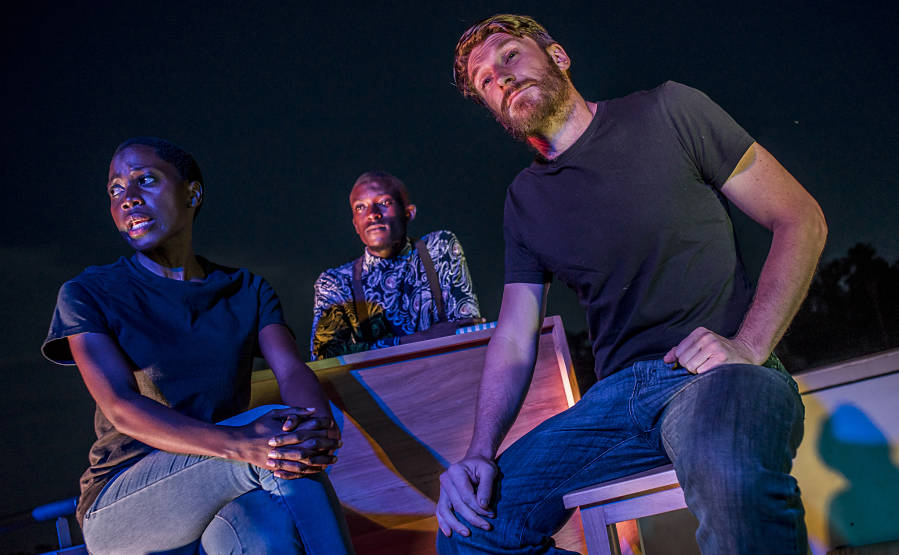
"The Laramie Project" in Kampala, Uganda. (Photo by Frederic Noy)

The influence of this watershed Tectonic Theater Project production can be measured by a real-world outcome: Nine years after the play’s 2000 premiere at the Denver Center for the Performing Arts, the Matthew Shepard and James Byrd Jr. Hate Crimes Prevention Act was enacted. Helmed by director Moisés Kaufman and composed by Tectonic’s ensemble, this docu-play about Shepard’s brutal 1998 murder in the small Wyoming town also has a huge theatrical footprint, continuing and amplifying a lineage of verbatim theatre that set a standard for multivocal docu-theatre employed in widely different ways by such troupes as American Records, The Civilians, Life Jacket Theatre Company, and Nature Theatre of Oklahoma, among others. Leaning on hundreds of face-to-face interviews, journal entries, and news reports, allowing the town to process and confront what had happened, The Laramie Project shows how theatrical tools can help us understand the world. The play was made into an HBO film and commemorated with a 10-year anniversary sequel that had a national simulcast, and has been translated to over 20 languages. (We especially cherish the story of a brave production that took place in Uganda in 2016.) As National Queer Theater’s founding artistic director Adam Odsess-Rubin put it, “The Laramie Project turned a news headline into urgent drama.”

29

By David Adjmi

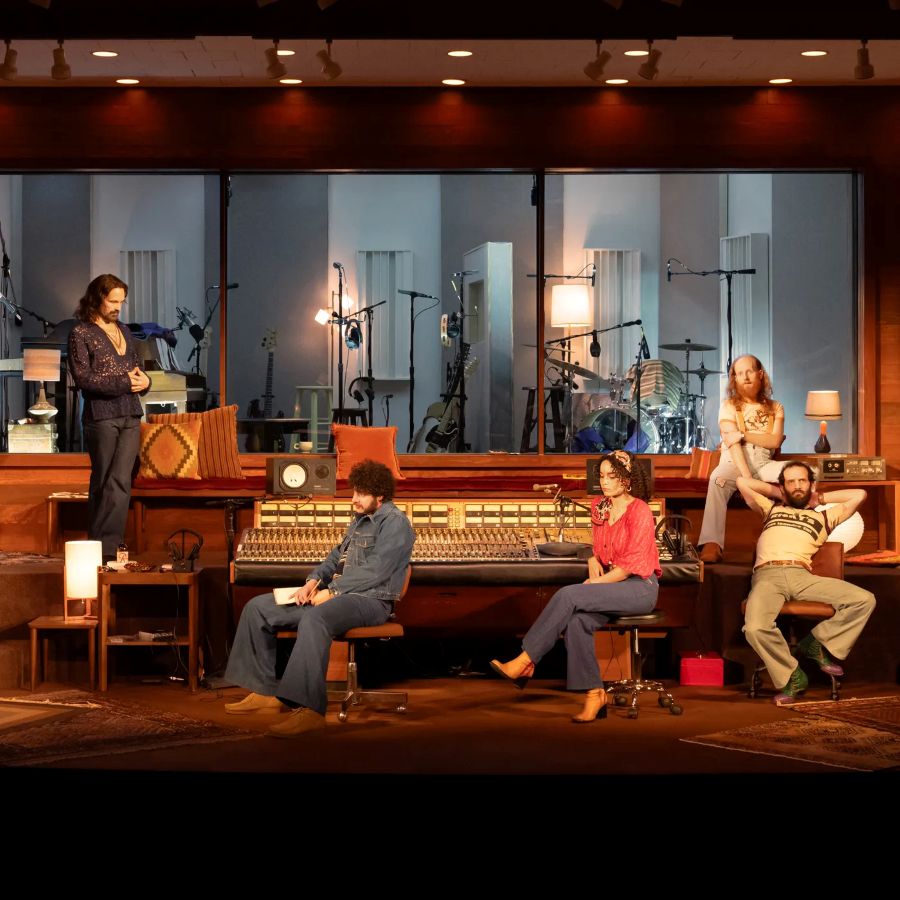
The cast of "Stereophonic" at the John Golden Theatre on Broadway. (Photo by Julieta Cervantes)

Like the rock album being meticulously crafted by the fictional Anglo-American quintet that is its subject, this sprawling yet intimate David Adjmi play was 1) years in the making, 2) something of a sensation, and 3) not immune to its share of offstage drama. Depicting the musical and interpersonal politics of a 1970s-era band with unmistakable similarities to Fleetwood Mac, Adjmi—with director Daniel Aukin, composer Will Butler, and a crackerjack ensemble and design team—achieved a fine-grained ensemble realism in the play’s premiere at Playwrights Horizons in 2023, and recreated that studio magic in a Tony-winning Broadway run the following year. The play’s current national tour has raised some questions about how well it holds up without all those original elements in place, and a plagiarism lawsuit filed by Fleetwood Mac’s producer Ken Caillat (settled last year) tarnished some of the play’s glow. But as Simon, the drummer, tells Peter, the band’s hyper-controlling lead guitarist, when they reach an impasse: “Music isn’t supposed to be perfect. It’s not about that. It’s about relating to each other.” Just like theatre.

30

By Annie Baker

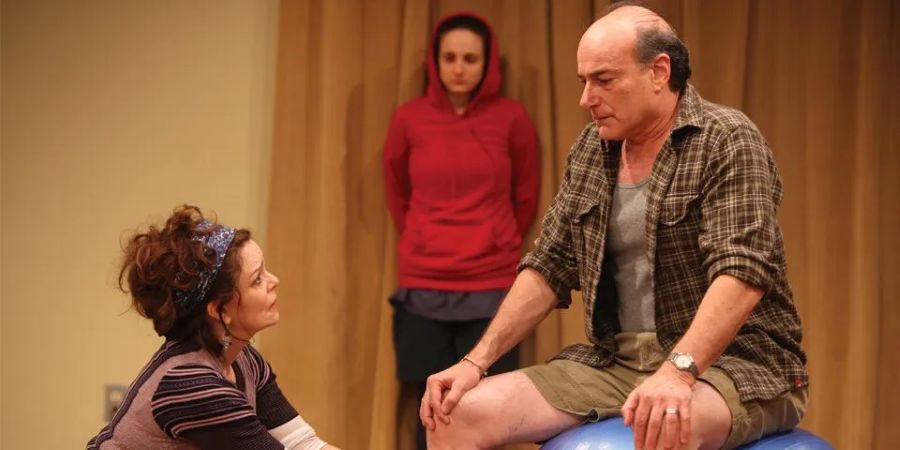
Dierdre O'Connell, Tracee Chimo, and Peter Friedman in "Circle Mirror Transformation" at Playwrights Horizons in 2009. (Photo by Joan Marcus)

She’d had an Off-Broadway play previously produced (Body Awareness at the Atlantic Theater), but this sneakily moving ensemble work about love and boredom in a Vermont drama class is the play that put Annie Baker’s name on the theatre map when it had a repeatedly extended run at Playwrights Horizons in 2009 (and later won the Best Play Obie). Directed by Sam Gold, it cemented some of the elements of what would become the much-imitated Baker style: close observation of small details, awkward silences, missed connections, droll humor. Though she has varied her approach in the plays since (including in The Flick, also on this list, and in her debut film Janet Planet), Baker’s work regularly pushes naturalism past mere realism into a deeper engagement with human frailty and absurdity. (Her 2012 adaptation of Uncle Vanya made explicit her debt to another dramatist-poet of the seemingly quotidian.)

31

A 24-Decade History of American Popular Music

By Taylor Mac

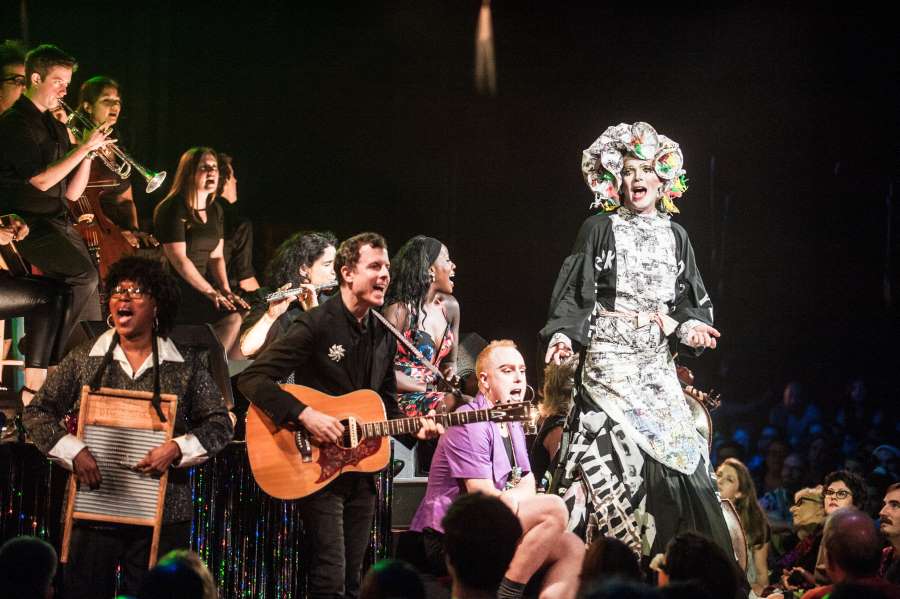
Taylor Mac in Act 3 (1826-1836) of "A 24-Decade History of Popular Music" at St. Ann's Warehouse. (Photo by Teddy Wolff)

Talk about durational theatre. The maximalism of Taylor Mac’s ambitious decade-by-decade survey of American music and culture wasn’t just realized in the eye-popping costumes by Machine Dazzle or the array of artists who shared the stage with Mac and judy’s band during the show’s 2016 run at St. Ann’s Warehouse in Brooklyn. Its ambitions were announced by the work’s sheer scale: a literal 24 hours, spanning eight acts and 246 songs. Audiences were welcome to nap, nosh, pee, or otherwise take breaks during the day-long span, though many stayed fully engaged for most of the proceedings. Performed in the fall before Trump’s first election, Mac’s work sounded a tragically hopeful note that resonates anew in the continuing Trump era: Judy described it as “a reenactment of how the individual(s) may lose the long game but communities and movements, if continually brought together, have the potential to thrive while bending towards justice.”

32

Book, music, & lyrics by Anaïs Mitchell

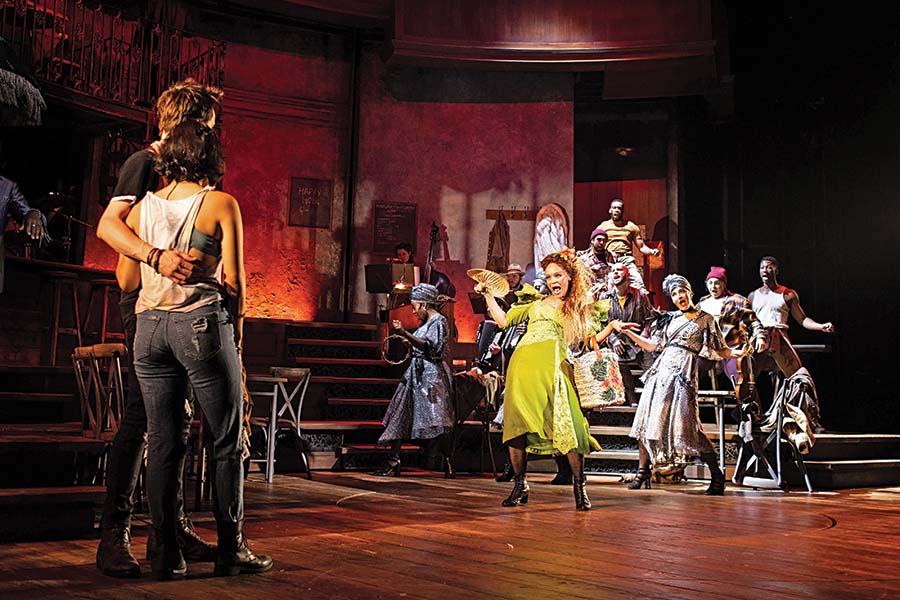
Amber Gray, right, and the cast of "Hadestown" at the National Theatre in London in 2018. (Photo by Helen Maybanks)

Hadestown emerged on Broadway in 2019 as a full-throated reminder to the theatre industry that intimate, stylistically specific musicals can grab audiences as much, if not more, than shows that lean on pop music, star casting, or big-budget spectacle. It was a long road to that point for Anaïs Mitchell’s musical, which traces its earliest versions all the way back to 2006 and through a 2010 concept album and an Off-Broadway run at New York Theatre Workshop in 2016. What wound up captivating audiences (and nabbing the Best Musical Tony) was, as Mitchell and director Rachel Chavkin have put it, a piece of poetry, not prose. A genre-blurring, folk-jazz fever dream, Hadestown reimagines the Orpheus and Eurydice myth in a Depression-era underworld plagued by hunger, labor, and longing—not exactly a plug-and-play musical theatre formula. As Chavkin also said, it was “by far the hardest thing I’ve ever directed.” It was worth the effort: For many, Hadestown’s journey and composition expanded the possibilities of what musical theatre art at the highest level can be.

33

By Ayad Akhtar

Shirine Babb, Benim Foster, Nicole Lowrance, and Rajesh Bose in "Disgraced" at Long Wharf in 2015. (Photo by T. Charles Erickson)

By the time Ayad Akhtar’s drama opened at American Theater Company in Chicago in 2012 (and moved to Lincoln Center Theater later that year), enough time had elapsed since 9/11 for audiences to embrace the story of a Muslim antihero: Amir, a successful New York lawyer who, though ostensibly assimilated and alienated from Islam, still finds himself profiled, stereotyped, and in conflict with both his white and Black friends, his white wife, and his fellow South Asians. Amir’s responses to these pressures are both understandable and demonstrably violent, which some critics felt played into Islamophobia. Akhtar, who that same year published the novel American Dervish, welcomed the controversy and dialogue that the play provoked, and its regional productions found it fruitful to host post-show conversations. Discourse about the play, pro and con, continued even as it won the 2013 Pulitzer and made it to Broadway in 2014.

34

By Kimberly Belflower

Maggie Kuntz, Morgan Scott, and Amalia Yoo in "John Proctor Is the Villain" on Broadway. (Photo by Julieta Cervantes)

Not all wolves show their fangs, Kimberly Belflower reminds us in this coming-of-age play. As its title suggests, Belflower tackles Arthur Miller’s canonical play The Crucible through the lens of #MeToo, as a young feminist’s club at a Georgia high school starts to notice the parallels in the play, particularly John’s relationship with young Abigail, and an inappropriate student-teacher relationship in their own midst. Originally commissioned by the Farm Theater for their College Collaboration Project, the play raged through regional productions (D.C.’s Studio Theater in 2022, Boston’s Huntington in 2024) before its triumphant Broadway run earlier this year. Though it has its share of cathartic screams, Belflower’s play isn’t a screed: Her writing shines most in excavating the interior lives of high-achieving girls weighed down by anxiety and perfectionism. An upcoming film adaptation should keep John Proctor in the zeitgeist for a while.

35

Book & lyrics by Stew, music by Stew with Heidi Rodewald

"Passing Strange" at the Belasco Theatre. (Photo by David Lee/Sundance)

Stew and Heidi Rodewald’s rock memoir began its life at the late, lamented Sundance Theatre Lab before running at Berkeley Repertory Theatre in 2006 and New York’s Public Theater in 2007, and heading to Broadway in 2008, then—crucially—getting a film of that run directed by Spike Lee, which later aired on PBS. What audiences saw in all these iterations was kind of storytelling concert in which the pop/rock polymath Stew, who had headed the L.A.-based band The Negro Problem, narrated his literary and musical journey from South Los Angeles to Amsterdam and back, putting a killer cast through their paces (on Broadway it included Colman Domingo, Eisa Davis, Daniel Breaker, De’Adre Aziza, and Rebecca Naomi Jones). Also crucial to the show’s long-tail success: As Heidi Schreck’s later What the Constitution Means to Me showed, this was not an author-dependent show, as many others have strapped on a guitar and sang the opening, “Now you don’t know me/And I don’t know you/So let’s cut to the chase/The name is Stew.”

36

By Sarah Ruhl

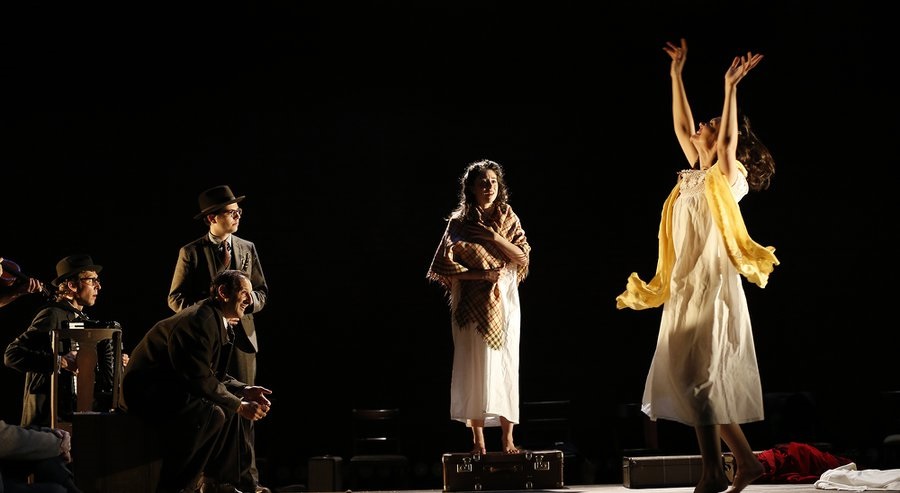
Sarah Price and Kenneth La’Ron Hamilton in "Eurydice" at Writers Theatre in 2023. (Photo by Michael Brosilow)

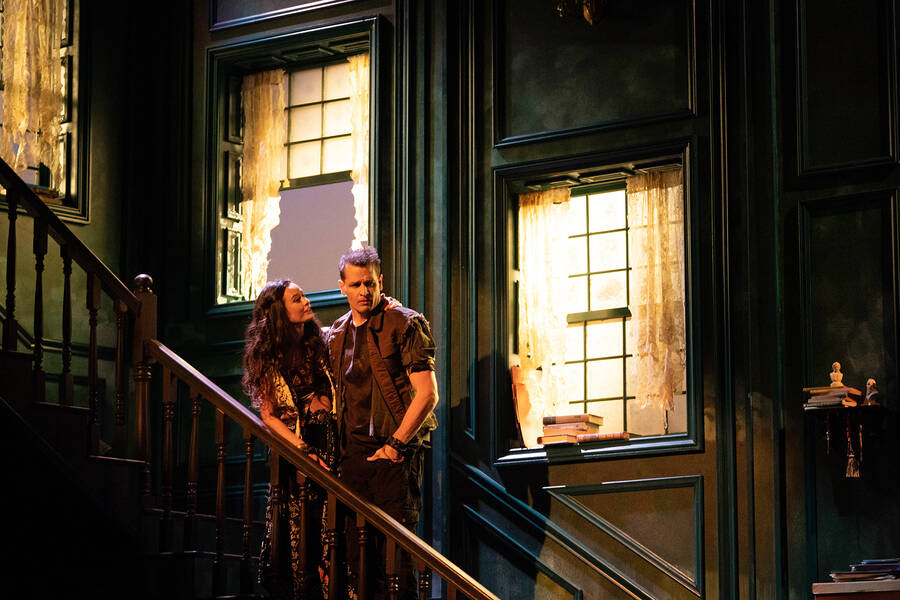
In the second take on the Orpheus and Eurydice myth to make our list, Sarah Ruhl reimagines the tale as a story of Eurydice’s rebirth rather than of Orpheus’s tragic mistake. Turning attention to Eurydice might seem like a simple shift, but in taking a character typically sidelined in the myth and giving her agency, Ruhl transforms the underworld into a surreal landscape as she delves into themes of memory, childhood, and language. Charles Isherwood, in his review of the 2006 production at Yale Repertory Theater, said that Ruhl’s play “may just be the most moving exploration of the theme of loss that the American theatre has produced since the events of Sept. 11, 2001.” Originally directed by Les Waters, Eurydice’s poetic world of rain-filled elevators, rooms of string, and talking stones also lived up to Ruhl’s intent to craft a script “written to be a playground for designers,” and opened the door to a universe of imaginative stagings since.

37

Book by Quiara Alegría Hudes, music & lyrics by Lin-Manuel Miranda

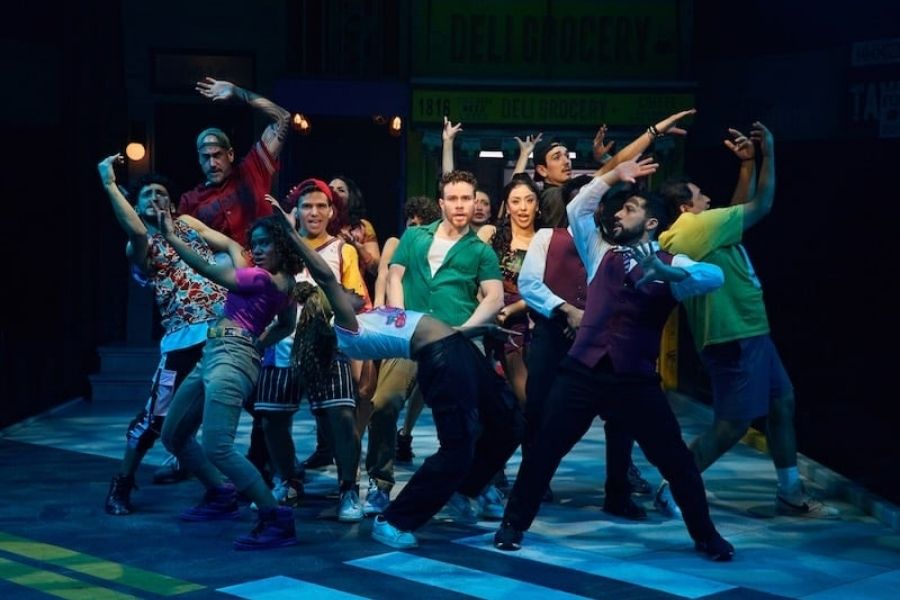
The company of “In the Heights” at Signature Theatre in Arlington, Va., in 2025. (Photo by DJ Corey Photography)

¡Pa’rriba esa bandera! Lin-Manuel Miranda and Quiara Alegría Hudes’s vibrant musical, set in a New York City neighborhood that hadn’t yet been depicted on a Broadway stage, inaugurated a new era of musical theatre, both in its sound (hip-hop, salsa, merengue, R&B) and in its fully rounded portrayal of Latine culture. Indeed, for many artists and audiences, In the Heights was the first time they could bring and celebrate their full identities within the theatre. Intended in part as a corrective to the depiction of Puerto Ricans in West Side Story, as told by people within the community who also love it, it had a respectable run on the Great White Way and won the 2008 Best Musical Tony, but it has found its true afterlife in the scores of regional productions, international tours, and school stagings, not to mention a lavish movie version, that have made Washington Heights as iconic as Brigadoon or Anatevka.

38

By David Henry Hwang

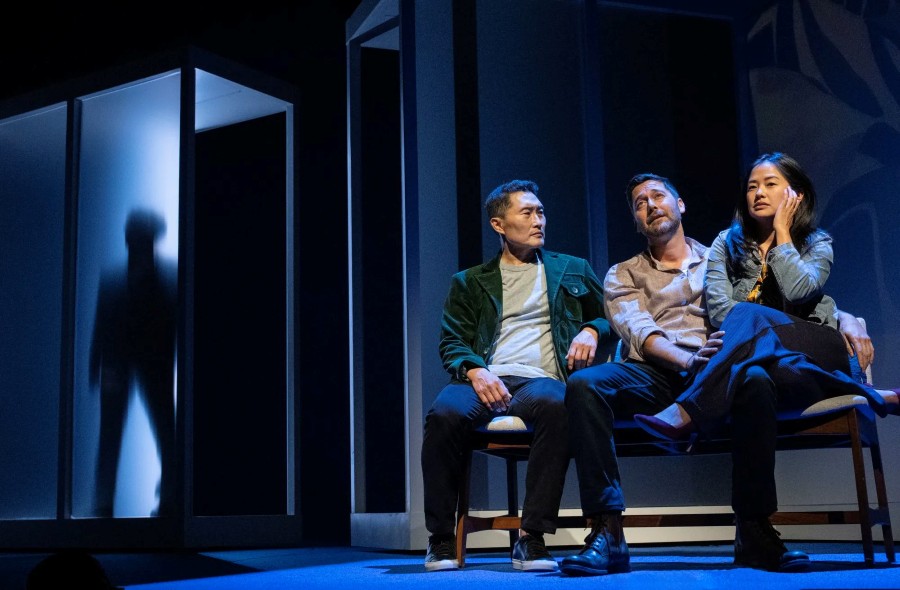
Daniel Dae Kim, Ryan Eggold, and Shannon Tyo in "Yellow Face" at Roundabout Theatre in 2024. (Photo by Joan Marcus)

David Henry Hwang’s play has had a long, strange life that is nearly as fascinating and tangled as the play’s near-farcical plot: It premiered in 2007 at Center Theatre Group (in a co-production with East West Players) and the Public Theater, was filmed for YouTube in 2013, and was then substantially rewritten for an acclaimed 2024 Broadway revival at Roundabout (recorded for PBS Great Performances). In the interim, the culture seemed to have caught up both with the play’s themes and with Hwang’s ironic hall-of-mirrors take on them. As the playwright DHH, who righteously protested 1990’s yellowface casting of Miss Saigon, gets embroiled in his own casting crisis, and his own Chinese American father faces persecution over alleged espionage, the play asks questions of truth vs. fiction, genuine oppression vs. genuine offensiveness, and what it means to truly stand for a community. Its influence on Asian American theatre representation is obvious, but its wider impact may be its formal and political daring.

39

Book by Jeff Whitty, music & lyrics by Robert Lopez & Jeff Marx

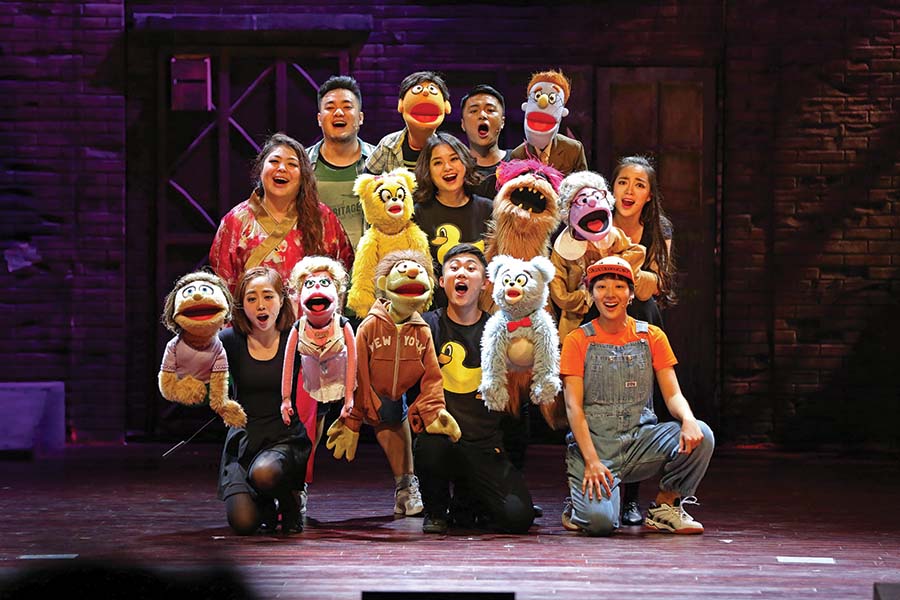
The Seven Ages staging of "Avenue Q," which opened in China in 2013 and continues to tour there. (Photo by Sun Yuqian)

“What do you do with a BA in English?” The longing, melancholy, and undercurrent of hope conveyed by these lyrics, as sung by a puppet, get to the heart of this irreverent musical. An adult riff on Sesame Street, developed at the Eugene O’Neill Theater Center before its pre-Broadway Vineyard Theatre run in 2003, the show drops audiences into a diverse New York City community of recent college graduates and other misfits as they sing about love, work, politics, and porn. With songs by Robert Lopez and Jeff Marx and a book by Jeff Whitty, Avenue Q became a long-running sensation, even besting Wicked for the Best Musical Tony in 2004, though after closing on Broadway it returned to Off-Broadway, where it seemed especially at home, for a New World Stages run that didn’t end until 2019.

40

By David Auburn

Fedna Jacquet and Tinashe Kajese-Bolden in "Proof" at True Colors Theatre Company in Atlanta in 2016. (Photo by Greg Mooney)

David Auburn’s play about a mathematician’s relationship with her late father, told in flashbacks as she tries figure out what she has and hasn’t inherited from him, is not only notable for its Stoppardian use of math as a metaphor for human relationships but for its deft merging of intellect and emotion. In his New York Times review of the play’s Off-Broadway premiere at Manhattan Theatre Club in 2000, Bruce Weber called it “a back porch drama…as accessible and compelling as a detective story.” The original production, which transferred to Broadway for a healthy run starting in late 2000, garnering both the Pulitzer and the Best Play Tony the following year, memorably starred Mary-Louise Parker; Gwyneth Paltrow took the part in London and in the 2005 film adaptation. Proof is now set for its first Broadway revival starring Ayo Edebiri and Don Cheadle.

41

By Edward Albee

David Adkins and Jennifer Van Dyck "The Goat or, Who is Sylvia?" at in Berkshire Theatre Group in 2019. (Photo by Emma K. Rothenberg-Ware)

The only play on the list written by an elder statesmen of the American theatre—Edward Albee was 74 when The Goat reared its head on Broadway in 2002, taking that year’s Best Play Tony—it is clearly the work of a seasoned playwright, but not one who has mellowed into old age. Quite the contrary: If anything, Albee’s untamed, ornery imagination runs further here than ever before, positing a family drama in which the patriarch’s midlife crisis involves an apparently sincere case of cross-species love. The knots into which this veteran dramatist twists his characters, and by extension his audience, can be seen as Theatre of the Absurd played it to its logical conclusion. But that wouldn’t explain the emotional wallop the play delivers. The heart bleats.

42

By Matthew López

The cast of "The Inheritance, Parts One and Two" at Round House Theatre. (Photo by Margot Schulman)

Matthew López’s ambitious seven-hour opus about the intertwining lives and loves of a group of contemporary gay men is in dialogue with Angels in America, certainly, but its more immediate structural model, intriguingly, is E.M. Forster’s Howards End. Like that Edwardian English novel, López’s play—which premiered at London’s Old Vic in 2018, then came to Broadway in 2019—is about a legacy and who rightly ought to claim it, though in his case the heritage in question is intergenerational gay culture and chosen-family formation. In dramatizing the free-floating anxiety of millennials who mostly escaped the HIV/AIDS crisis themselves but who were stripped of a generation of mentors by that plague, López created a kind of memory play for roads not taken. The closing of the play’s first half, in which dozens of ghosts from the plague years join one of the lead characters onstage, is a profound theatrical moment no one who’s seen it is likely to forget.

43

By Stephen Karam

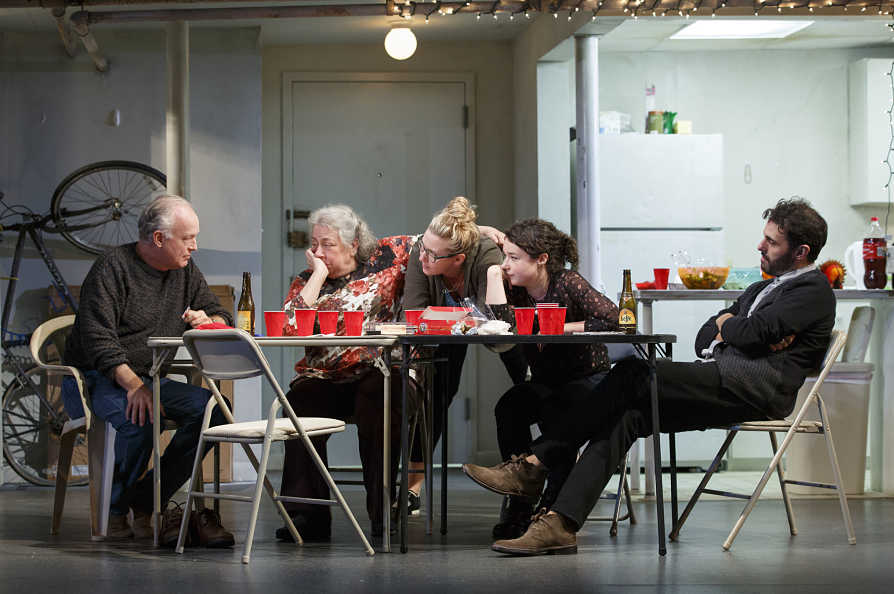
Reed Birney, Jane Houdyshell, Cassie Beck, Sarah Steele, and Arian Moayed in "The Humans" at the Roundabout Theatre. (Photo by Joan Marcus)

On its face, Stephen Karam’s play about a fraught Thanksgiving dinner in which generations spar, commiserate, and reveal unpleasant secrets to each other would seem to be in the tradition of family plays à la August: Osage County. While it owes some debt to that lineage, the title gives a clue that Karam is up to something a little weirder, even more cosmic with this drama, which debuted at the Roundabout Off-Broadway in 2015 before a Broadway run in 2016 that took that year’s Best Play Tony. Like Annie Baker’s unsettling John, Karam’s play has spectral undercurrents and is pervaded by a sense of existential precarity: The dinner is being held at an adult daughter’s barely furnished Chinatown NYC apartment rather than the parents’ Pennsylvania home, which is figuratively disintegrating in any case. Written and staged well before the 2016 election, The Humans also offered a fresh, prescient take on the decline of the white middle-class family. (You just know that Erik Blake, the embittered patriarch who’s been fired from a janitorial job for inappropriate conduct, would vote for Trump.)

44

By Lauren Yee

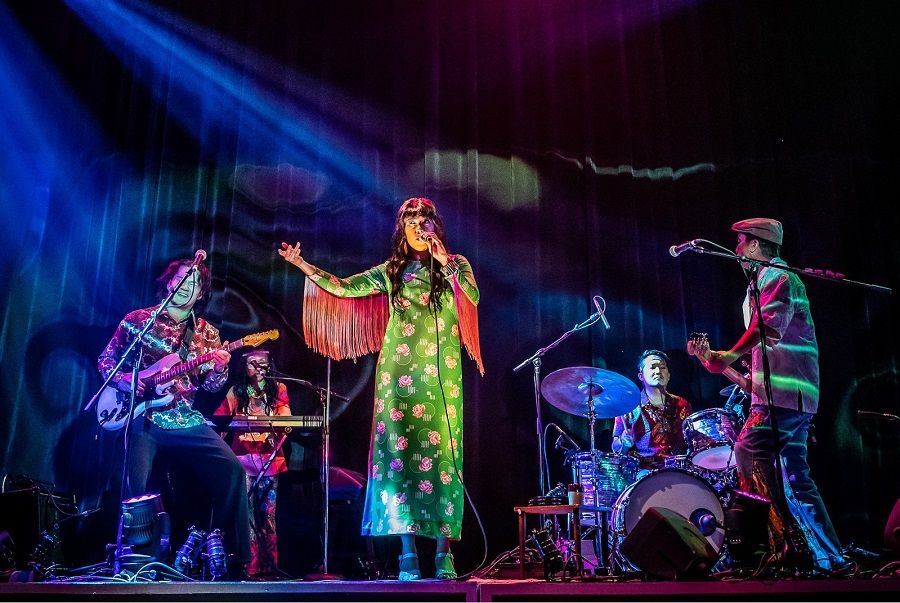
Christopher T. Pow, Mayda Miller, Danielle Troiano, Shawn Mouacheupao, and Greg Watanabe in "Cambodian Rock Band," a Theater Mu production at Jungle Theatre. (Photo by Rich Ryan)

Using what has become her signature style of intertwining the past and present, playwright Lauren Yee tells the chilling yet electrifying story of a young woman uncovering her father’s past as both a survivor of the Cambodian genocide and as a member of a rock band amid that tumult. Commissioned by and premiered at California’s South Coast Repertory in 2018 before playing all over the U.S., Cambodian Rock Band raises questions familiar to first-generation children of immigrants: Do we really know our family? And what horrors have they shielded from us? Yee, a Chinese American writer from the San Francisco Bay Area, meticulously researched the subject, but the play doesn’t feel academic or cautious. Instead, incorporating the songs of Dengue Fever, played live between scenes, the show has had a life on the road comparable to that of an actual rock band. The show also rallied Asian American Pacific Islander (AAPI) communities at a time of rising anti-Asian hate, as institutions across the country hosted Khmer and AAPI Nights to celebrate the show’s Asian excellence, often for the first time.

45

By Clare Barron

The cast of "Dance Nation" by Clare Barron at Playwrights Horizons Off Broadway. (Photo by Joan Marcus)

Along with Sarah DeLappe’s The Wolves, Clare Barron’s play about a pre-teen dance troupe preparing for a national competition, which premiered at Playwrights Horizons in 2018, helped to generate a wave of plays emboldened to embody teen feminine rage, including Alexis Scheer’s Our Dear Dead Drug Lord, Liliana Padilla’s How to Defend Yourself, and Kimberly Belflower’s John Proctor Is the Villain. But there’s a delightful and humanizing catch in this case: All the young people in the troupe are played by adult actors of different generations, and most aren’t professional dancers. This choice only heightens the play’s surreality and cathartic form, and its firm rejection of the white male gaze. It all makes for a feral yet tender reflection on the technicolor confusion of growing up and seeking to understand oneself.

46

By Will Arbery

John Zdrojeski and Julia McDermott in "Heroes of the Fourth Turning" at Playwrights Horizons. (Photo by Joan Marcus)

Some of the praise that greeted this acclaimed Will Arbery drama, first staged at Playwrights Horizons in 2019, came from some unlikely quarters: Right-wing intellectuals like Rod Dreher said they saw themselves and their ideas depicted with sympathy in the play, set at a conservative college in Wyoming based directly on the one run by Arbery’s parents. So is Heroes of the Fourth Turning a conservative apologia? Not exactly, though in depicting the sincere arguments and envies among a group of young graduates of the college in the months after Trump’s first inauguration, Arbery gives them their due as dramatic subjects while teasing out the conflicts and contradictions that are still to this day playing out among the MAGA faithful and the conservative movement more broadly, as they rationalize and metabolize their engagement in a crass, militant culture war. The casualties of that war, human and moral, are Arbery’s real subjects, and he never loses sight of them in the crossfire.

47

Book, music, and lyrics by Dave Malloy

The company of “Natasha, Pierre, & the Great Comet of 1812” at Writers Theatre in 2025. (Photo by Liz Lauren)

In 2015, we wondered if this musical could take immersive theatre to Broadway after its 2012 premiere at Ars Nova and stints at American Repertory Theater and in a bespoke tent near NYC’s High Line. In the decade since then, Great Comet, as it’s colloquially known, has gone on to resonate beyond its 2016-17 Broadway run, which indeed did happen but closed too early. Perhaps ticketbuyers weren’t ready for a full embrace, but in adapting a segment from Leo Tolstoy’s War and Peace, composer Dave Malloy created a pathbreaking score that blends electropop, polka, power ballads, and classical sounds. That, combined with actor-musicianship and audience interaction, courtesy of Rachel Chavkin’s direction and Mimi Lien’s set, made for a joyously raucous party with room for intimate moments. Malloy has gone on to expand the form with titles like Octet and an upcoming adaptation of Black Swan. If Hamilton made being a theatre nerd cool, Great Comet introduced immersive musical theatre to a burgeoning generation of theatremakers and helped to pave the way for shows like the Chavkin-directed Hadestown.

48

By Eboni Booth

Caleb Eberhardt in "Primary Trust" at La Jolla Playhouse. (Photo by Rich Soublet II)

In the mood for bonding over mai tais? Eboni Booth’s moving Pulitzer winner (which we were honored to publish in our Spring 2024 print issue) introduces us to Kenneth, a lonely 38-year-old bookstore worker who routinely drowns his sorrows at the local tiki bar. When his world is upended, we’re whisked through a tale of connection, friendship, and breaking through. Premiering at Roundabout Theatre Off-Broadway in 2023, Primary Trust quickly shot to the top of our most-produced plays list this past fall. In an interview with Booth, who is also an actor, playwright Branden Jacobs-Jenkins may have pinpointed one key to the play’s appeal, telling her, “You have this thing that I love and that I find a lot of actors-turned-writers have, which is a kind of effortlessness with character building. You write these vehicles for actors in some magical way that, once inhabited, instantly take on this uncanny quality of real emotional depth. Your people just always strike me as so alive and warm and true.”

49

By Dominique Morisseau

Dominique Morisseau’s "The Skeleton Crew" at Artists Repertory Theatre in Portland, Ore. (Photo by David Kinder)

A proud daughter of the Midwest, playwright Dominique Morisseau mines her hometown of Detroit and its unsung heroes for her plays. When Skeleton Crew premiered at the Atlantic Theatre in 2016, it transcended its setting to pierce the heart of the American Dream. In this pressure-cooker drama, the last employees of an auto parts factory reminisce on the city that once was and what will become of them and their communities when the factory closes. Reflecting on the end of a legacy in which manufacturing jobs like this were a lifeline for millions of Black folks who flooded into cities throughout the 20th century, Morisseau links their fate to the continual displacement of a people who can never feel quite settled in this country. The play’s timeliness—it premiered two years after the Flint water crisis, then ran on Broadway after the pandemic lockdowns, garnering the 2022 Best Play Tony—have made it one of those plays that will stick to the bones for years to come.

50

By Simon Stephens

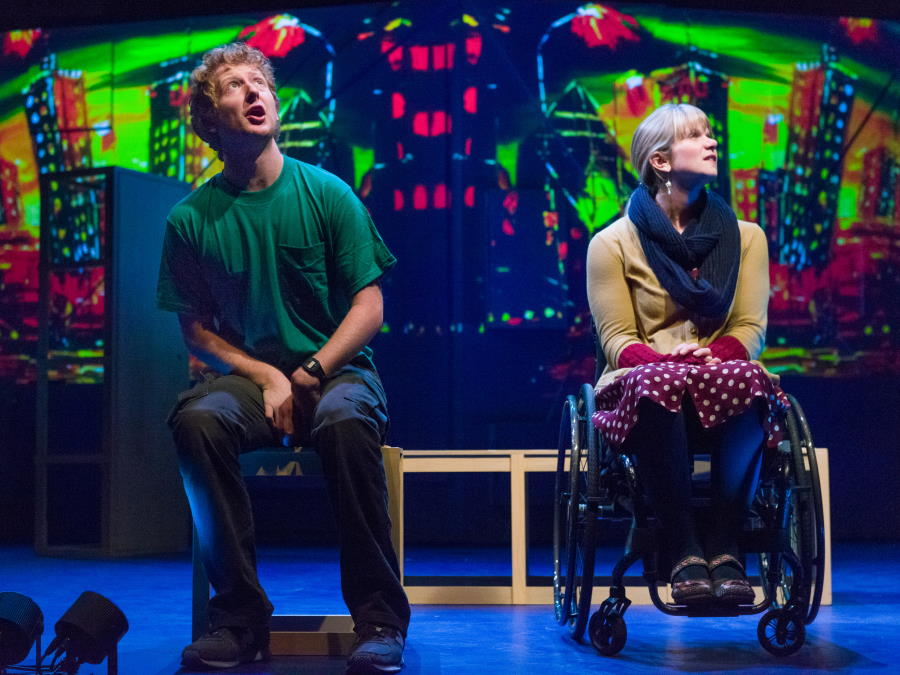
Young man on bench talks to woman in wheelchair in "Curious Incident of the Dog in the Nighttime."
MacGregor Arney and Regan Linton in "Curious Incident of the the Dog in the Night-Time" at Mixed Blood Theatre in 2017. (Photo by Rich Ryan)

The only title on this list with a non-American author, Simon Stephens’s acclaimed National Theatre adaptation of Mark Haddon’s novel about Christopher, a neurodivergent boy trying to solve a mystery, arrived on Broadway in 2014 and made a noticeable splash. Director Marianne Elliott’s striking stagecraft, meant to evoke the world as Christopher saw it, used precise projection mapping and dynamic choreography courtesy of Scott Graham and Steven Hoggett. Both Elliott and Hoggett have worked frequently on Broadway in the past decade, though not on new plays, while Stephens’s work has also shown up in the U.S. with some frequency (Heisenberg, Punk Rock, the Andrew Scott Vanya). Curious Incident has had the widest reach of any of their work, though, topping our most-produced plays list in 2019-20, and influencing the representation of neurodivergence onstage (including spurring calls for more authentic casting of the lead role).

  1. Hamilton
  2. August: Osage County
  3. Topdog/Underdog
  4. Fun Home
  5. An Octoroon
  6. A Strange Loop
  7. Mr. Burns, a Post-Electric Play
  8. Sweat
  9. What the Constitution Means to Me
  10. Fairview
  11. The Flick
  12. Slave Play
  13. Doubt
  14. Wicked
  15. Indecent
  16. Spring Awakening
  17. Ruined
  18. Next to Normal
  19. Come From Away
  20. English
  21. The Brothers Size/Brother Sister Plays
  22. The Wolves
  23. Caroline, or Change
  24. Fat Ham
  25. Oh, Mary!
  26. Appropriate
  27. Clybourne Park
  28. The Laramie Project
  29. Stereophonic
  30. Circle Mirror Transformation
  31. A 24-Decade History of American Popular Music
  32. Hadestown
  33. Disgraced
  34. John Proctor Is the Villain
  35. Passing Strange
  36. Eurydice
  37. In the Heights
  38. Yellow Face
  39. Avenue Q
  40. Proof
  41. The Goat, or Who Is Sylvia
  42. The Inheritance
  43. The Humans
  44. Cambodian Rock Band
  45. Dance Nation
  46. Heroes of the Fourth Turning
  47. Natasha, Pierre & the Great Comet of 1812
  48. Primary Trust
  49. Skeleton Crew
  50. The Curious Incident of the Dog in the Night-Time

More From American Theatre

Support American Theatre: a just and thriving theatre ecology begins with information for all. Please join us in this mission by joining TCG, which entitles you to copies of our quarterly print magazine and helps support a long legacy of quality nonprofit arts journalism.

ADV – Billboard