Theatre in a Time of Genocide: Palestinian Imagination Under Fire
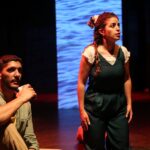
2 playwrights talk to theatremakers in the West Bank and Gaza, who are continuing their resistance to occupation with their art and their witness.

2 playwrights talk to theatremakers in the West Bank and Gaza, who are continuing their resistance to occupation with their art and their witness.
Stories of resistance from perseverant 20th century theatremakers around the world, and how they walk with us today.
Lessons from the Global South on fugitivity and world-making in the face of empire.
Bond Street Theatre, which takes theatre into refugee camps and prisons overseas, has had programs cancelled—but they’re regrouping, fundraising, and even bringing some of their work home.
Now in its 20th year, this gathering of Filipino and Filipino American theatremakers helps to bridge gaps of language and culture—and to offer a kind of mutual homecoming.
The venerable international festival’s 79th iteration lays out the welcome mat for first-time performers and audiences, and puts its first non-European language, Arabic, in the spotlight.
As seen at a recent festival, theatre from Ukraine, Latvia, Germany, and Poland can’t help but be shadowed by war and retrenchment in Eastern Europe, though there is still joy and art to fight for as well.
The busy actor has stocked an International Theatre Festival at the Venice Biennale with heavy hitters—including the one that formed him, the Wooster Group.
This year’s artists include Milo Rau, Simon McBurney, Dan Hurlin, Liesl Tommy, Stefanie Batten Bland, and Wesley Ruzibiza.
Theatre in Kosovo—state-sanctioned and safe during the Soviet era, scrappy in the war years—offers models both cautionary and instructive for U.S. theatres facing headwinds.
Each gift is a stitch in the tapestry that celebrates our resilience, strengthening theatre nationwide. Add your thread today.